Freeman-Sheldon syndrome
Ultimo aggiornamento 28 Ott 2021
Rispetta le linee guida editoriali
- ScaricaScarica
- Condividi
- Language
- Discussione
- Ask Patient
- Versione audio
- Aggiungi alle fonti preferite su Google
Freeman-Sheldon syndrome (also known as Freeman-Burian syndrome) is a condition that primarily affects muscles in the face and skull (craniofacial muscles) and can often affect joints in the hands and feet. The condition is characterised by abnormalities known as contractures, which result from permanent tightening of muscles, skin, tendons, and surrounding tissues, and restrict movement of the affected body part. In Freeman-Sheldon syndrome, contractures in the face lead to a distinctive facial appearance including a small mouth (microstomia) with pursed lips, giving the appearance of whistling. For this reason, Freeman-Sheldon syndrome is sometimes called "whistling face syndrome." Other facial features common in this condition include a chin dimple shaped like an "H" or "V" and unusually deep folds in the skin between the nose and the corners of the mouth (nasolabial folds).
Scelte video per Condizioni geneticheVideo library
Descrizione
Freeman-Sheldon syndrome (also known as Freeman-Burian syndrome) is a condition that primarily affects muscles in the face and skull (craniofacial muscles) and can often affect joints in the hands and feet. The condition is characterised by abnormalities known as contractures, which result from permanent tightening of muscles, skin, tendons, and surrounding tissues, and restrict movement of the affected body part. In Freeman-Sheldon syndrome, contractures in the face lead to a distinctive facial appearance including a small mouth (microstomia) with pursed lips, giving the appearance of whistling. For this reason, Freeman-Sheldon syndrome is sometimes called "whistling face syndrome." Other facial features common in this condition include a chin dimple shaped like an "H" or "V" and unusually deep folds in the skin between the nose and the corners of the mouth (nasolabial folds).
People with Freeman-Sheldon syndrome may also have a variety of other facial features, such as a prominent forehead and brow ridges, a sunken appearance of the middle of the face (midface hypoplasia), a short nose, a long area between the nose and mouth (philtrum), and full cheeks. Affected individuals may have a number of abnormalities that affect the eyes. These features can include widely spaced eyes (hypertelorism), deep-set eyes, outside corners of the eyes that point downward (down-slanting palpebral fissures), a narrowing of the eye opening (blepharophimosis), droopy eyelids (ptosis), and eyes that do not look in the same direction (strabismus).
Other features that can occur in Freeman-Sheldon syndrome include an unusually small tongue (microglossia) and jaw (micrognathia) and a high arch in the roof of the mouth (high-arched palate). People with Freeman-Sheldon syndrome may have difficulty swallowing (dysphagia), a failure to gain weight and grow at the expected rate (failure to thrive), and breathing complications that may be life-threatening. Speech problems or hearing impairment can also occur in people with this disorder.
In people with Freeman-Sheldon syndrome, contractures in the hands and feet can lead to permanently bent fingers and toes (camptodactyly), a hand deformity in which all of the fingers are angled outward toward the fifth finger (ulnar deviation, also called "windmill vane hand"), and inward- and downward-turning feet (clubfoot). Less commonly, contractures affect the hips, knees, shoulders, or elbows.
People with Freeman-Sheldon syndrome may also have abnormalities of the spine, ribs, or chest. Many affected individuals have abnormal side-to-side or front-to-back curvature of the spine (scoliosis or kyphosis) or an abnormally curved lower back (lordosis). In many affected individuals, the muscles between the ribs do not function properly, which can impair breathing or coughing. The ribs or breastbone (sternum) may be abnormally shaped in people with this condition.
Intelligence is unaffected in most people with Freeman-Sheldon syndrome, but development of normal milestones may be delayed due to physical abnormalities.
Modelli di ereditarietà
The source lists the following possible inheritance patterns: Autosomal dominant; Autosomal recessive. More than one pattern can apply in different cases.
Related genes
Altri nomi
Craniocarpotarsal dysplasia
Craniocarpotarsal dystrophy
DA2A
Distal arthrogryposis, type 2A
FBS
Freeman-Burian syndrome
FSS
Whistling face syndrome
Whistling face-windmill vane hand syndrome
Related patient information and medicines
Patient information leaflet
Costola cervicale
About 1 in 100 people are born with an extra rib called a cervical rib. About 1 in 10 people who have a cervical rib develop thoracic outlet syndrome. This happens if the cervical rib squashes the nerves and blood vessels going into the arm. Because this is something that you are born with, cervical ribs are known as a congenital condition. At the.
Patient information leaflet
Sindrome compartimentale
Compartment syndrome occurs due to increased pressure within a confined space, or compartment, in the body. Compartment syndrome most commonly occurs in the leg below the knee. Acute compartment syndrome (occurring over a short period of time, and causing severe symptoms) is an emergency. If untreated, it can affect the blood supply to muscles in.
Patient information leaflet
Sindrome da dolore regionale complesso (CRPS)
Sindrome da dolore regionale complesso è a debilitating, painful condition in a limb, associated with nerve, skin and bone abnormalities. The condition often follows an injury to that limb. However, there is no relationship to the severity of the injury, and in some cases there is no history of any injury. It usually affects one limb, but can later.
Patient information leaflet
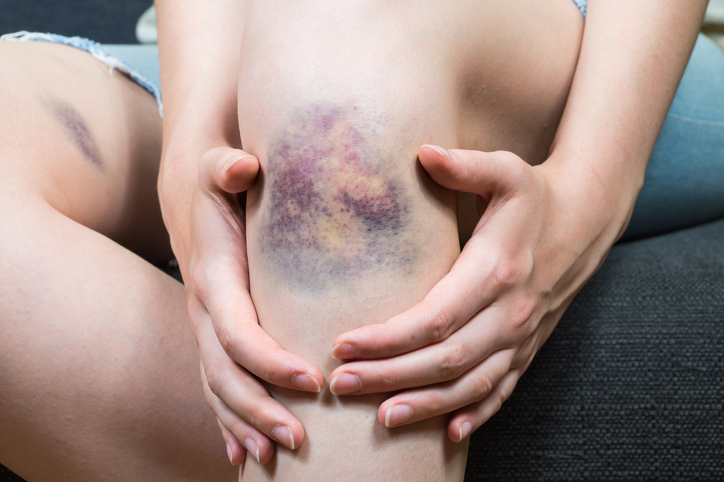
Sindrome di Ehlers-Danlos
The Ehlers-Danlos syndromes (EDS) are a group of conditions that affect the stretchiness and strength of supporting tissues in the body, including skin, joints, blood vessels and internal organs. What are the Ehlers-Danlos syndromes. The Ehlers Danlos syndromes (EDS) are a group of conditions which are usually (although not always) inherited from.

Patient information leaflet
Disturbi dello spettro dell'ipermobilità
Disturbi dello spettro dell'ipermobilità include all people with what used to be called joint ipermobilità syndrome, and before that benign joint hypermobility syndrome. ... Hypermobility spectrum disorders (HSDs) sono a group of conditions that involve joint hypermobility (increased range of motion in the joints, sometimes referred to as "loose joints").
Patient information leaflet
Sindrome del cri du chat
Cri du chat syndrome is a chromosome problem caused by a missing piece of chromosome 5. The syndrome is called cri du chat (French for cry of dello cat) perché affected babies often have a high-pitched cry. Not all babies with the missing piece of chromosome 5 will develop cri du chat syndrome. Cri du chat syndrome may cause a variety of.
Ulteriori letture e riferimenti
- Freeman-Sheldon syndrome; MedlinePlus, National Library of Medicine.
- Beals RK. The distal arthrogryposes: a new classification of peripheral contractures. Clin Orthop Relat Res. 2005 Jun;(435):203-10.
- Beck AE, McMillin MJ, Gildersleeve HI, Shively KM, Tang A, Bamshad MJ. Genotype-phenotype relationships in Freeman-Sheldon syndrome. Am J Med Genet A. 2014 Nov;164A(11):2808-13. doi: 10.1002/ajmg.a.36762. Epub 2014 Sep 25.
- Bell KM, Huang A, Kronert WA, Bernstein SI, Swank DM. Prolonged myosin binding increases muscle stiffness in Drosophila models of Freeman-Sheldon syndrome. Biophys J. 2021 Mar 2;120(5):844-854. doi: 10.1016/j.bpj.2020.12.033. Epub 2021 Jan 30.
- Das S, Kumar P, Verma A, Maiti TK, Mathew SJ. Myosin heavy chain mutations that cause Freeman-Sheldon syndrome lead to muscle structural and functional defects in Drosophila. Dev Biol. 2019 May 15;449(2):90-98. doi: 10.1016/j.ydbio.2019.02.017. Epub 2019 Feb 28.
- Poling MI, Dufresne CR, Chamberlain RL. Findings, Phenotypes, Diagnostic Accuracy, and Treatment in Freeman-Burian Syndrome. J Craniofac Surg. 2020 Jun;31(4):1063-1069. doi: 10.1097/SCS.0000000000006299.
- Poling MI, Dufresne CR, Chamberlain RL. Freeman-Burian syndrome. Orphanet J Rare Dis. 2019 Jan 10;14(1):14. doi: 10.1186/s13023-018-0984-2.
- Racca AW, Beck AE, McMillin MJ, Korte FS, Bamshad MJ, Regnier M. The embryonic myosin R672C mutation that underlies Freeman-Sheldon syndrome impairs cross-bridge detachment and cycling in adult skeletal muscle. Hum Mol Genet. 2015 Jun 15;24(12):3348-58. doi: 10.1093/hmg/ddv084. Epub 2015 Mar 3.
- Rao DS, Kronert WA, Guo Y, Hsu KH, Sarsoza F, Bernstein SI. Reductions in ATPase activity, actin sliding velocity, and myofibril stability yield muscle dysfunction in Drosophila models of myosin-based Freeman-Sheldon syndrome. Mol Biol Cell. 2019 Jan 1;30(1):30-41. doi: 10.1091/mbc.E18-08-0526. Epub 2018 Oct 31.
- Schiaffino S, Rossi AC, Smerdu V, Leinwand LA, Reggiani C. Developmental myosins: expression patterns and functional significance. Skelet Muscle. 2015 Jul 15;5:22. doi: 10.1186/s13395-015-0046-6. eCollection 2015.
- Stevenson DA, Carey JC, Palumbos J, Rutherford A, Dolcourt J, Bamshad MJ. Clinical characteristics and natural history of Freeman-Sheldon syndrome. Pediatrics. 2006 Mar;117(3):754-62. doi: 10.1542/peds.2005-1219.
- Tajsharghi H, Kimber E, Kroksmark AK, Jerre R, Tulinius M, Oldfors A. Embryonic myosin heavy-chain mutations cause distal arthrogryposis and developmental myosin myopathy that persists postnatally. Arch Neurol. 2008 Aug;65(8):1083-90. doi: 10.1001/archneur.65.8.1083.
- Toydemir RM, Rutherford A, Whitby FG, Jorde LB, Carey JC, Bamshad MJ. Mutations in embryonic myosin heavy chain (MYH3) cause Freeman-Sheldon syndrome and Sheldon-Hall syndrome. Nat Genet. 2006 May;38(5):561-5. doi: 10.1038/ng1775. Epub 2006 Apr 16.
- Walklate J, Vera C, Bloemink MJ, Geeves MA, Leinwand L. The Most Prevalent Freeman-Sheldon Syndrome Mutations in the Embryonic Myosin Motor Share Functional Defects. J Biol Chem. 2016 May 6;291(19):10318-31. doi: 10.1074/jbc.M115.707489. Epub 2016 Mar 4.
Condividi i tuoi pensieri o esperienze con gli altri nel nostro comunità di pazienti.
Accesso semplice a trattamenti affidabili e servizi sanitari online.
Common conditions
Get help with common conditions through the NHS, without a GP appointment.
 Sinusite acuta
 Tonsillite batterica
 Impetigine
 Punture di insetti
 Fuoco di Sant'AntonioInfezioni delle vie urinarie (IVU)
Iscriviti alla newsletter di Patient
La tua dose settimanale di consigli sulla salute chiari e affidabili - scritti per aiutarti a sentirti informato, sicuro e in controllo.
Abbonandoti accetti i nostri Informativa sulla Privacy. Puoi annullare l'iscrizione in qualsiasi momento. Non vendiamo mai i tuoi dati.