ERCC excision repair 2, TFIIH core complex helicase subunit
Ultimo aggiornamento 6 Apr 2023
Rispetta le linee guida editoriali
- ScaricaScarica
- Condividi
- Language
- Discussione
- Ask Patient
- Versione audio
- Aggiungi alle fonti preferite su Google
The ERCC2 gene provides instructions for making a protein called XPD. This protein is an essential part (subunit) of a group of proteins known as the general transcription factor 2 H (TFIIH) complex. The TFIIH complex has two major functions: it is involved in a process called gene transcription, and it helps repair damaged DNA.
Scelte video per GenesVideo library
Normal function
The ERCC2 gene provides instructions for making a protein called XPD. This protein is an essential part (subunit) of a group of proteins known as the general transcription factor 2 H (TFIIH) complex. The TFIIH complex has two major functions: it is involved in a process called gene transcription, and it helps repair damaged DNA.
Gene transcription is the first step in protein production. By controlling gene transcription, the TFIIH complex helps regulate the activity of many different genes. The XPD protein appears to stabilize the TFIIH complex. Studies suggest that the XPD protein works together with XPB, another protein in the TFIIH complex that is produced from the ERCC3 gene, to start (initiate) gene transcription.
The TFIIH complex also plays an important role in repairing damaged DNA. DNA can be damaged by ultraviolet (UV) rays from sunlight and by toxic chemicals, such as those found in cigarette smoke. DNA damage occurs frequently, but normal cells are usually able to fix it before it can cause problems.
One of the major mechanisms that cells use to fix DNA is known as nucleotide excision repair (NER). The TFIIH complex is part of this repair mechanism. The XPD protein acts as a helicase, which is an enzyme that attaches (binds) to particular regions of DNA and temporarily unwinds the two spiral strands. Once the damaged region has been exposed, other proteins snip out (excise) the abnormal section and replace the damaged area with the correct DNA.
Conditions referring to this gene or chromosome
Altri nomi
basic transcription factor 2 80 kDa subunit
BTF2 p80
COFS2
CXPD
DNA excision repair protein ERCC-2
DNA repair protein complementing XP-D cells
EM9
ERCC2_HUMAN
excision repair cross-complementation group 2
excision repair cross-complementing rodent repair deficiency, complementation group 2
MAG
MGC102762
MGC126218
MGC126219
TFIIH
TFIIH 80 kDa subunit
TFIIH basal transcription factor complex 80 kDa subunit
TFIIH basal transcription factor complex helicase subunit
TFIIH p80
TTD
xeroderma pigmentosum complementary group D
xeroderma pigmentosum group D-complementing protein
Related patient information and medicines

Patient information leaflet
Idrosadenite suppurativa
Medical treatment Medical treatment means using medicines, either on the skin (topically), or by mouth. Generally, a short course of antibiotics will last for two weeks. Tetracycline compresse Erythromycin. Erythromycin Doxycycline. Acitretin Acitretin capsules for psoriasis and isotretinoin Isotretinoin capsules for acne are sometimes used. They.

Patient information leaflet
Posso prendere Tetraciclina e Calcio insieme?
Limit caffeine intake to moderate levels. Using other medicines Taking multiple medicines. Our Medicines Interaction Checker helps you check whether your prescriptions, over-the-counter medicines, and supplements are safe to take together. Simply search for your medicines to see potential interactions and what to do about them. Disclaimer This.
Patient information leaflet
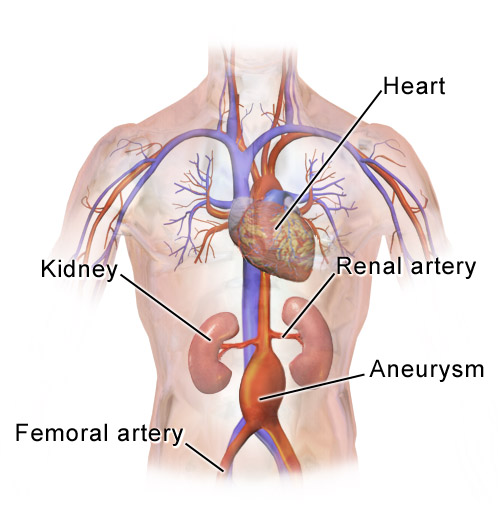
Aneurisma dell'aorta addominale
The aorta is the main blood vessel in the abdomen, running down from your heart. In older people, particularly those who smoke, part of it can enlarge and balloon up. This is called an abdominal aortic aneurysm (often abbreviated to AAA, pronounced 'triple-A'). This doesn't cause any symptoms and the person is usually unaware they have it, until.
Patient information leaflet
Fistola pilonidale
A pilonidal sinus is an infected tract under the skin between the buttocks. Treatment commonly involves an operation. After the operation it is advised that the area should be kept the area free of growing hair by regular shaving or other means of hair removal. What is a pilonidal sinus. Diagram detailing the natal cleft Diagram detailing the.

Patient information leaflet
AskPatient
AskPatient is a safer, clinically informed AI assistant designed to help you understand health information and find reliable linee guida on Patient.info. Whether you have a symptom, want to understand a condition, or need help finding the right information, AskPatient can guide you... Why AskPatient is different Built on trusted clinical information.

Patient information leaflet
Dislocazione
Dislocations sono injuries where the bones in a joint are forced apart and into an abnormal position; they are caused by an injury which produces an impact on the joint These would include falls, accidents involving vehicles and collisions during contact sports. If the joint is injured and pulled apart, the structures of the joint, plus the bones.
Ulteriori letture e riferimenti
- ERCC excision repair 2, TFIIH core complex helicase subunit; MedlinePlus, National Library of Medicine.
- Boyle J, Ueda T, Oh KS, Imoto K, Tamura D, Jagdeo J, Khan SG, Nadem C, Digiovanna JJ, Kraemer KH. Persistence of repair proteins at unrepaired DNA damage distinguishes diseases with ERCC2 (XPD) mutations: cancer-prone xeroderma pigmentosum vs. non-cancer-prone trichothiodystrophy. Hum Mutat. 2008 Oct;29(10):1194-208. doi: 10.1002/humu.20768.
- Broughton BC, Berneburg M, Fawcett H, Taylor EM, Arlett CF, Nardo T, Stefanini M, Menefee E, Price VH, Queille S, Sarasin A, Bohnert E, Krutmann J, Davidson R, Kraemer KH, Lehmann AR. Two individuals with features of both xeroderma pigmentosum and trichothiodystrophy highlight the complexity of the clinical outcomes of mutations in the XPD gene. Hum Mol Genet. 2001 Oct 15;10(22):2539-47. doi: 10.1093/hmg/10.22.2539.
- DiGiovanna JJ, Kraemer KH. Shining a light on xeroderma pigmentosum. J Invest Dermatol. 2012 Mar;132(3 Pt 2):785-96. doi: 10.1038/jid.2011.426. Epub 2012 Jan 5.
- DiGiovanna JJ, Randall G, Edelman A, Allawh R, Xiong M, Tamura D, Khan SG, Rizza ERH, Reynolds JC, Paul SM, Hill SC, Kraemer KH. Debilitating hip degeneration in trichothiodystrophy: Association with ERCC2/XPD mutations, osteosclerosis, osteopenia, coxa valga, contractures, and osteonecrosis. Am J Med Genet A. 2022 Dec;188(12):3448-3462. doi: 10.1002/ajmg.a.62962. Epub 2022 Sep 14.
- Faghri S, Tamura D, Kraemer KH, Digiovanna JJ. Trichothiodystrophy: a systematic review of 112 published cases characterises a wide spectrum of clinical manifestations. J Med Genet. 2008 Oct;45(10):609-21. doi: 10.1136/jmg.2008.058743. Epub 2008 Jun 25.
- Lambert WC, Gagna CE, Lambert MW. Xeroderma pigmentosum: its overlap with trichothiodystrophy, Cockayne syndrome and other progeroid syndromes. Adv Exp Med Biol. 2008;637:128-37. doi: 10.1007/978-0-387-09599-8_14. No abstract available.
- Lehmann AR. The xeroderma pigmentosum group D (XPD) gene: one gene, two functions, three diseases. Genes Dev. 2001 Jan 1;15(1):15-23. doi: 10.1101/gad.859501. No abstract available.
- Nishiwaki T, Kobayashi N, Iwamoto T, Yamamoto A, Sugiura S, Liu YC, Sarasin A, Okahashi Y, Hirano M, Ueno S, Mori T. Comparative study of nucleotide excision repair defects between XPD-mutated fibroblasts derived from trichothiodystrophy and xeroderma pigmentosum patients. DNA Repair (Amst). 2008 Dec 1;7(12):1990-8. doi: 10.1016/j.dnarep.2008.08.009. Epub 2008 Oct 10.
- Oksenych V, Coin F. The long unwinding road: XPB and XPD helicases in damaged DNA opening. Cell Cycle. 2010 Jan 1;9(1):90-6. doi: 10.4161/cc.9.1.10267. Epub 2010 Jan 5.
- Zhou X, Khan SG, Tamura D, Ueda T, Boyle J, Compe E, Egly JM, DiGiovanna JJ, Kraemer KH. Abnormal XPD-induced nuclear receptor transactivation in DNA repair disorders: trichothiodystrophy and xeroderma pigmentosum. Eur J Hum Genet. 2013 Aug;21(8):831-7. doi: 10.1038/ejhg.2012.246. Epub 2012 Dec 12.
Condividi i tuoi pensieri o esperienze con gli altri nel nostro comunità di pazienti.
Accesso semplice a trattamenti affidabili e servizi sanitari online.
Common conditions
Get help with common conditions through the NHS, without a GP appointment.
 Sinusite acuta
 Tonsillite batterica
 Impetigine
 Punture di insetti
 Fuoco di Sant'AntonioInfezioni delle vie urinarie (IVU)
Iscriviti alla newsletter di Patient
La tua dose settimanale di consigli sulla salute chiari e affidabili - scritti per aiutarti a sentirti informato, sicuro e in controllo.
Abbonandoti accetti i nostri Informativa sulla Privacy. Puoi annullare l'iscrizione in qualsiasi momento. Non vendiamo mai i tuoi dati.