Peters anomaly
Ultimo aggiornamento 2 lug 2025
Rispetta le linee guida editoriali
- ScaricaScarica
- Condividi
- Language
- Discussione
- Versione audio
- Aggiungi alle fonti preferite su Google
Peters anomaly is characterised by eye problems that occur in an area at the front part of the eye known as the anterior segment. The anterior segment consists of structures including the lens, the colored part (iris) of the eye, and the clear covering of the eye (cornea). During development of the eye, the elements of the anterior segment form separate structures. However, in Peters anomaly, development of the anterior segment is abnormal, leading to incomplete separation of the cornea from the iris or the lens. As a result, the cornea is cloudy (opaque), which causes blurred vision. The opaque area (opacity) of the cornea varies in size and intensity from a small, faint streak to a large, white cloudy area that covers the front surface of the eye. Additionally, the location of the opacity varies; the cloudiness may be at the center of the cornea or off-center. Large, centrally located opacities tend to cause poorer vision than smaller, off-center ones.
Descrizione
Peters anomaly is characterised by eye problems that occur in an area at the front part of the eye known as the anterior segment. The anterior segment consists of structures including the lens, the colored part (iris) of the eye, and the clear covering of the eye (cornea). During development of the eye, the elements of the anterior segment form separate structures. However, in Peters anomaly, development of the anterior segment is abnormal, leading to incomplete separation of the cornea from the iris or the lens. As a result, the cornea is cloudy (opaque), which causes blurred vision. The opaque area (opacity) of the cornea varies in size and intensity from a small, faint streak to a large, white cloudy area that covers the front surface of the eye. Additionally, the location of the opacity varies; the cloudiness may be at the center of the cornea or off-center. Large, centrally located opacities tend to cause poorer vision than smaller, off-center ones.
Nearly half of the individuals affected with Peters anomaly have low vision early in life and about a quarter are legally blind. Due to a lack of visual stimulation, some individuals develop "lazy eye" (amblyopia). Peters anomaly is often associated with other eye problems, such as increased pressure within the eye (glaucoma), clouding of the lens (cataract), and unusually small eyeballs (microphthalmia). In most cases, Peters anomaly is bilateral, which means that it affects both eyes, although the level of vision impairment may be different in each eye. These individuals may have eyes that do not point in the same direction (strabismus). In some people with Peters anomaly, corneal clouding improves over time leading to improved vision.
There are two types of Peters anomaly, which are distinguished by their signs and symptoms. Peters anomaly type I is characterised by an incomplete separation of the cornea and iris and mild to moderate corneal opacity. Type II is characterised by an incomplete separation of the cornea and lens and severe corneal opacity that may involve the entire cornea.
Modelli di ereditarietà
The source lists the following possible inheritance patterns: Autosomal recessive; Autosomal dominant. More than one pattern can apply in different cases.
Related genes
Altri nomi
Irido-corneo-trabecular dysgenesis
Peters congenital glaucoma
Related patient information and medicines

Patient information leaflet
Viaggiare verso località remote
If you consider that you might need 'j... Personal first aid kit for a remote trip The following lists a comprehensive first aid kit for two people travelling together to a remote environment. It is based on the advice given in 'Pocket First Aid and Wilderness Medicine', a book written by two well-established expedition doctors with experience of.
Patient information leaflet
Test di screening in gravidanza
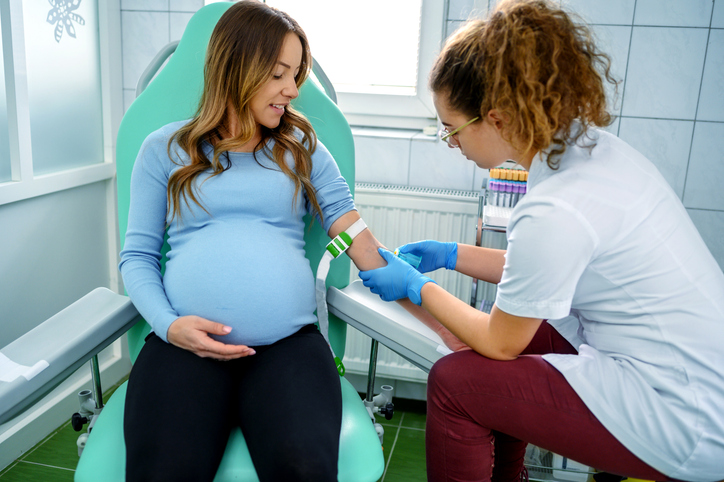
This leaflet discusses the routine pregnancy screening tests (antenatal checks) that should be offered to all pregnant women in the UK. These are screening an... A pregnancy screening test (also known as an prenatali check), aims to detect a disease or condition in the early stages before it causes significant problems, and where treatment can be.

Patient information leaflet
Programma di screening del NHS
Screening involves tests on people without symptoms to check if they have a disease or condition before it causes symptoms. The reason for screening is the expectation that a problem can be discovered in the early stages and either prevented from progressing further or treated before they cause significant problems. Not all conditions have.

Patient information leaflet
Campionamento dei villi coriali
Chorionic villus sampling (CVS) is a procedure that is carried out during pregnancy to diagnose or exclude various chromosomal or genetic conditions. Chorionic villus sampling (CVS) is a procedure that is carried out during early pregnancy. Usually the reason is to see if the developing baby has a chromosomal disorder such as Down's syndrome or a.

Patient information leaflet
Amniocentesi
The most common reason for a pregnant woman to be offered amniocentesis is to see if a developing baby has a chromosomal disorder such as Down's syndrome. Amniocentesi is a procedure that is carried out during pregnancy. The most common reason for a pregnant woman to be offered amniocentesis is to see if her developing baby has a chromosomal.
Patient information leaflet
Strabismo nei bambini
A squint is a condition where the eyes do not always look in exactly the same direction. What is a squint. A squint, also called strabismus, is a condition where the eyes do not line up perfectly together in the direc... A child with a squint may stop processing information from the affected eye, so that it effectively stops seeing. This can lead.
Ulteriori letture e riferimenti
- Peters anomaly; MedlinePlus, National Library of Medicine.
- Bhandari R, Ferri S, Whittaker B, Liu M, Lazzaro DR. Peters anomaly: review of the literature. Cornea. 2011 Aug;30(8):939-44. doi: 10.1097/ICO.0b013e31820156a9.
- Chang JW, Kim JH, Kim SJ, Yu YS. Long-term clinical course and visual outcome associated with Peters' anomaly. Eye (Lond). 2012 Sep;26(9):1237-42. doi: 10.1038/eye.2012.128. Epub 2012 Jun 29.
- Chesneau B, Aubert-Mucca M, Fremont F, Pechmeja J, Soler V, Isidor B, Nizon M, Dollfus H, Kaplan J, Fares-Taie L, Rozet JM, Busa T, Lacombe D, Naudion S, Amiel J, Rio M, Attie-Bitach T, Lesage C, Thouvenin D, Odent S, Morel G, Vincent-Delorme C, Boute O, Vanlerberghe C, Dieux A, Boussion S, Faivre L, Pinson L, Laffargue F, Le Guyader G, Le Meur G, Prieur F, Lambert V, Laudier B, Cottereau E, Ayuso C, Corton-Perez M, Bouneau L, Le Caignec C, Gaston V, Jeanton-Scaramouche C, Dupin-Deguine D, Calvas P, Chassaing N, Plaisancie J. First evidence of SOX2 mutations in Peters' anomaly: Lessons from molecular screening of 95 patients. Clin Genet. 2022 May;101(5-6):494-506. doi: 10.1111/cge.14123. Epub 2022 Feb 27.
- Harissi-Dagher M, Colby K. Anterior segment dysgenesis: Peters anomaly and sclerocornea. Int Ophthalmol Clin. 2008 Spring;48(2):35-42. doi: 10.1097/IIO.0b013e318169526c. No abstract available.
- Najjar DM, Christiansen SP, Bothun ED, Summers CG. Strabismus and amblyopia in bilateral Peters anomaly. J AAPOS. 2006 Jun;10(3):193-7. doi: 10.1016/j.jaapos.2006.01.006.
- Nischal KK. A new approach to the classification of neonatal corneal opacities. Curr Opin Ophthalmol. 2012 Sep;23(5):344-54. doi: 10.1097/ICU.0b013e328356893d.
- Shigeyasu C, Yamada M, Mizuno Y, Yokoi T, Nishina S, Azuma N. Clinical features of anterior segment dysgenesis associated with congenital corneal opacities. Cornea. 2012 Mar;31(3):293-8. doi: 10.1097/ICO.0b013e31820cd2ab.
Partecipa alla conversazione
Condividi i tuoi pensieri o esperienze con gli altri nel nostro comunità di pazienti.

Chiedi, condividi, connettiti.
Esplora le discussioni, fai domande e condividi esperienze su centinaia di argomenti di salute.
Iscriviti alla newsletter di Patient
La tua dose settimanale di consigli sulla salute chiari e affidabili - scritti per aiutarti a sentirti informato, sicuro e in controllo.
Abbonandoti accetti i nostri Informativa sulla Privacy. Puoi annullare l'iscrizione in qualsiasi momento. Non vendiamo mai i tuoi dati.