Pregnancy and physical activity
Peer reviewed by Dr Jacqueline Payne, FRCGPLast updated by Dr Mary Harding, MRCGPLast updated 9 Aug 2017
Meets Patient’s editorial guidelines
- DownloadDownload
- Share
- Language
- Discussion
- Audio Version
- Add to preferred sources on Google
This page has been archived.
It has not been reviewed recently and is not up to date. External links and references may no longer work.
It is important to do some regular physical activity during pregnancy as part of a healthy lifestyle. In most cases, moderate physical activity is safe.
At a glance
Moderate activity during pregnancy is safe for most women and can benefit both mother and baby.
Aim for a mix of aerobic and muscle-strengthening activities.
A good goal is 20-30 minutes of aerobic activity per day.
Avoid activities like scuba diving, contact sports, and those with a high risk of falling.
Stop exercising and seek urgent medical attention if you have chest pain, dizziness, or vaginal bleeding.
If you have certain health conditions, speak to your doctor before starting any physical activity.
Sign up for our free 8-week Healthy Pregnancy course!
Each week we’ll share useful information and essential tips on topics such as nutrition, exercise, mental health, symptoms to look out for, and preparing for childbirth, to help you navigate your pregnancy journey whatever stage you are at.
By subscribing you accept our Privacy Policy. You can unsubscribe at any time. We never sell your data.
For most women, it is important to do some regular physical activity during pregnancy as part of living a healthy lifestyle. In most cases, moderate physical activity during pregnancy is safe and can have benefits for both you and your baby and should not harm either of you.
Aim to do a mixture of both aerobic physical activity (activity which raises the heart rate) and muscle-strengthening physical activity. In general, a minimum of 30 minutes of physical activity every day is recommended. There are, however, some specific sports which are best avoided in pregnancy. If your pregnancy is not straightforward, consult your doctor about the best exercise for you.
What is physical activity?
Physical activity is any activity that you may do that helps to improve or maintain your physical fitness as well as your health in general. It can include:
Everyday activities. For example, walking to work, doing housework, gardening, DIY around the house, or any active or manual work that you may do as part of your job.
Active recreational activities. This includes activities such as dancing, or walking for recreation.
Sport. For example, exercise and fitness training at a gym or during an exercise class, swimming and tennis, etc.
If anyone does regular physical activity, it can have a number of health benefits. See separate leaflet called Physical Activity For Health.
Just because you are pregnant does not usually mean that you should stop any physical activity. Equally, it does not usually mean that you cannot start physical activity. For most women, it is important to do some regular physical activity during pregnancy as part of living a healthy lifestyle. In most cases, moderate physical activity during pregnancy is safe. It can have benefits for both you and your baby and should not harm either of you. However, you do need to be sensible about what type of physical activity you do. This leaflet gives details about physical activity during pregnancy. It includes safe types of physical activity, physical activity benefits and how much physical activity you should do when you are pregnant.
What are the benefits of physical activity during pregnancy?
If you are regularly physically active during pregnancy, this can have a number of benefits, both for you and for your baby. If you are pregnant, regular physical activity has been shown to:
Help you keep a healthy weight during and after your pregnancy.
Help you to sleep better and feel less tired.
Reduce your chances of developing varicose veins.
Reduce the likelihood of swelling of your feet, ankles or hands.
Reduce the chance and severity of anxiety or depression.
Help prevent back pain.
Reduce the risk of developing diabetes during your pregnancy (gestational diabetes). In women who do develop diabetes during their pregnancy, regular physical activity may help to improve the control of their diabetes.
Reduce the risk of problems with high blood pressure during your pregnancy.
Reduce the time it takes to recover after delivery.
If you do some physical activity during your pregnancy you are also more likely to continue this after you have given birth and therefore get the longer-term benefits of physical activity. Amongst other things, these benefits may include some protection against developing heart disease, 'thinning' of the bones (osteoporosis), high blood pressure, colon cancer and breast cancer. Regular physical activity can also help you to manage your weight and keep a healthy weight in the long term.
What type of physical activity should I do whilst pregnant?
Pregnant women should aim, as should non-pregnant women, to do a mixture of both aerobic physical activity and muscle-strengthening physical activity.
Aerobic activity is any activity that makes your heart and lungs work harder. For example, brisk walking, jogging, swimming or dancing. Some normal activities that are part of your daily routine (everyday activities) can also be classed as aerobic activity. Examples include fairly heavy housework, climbing the stairs, or gardening that makes you mildly out of breath and mildly sweaty.
Muscle-strengthening activity can include climbing stairs, walking uphill, lifting or carrying shopping, weight training. Yoga, Pilates or similar resistance exercises that use your major muscle groups are usually suitable in pregnancy. However, let your instructor know you are pregnant. There may be some adaptations needed - for example, positions which are not advisable.
As well as this, pelvic floor exercises are also important during pregnancy and are advised for all pregnant women. They can help to strengthen the muscles of your pelvic floor, which can come under strain whilst you are pregnant, and especially during labour. See separate leaflet called Pelvic Floor Exercises.
The aim of physical activity during pregnancy is that you can maintain a good fitness level throughout your pregnancy, rather than aiming for your peak fitness.
You do need to be careful about the type of physical activity that you choose so as not to risk any harm to yourself or your baby. Some changes obviously take place to your body during pregnancy. For example, hormone changes can affect your muscles and ligaments. Because of this, your joints can become more lax and more mobile during pregnancy. If you are not careful and, depending on the type of physical activity that you do, this can increase your chance of injury.
The following is some advice about the type of physical activity to avoid (or think carefully before doing) during pregnancy:
After 16 weeks of pregnancy, you should not exercise while you are lying on your back. This is because one of your main blood vessels in your body (called your vena cava) can get squashed by the growing baby if you lie in this position. This can make you feel light-headed and you may possibly faint.
You should not scuba dive during pregnancy because your developing baby is at risk of developing problems such as decompression sickness. (When you return to normal atmospheric pressure on surfacing after diving, bubbles of nitrogen gas can form in your baby's bloodstream and block the circulation in small blood vessels in their brain and elsewhere.)
Think carefully and be cautious if you are considering activities where you may be more likely to lose your balance and fall. Falling might injure your tummy (abdomen) and possibly injure your developing baby. Such activities include horse riding, downhill skiing, ice hockey, gymnastics and outdoor cycling.
During contact sports, or other sports where you might accidentally be hit, you risk being hit in your abdomen. These sports are not generally advised during pregnancy. Such sports include basketball, football, squash, judo, boxing, kickboxing, etc.
Walking is a very good physical activity whilst you are pregnant. Swimming is also good. Special aquanatal classes or other exercise classes specifically aimed at pregnant women run in many areas. If you are doing another exercise class that is not dedicated to pregnant women, do let your instructor know that you are pregnant. Also, you should always remember to warm up and cool down at the beginning and end of each session.
Try to build physical activity into part of your everyday life. Take the stairs and not the lift at work or in the shopping centre. Take a brisk walk at lunchtime. Try not to sit for long periods in front of the television or in front of a computer. Walk instead of driving to the shops, etc.
How much physical activity should I do whilst pregnant?
If you are someone who exercised regularly before you were pregnant
In general, provided the type of physical activity is sensible (see above), you can try to keep up with your usual level of physical activity for as long as it feels comfortable.
However, it is normal that as your pregnancy goes along, you will have to slow down the intensity of your physical activity and you will not be able to exercise to the same level as before. Listen to your body. Ask your doctor or midwife for advice about your usual physical activity programme and how this should be adapted during your pregnancy.
A good goal to aim for is 20-30 minutes of aerobic physical activity per day whilst you are pregnant. Avoid doing high-intensity exercise for more than 45 minutes at a time.
If you are someone who has not been very physically active before pregnancy
If this applies to you, it would not be sensible to suddenly start an intensive physical activity programme. Start with 15 minutes of physical activity three times a week. You can then increase this gradually to 30-minute sessions four times a week and then to 30 minutes every day.
You should aim to do moderate-intensity physical activity. This means that you get warm, mildly out of breath and mildly sweaty. A good tool that you can use to measure the intensity of your physical activity is the talk test. You should aim to still be able to talk and hold a conversation whilst you are doing physical activity. If you can do this, you are probably exercising at the right level or intensity. If you become too breathless to talk whilst you are doing physical activity, it probably means that you are doing too much.
Is physical activity during pregnancy safe for all women?
Physical activity during pregnancy is safe for most women. However, there are some pregnant women who should speak to their doctor or midwife before doing any physical activity during their pregnancy. Their doctor or midwife will be able to advise about whether it is safe for them to take part in physical activity. These include pregnant women with:
Known heart problems.
Known lung disease.
Vaginal bleeding that continues throughout their pregnancy.
High blood pressure during their pregnancy.
A history of early (preterm) labour in the past.
Any signs of preterm labour during this pregnancy.
Premature rupture of their membranes.
Known weakness of the neck of the womb (cervix), including women who have had a cervical stitch (cervical cerclage).
Placenta praevia (where the placenta lies low down in the womb (uterus) or over the cervix).
Signs that their baby may be small-for-dates on ultrasound scanning during this pregnancy.
A twin or multiple pregnancy (triplets, quadruplets, etc).
Poorly controlled diabetes during their pregnancy.
Poorly controlled fits (seizures) during their pregnancy.
Poorly controlled thyroid disease during their pregnancy.
Anaemia during their pregnancy.
Bone or joint problems that may affect their ability to exercise.
An eating disorder such as anorexia.
You should also speak with your doctor or midwife before you start any physical activity during pregnancy if you:
Smoke more than 20 cigarettes a day.
Are someone who normally does not do much physical activity at all.
Are very overweight (have a body mass index of more than 40).
Is there any reason why I should stop exercising during pregnancy?
As mentioned above, there are many benefits of doing regular physical activity whilst you are pregnant. And generally, the benefits of exercising during pregnancy by far and away outweigh any risks. However, there are a few things that you should watch out for. You should stop exercising and seek urgent medical attention if you develop:
Excessive shortness of breath.
Chest pain or a 'thumping heart' (palpitations).
Dizziness or feeling faint.
Painful contractions, signs of labour or any leakage of amniotic fluid.
Vaginal bleeding.
Excessive tiredness.
Tummy (abdominal), pelvic or back pain.
A severe headache.
Feelings of muscle weakness.
Calf pain or swelling.
Concerns that your baby is moving less.
Some other points about physical activity during pregnancy
There are some other things that you should be careful about when doing physical activity while you are pregnant:
Take care not to overheat during exercise. Make sure that you drink plenty of fluids while you are exercising and avoid exercising in hot weather.
Don't let your blood sugar levels drop too low. If you are doing a lot of physical activity, make sure that you eat enough calories to allow for the level of physical activity that you are doing.
If you are travelling to altitudes of 2,500 m or higher, you should take care. Rest as much as possible during the first four to five days that you are there. This is because over-exerting yourself at such altitudes can reduce the flow of blood to your womb (uterus). This can mean that the flow of blood to your placenta and the baby is reduced. After a few days, your body starts to get used to being at this higher altitude and starts to compensate for this.
Avoid swimming or exercising in water with temperatures above 32°C.
Physical activity after your baby is born
Again, regular physical activity after your baby is born can have a number of benefits. Regular physical activity after you have given birth can:
Help you lose weight and get back into shape.
Increase your energy levels.
Improve your mood.
Mean that you are less likely to develop anxiety or postnatal depression.
Help to strengthen your pelvic floor muscles and reduce your chance of developing stress incontinence.
If you are breast-feeding and doing moderate exercise (the 30 minutes of moderate-intensity exercise as described above), this should not reduce the quantity or the quality of your breast milk or have any knock-on effects on your baby.
However, you still need to be sensible with your physical activity after you have given birth. It is generally advised that you can start walking, doing pelvic floor exercises and stretching immediately after birth provided that you have had a normal vaginal delivery with no complications. You should gradually increase your physical activity to build up to your pre-pregnancy levels. If you have had a caesarean section, you should ask your doctor or midwife to advise you about when it is safe for you to start physical activity. In general, it is not usually recommended to start until after your postnatal check at 6-8 weeks.
Patient picks for General pregnancy information
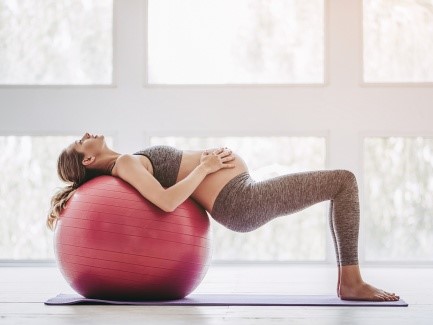
Pregnancy
Diet and lifestyle during pregnancy
Pregnancy can be a very exciting time for most people. It can also make some people feel anxious about what they should (or should not) be doing for their own and their baby's health.
by Dr Hayley Willacy, FRCGP
Pregnancy
Pregnancy and smoking
If you smoke and you are pregnant or planning to become pregnant, you are strongly advised to stop to benefit your health and the health of your baby.
by Dr Mary Harding, MRCGP
Frequently asked questions
Can I continue with my usual fitness instructor if they are not specifically trained for pregnant women?
Yes, you can generally continue with another exercise class that is not specifically for pregnant women, but it is important to always inform your instructor that you are pregnant. They may need to suggest adaptations for certain exercises.
What is considered 'moderate intensity' exercise during pregnancy?
Moderate-intensity physical activity means you should feel warm, mildly out of breath, and mildly sweaty. A good way to check is the 'talk test': you should still be able to hold a conversation while exercising. If you become too breathless to talk, you are likely exercising too intensely.
How soon after giving birth can I start exercising again?
If you've had a normal vaginal delivery without complications, you can usually start walking, doing pelvic floor exercises, and stretching immediately after birth. You should gradually increase your activity. If you had a caesarean section, you should get advice from your doctor or midwife, as it's generally not recommended to start until after your postnatal check at 6-8 weeks.
What kind of everyday activities count as physical activity during pregnancy?
Everyday activities like walking to work, doing housework, gardening, DIY, or active manual work as part of your job all count. Additionally, active recreational activities such as dancing or walking for leisure can contribute to your physical activity levels.
Are there any specific exercises or activities that help strengthen the pelvic floor muscles during pregnancy?
Pelvic floor exercises are specifically advised for all pregnant women. They can help to strengthen the muscles of your pelvic floor, which can be put under strain during pregnancy and labour.
Further reading and references
- Antenatal care for uncomplicated pregnancies; NICE Clinical Guideline (March 2008 - updated February 2019)
- Management of women with obesity in pregnancy; Royal College of Obstetricians and Gynaecologists and Centre for Maternal and Child Enquiries (March 2010)
- Smoking: stopping in pregnancy and after childbirth; NICE Public health guideline, June 2010
- Weight management before, during and after pregnancy; NICE Public Health Guideline (July 2010)
- Pregnancy: occupational aspects of management, Royal College of Physicians and the Faculty of Occupational Medicine (2013)
- Fetal Alcohol Spectrum Disorders; Centers for Disease Control and Prevention
- Blackburn C et al; Facing the challenge and shaping the future for primary and secondary aged students with Foetal Alcohol Spectrum Disorders (FAS-eDProject) Literature Review, National Organisation for Foetal Alcohol Syndrome - UK, September 2009
- Pattemore PK; Tobacco or healthy children: the two cannot co-exist. Front Pediatr. 2013 Aug 23;1:20. doi: 10.3389/fped.2013.00020.
- De-Regil LM, Pena-Rosas JP, Fernandez-Gaxiola AC, et al; Effects and safety of periconceptional oral folate supplementation for preventing birth defects. Cochrane Database Syst Rev. 2015 Dec 14;12:CD007950. doi: 10.1002/14651858.CD007950.pub3.
- Monahan M, Boelaert K, Jolly K, et al; Costs and benefits of iodine supplementation for pregnant women in a mildly to moderately iodine-deficient population: a modelling analysis. Lancet Diabetes Endocrinol. 2015 Sep;3(9):715-22. doi: 10.1016/S2213-8587(15)00212-0. Epub 2015 Aug 9.
- E-cigarettes: an evidence update; Public Health England, August 2015
- Chamberlain C, O'Mara-Eves A, Porter J, et al; Psychosocial interventions for supporting women to stop smoking in pregnancy. Cochrane Database Syst Rev. 2017 Feb 14;2:CD001055. doi: 10.1002/14651858.CD001055.pub5.
- Use of electronic cigarettes in pregnancy: A guide for midwives and other health professionals; The Smoking in Pregnancy Challenge Group
- Evenson KR, Barakat R, Brown WJ, et al; Guidelines for Physical Activity during Pregnancy: Comparisons From Around the World. Am J Lifestyle Med. 2014 Mar;8(2):102-121.
- Physical Activity and Exercise During Pregnancy and the Postpartum Period; The American College of Obstetricians and Gynaecologists (ACOG) Committee Opinion, December 2015
- Newton ER, May L; Adaptation of Maternal-Fetal Physiology to Exercise in Pregnancy: The Basis of Guidelines for Physical Activity in Pregnancy. Clin Med Insights Womens Health. 2017 Feb 23;10:1179562X17693224. doi: 10.1177/1179562X17693224. eCollection 2017.
- Harrison AL, Shields N, Taylor NF, et al; Exercise improves glycaemic control in women diagnosed with gestational diabetes mellitus: a systematic review. J Physiother. 2016 Oct;62(4):188-96. doi: 10.1016/j.jphys.2016.08.003. Epub 2016 Aug 22.
- De-Regil LM, Palacios C, Lombardo LK, et al; Vitamin D supplementation for women during pregnancy. Cochrane Database Syst Rev. 2016 Jan 14;(1):CD008873. doi: 10.1002/14651858.CD008873.pub3.
- The Pregnancy Book; Dept of Health, 2009 (archived content)
- UK Chief Medical Officers’ Low Risk Drinking Guidelines; GOV.UK, August 2016
- Jahanfar S, Jaafar SH; Effects of restricted caffeine intake by mother on fetal, neonatal and pregnancy outcomes. Cochrane Database Syst Rev. 2015 Jun 9;(6):CD006965. doi: 10.1002/14651858.CD006965.pub4.
- Chen LW, Wu Y, Neelakantan N, et al; Maternal caffeine intake during pregnancy is associated with risk of low birth weight: a systematic review and dose-response meta-analysis. BMC Med. 2014 Sep 19;12:174. doi: 10.1186/s12916-014-0174-6.
About the authorView full bio

Dr Mary Harding, MRCGP
General Practitioner, Medical Author
BA, MA, MB, BChir, MRCGP, DFFP
Dr Mary Harding qualified from Cambridge University medical school in 1989.
About the reviewerView full bio

Dr Jacqueline Payne, FRCGP
General Practitioner, Medical Author
MB, BS, DFFP, DRCOG, FRCGP
Jacqueline was a GP in Kendal, Cumbria for 25 years, where she trained young GPs for the RCGP and was an Instructing Doctor for the FSRH.
Article history
The information on this page is written and peer reviewed by qualified clinicians.
Article also available in English, German, Spanish, French, Italian, Portuguese, Hindi, Hebrew, Arabic, and Swedish.
9 Aug 2017 | Latest version
Join the conversation
Share your thoughts or experiences with others in our patient communities.

Ask, share, connect.
Browse discussions, ask questions, and share experiences across hundreds of health topics.

Feeling unwell?
Assess your symptoms online for free
Sign up to the Patient newsletter
Your weekly dose of clear, trustworthy health advice - written to help you feel informed, confident and in control.
By subscribing you accept our Privacy Policy. You can unsubscribe at any time. We never sell your data.
More in pregnancy
- Abortion
- Assisted delivery
- Baby-led weaning
- Bottle-feeding your baby
- Colic in babies and infants
- Condom
- Contraception after having a baby
- Contraceptive hormone pills, patches and rings
- Contraceptive injection
- Emergency contraception
- Food poisoning
- Hydrocele in infants
- Nappy rash
- Pelvic pain in women
- Planning to become pregnant
- Postpartum endometritis
- Pre-eclampsia
- Progestogen-only contraceptive pill
- Retinopathy of prematurity
- Right lower quadrant pain in pregnancy