lamin A/C
Ultimo aggiornamento 19 Nov 2025
Rispetta le linee guida editoriali
- ScaricaScarica
- Condividi
- Language
- Discussione
- Ask Patient
- Versione audio
- Aggiungi alle fonti preferite su Google
L LMNA gene provides instructions for making several slightly different proteins called lamins. The two major proteins produced from this gene, lamin A and lamin C, are made in most of the body's cells. These proteins are made up of a nearly identical sequence of protein building blocks (amino acids). The small difference in the sequence makes lamin A longer than lamin C.
Scelte video per GenesVideo library
Normal function
L LMNA gene provides instructions for making several slightly different proteins called lamins. The two major proteins produced from this gene, lamin A and lamin C, are made in most of the body's cells. These proteins are made up of a nearly identical sequence of protein building blocks (amino acids). The small difference in the sequence makes lamin A longer than lamin C.
Lamins A and C are structural proteins called intermediate filament proteins. Intermediate filaments provide stability and strength to cells. Lamins A and C are supporting (scaffolding) components of the nuclear envelope, which is a structure that surrounds the nucleus in cells. Specifically, these proteins are located in the nuclear lamina, a mesh-like layer of intermediate filaments and other proteins that is attached to the inner membrane of the nuclear envelope. The nuclear envelope regulates the movement of molecules into and out of the nucleus. Lamins A and C are also found inside the nucleus, and researchers believe the proteins may play a role in regulating the activity (expression) of certain genes.
The lamin A protein must be processed within the cell before becoming part of the lamina. Its initial form, called prelamin A, undergoes a complex series of steps that are necessary for the protein to be inserted into the lamina. Lamin C does not have to undergo this processing before becoming part of the lamina.
Conditions referring to this gene or chromosome
Altri nomi
LMN1
LMNA_HUMAN
Related patient information and medicines

Patient information leaflet
Clostridioides difficile
Infection with Clostridioides difficile (sometimes just called 'C. diff') most commonly occurs in people who have recently had a course of antibiotics and are in hospital. Symptoms can range from mild diarrhoea to a life-threatening inflammation of the bowel. What is Clostridioides difficile. Clostridioides difficile (C. difficile) is a germ.

Patient information leaflet
Taglio cesareo
A caesarean section (C-section) may be planned (elective caesarean section) or unplanned (including emergency or crash caesarean sections). What is a caesarean section. Caesarean section is an operation in which a cut is made in your tummy (abdomen) and in the wall of your womb (uterus) so that your baby can be delivered without passing down.

Patient information leaflet
Tosse virale
Most coughs are caused by viral infections and usually soon go. This leaflet gives some tips on what to do and discusses which symptoms may indicate a more serious illness. Viral infections commonly affect the throat (larynx), the main airway (trachea), or the airways going into the lungs (bronchi). These infections are sometimes called.

Patient information leaflet
Negligenza medica
Has given you a poor service and not put things right. There is a separate Health Service Ombudsman for England, Scotland, Wales and Northern Ireland. In the UK, the governing bodies are: The General Medical Council (GMC), for doctors. Medical negligence (also called clinical negligence) is when a clinician fails to provide a patient with adequate.

Patient information leaflet
Calcolatore dell'ovulazione
Open the ovulation calculator How does the ovulation calculator work. The ovulation calculator uses the date of your last period and your average cycle length to estimate your fertile window — the days when you're most likely to conceive. Ovulation usually happens about 14 days before your next period. By predicting this window, the tool helps.
Patient information leaflet
Streptococco A
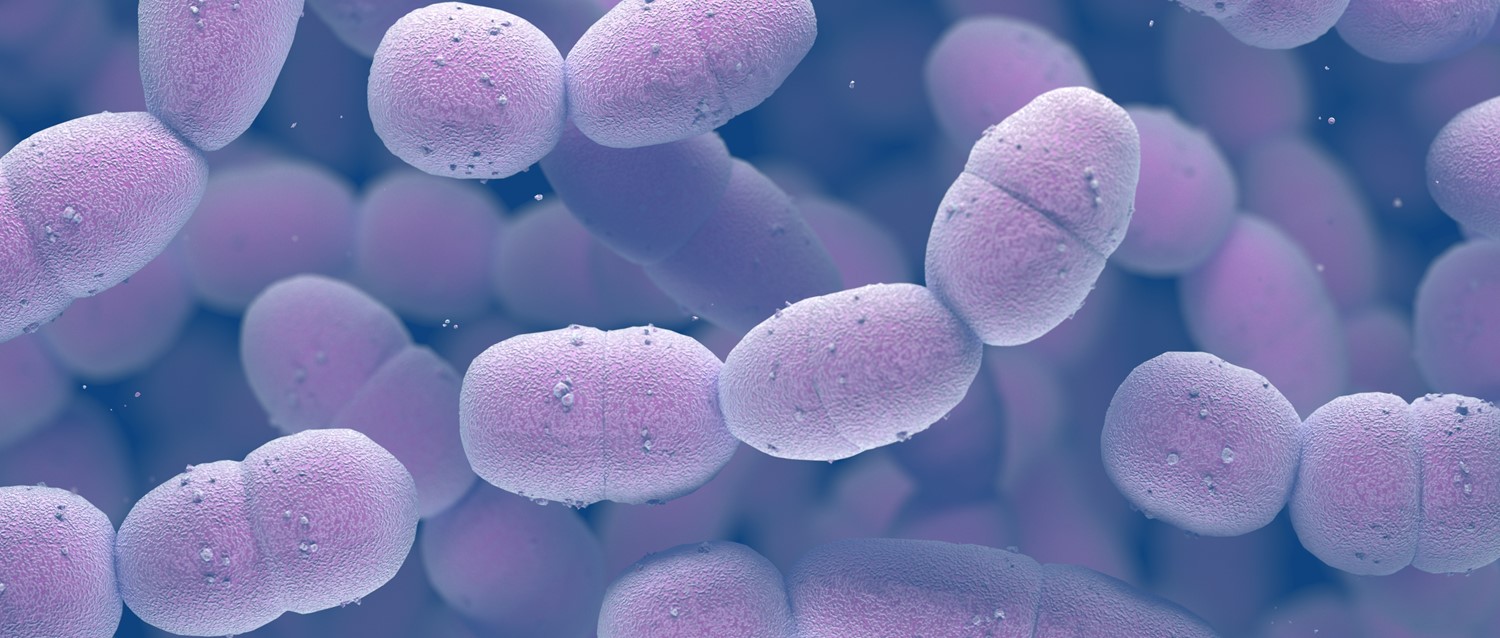
Strep A, or Group A streptococcus, è a common type of bacteria, which has been recognised as a cause of infections for many years. Most Group A streptococcus infections are mild, but in rare cases, these can cause serious illness and even death. Strep A, or Group A streptococcus (GAS), is a type of bacteria, with the scientific name Streptococcus.
Ulteriori letture e riferimenti
- lamin A/C; MedlinePlus, National Library of Medicine.
- Arbustini E, Favalli V, Narula N. LMNA Mutations Associated With Mild and Late-Onset Phenotype: The Case of the Dutch Founder Mutation p.(Arg331Gln). Circ Cardiovasc Genet. 2017 Aug;10(4):e001816. doi: 10.1161/CIRCGENETICS.117.001816. No abstract available.
- Bidault G, Vatier C, Capeau J, Vigouroux C, Bereziat V. LMNA-linked lipodystrophies: from altered fat distribution to cellular alterations. Biochem Soc Trans. 2011 Dec;39(6):1752-7. doi: 10.1042/BST20110675.
- Bonne G, Quijano-Roy S. Emery-Dreifuss muscular dystrophy, laminopathies, and other nuclear envelopathies. Handb Clin Neurol. 2013;113:1367-76. doi: 10.1016/B978-0-444-59565-2.00007-1.
- Carboni N, Mateddu A, Marrosu G, Cocco E, Marrosu MG. Genetic and clinical characteristics of skeletal and cardiac muscle in patients with lamin A/C gene mutations. Muscle Nerve. 2013 Aug;48(2):161-70. doi: 10.1002/mus.23827. Epub 2013 Jun 28.
- Carboni N, Politano L, Floris M, Mateddu A, Solla E, Olla S, Maggi L, Antonietta Maioli M, Piras R, Cocco E, Marrosu G, Giovanna Marrosu M. Overlapping syndromes in laminopathies: a meta-analysis of the reported literature. Acta Myol. 2013 May;32(1):7-17.
- De Sandre-Giovannoli A, Bernard R, Cau P, Navarro C, Amiel J, Boccaccio I, Lyonnet S, Stewart CL, Munnich A, Le Merrer M, Levy N. Lamin a truncation in Hutchinson-Gilford progeria. Science. 2003 Jun 27;300(5628):2055. doi: 10.1126/science.1084125. Epub 2003 Apr 17. No abstract available.
- Eriksson M, Brown WT, Gordon LB, Glynn MW, Singer J, Scott L, Erdos MR, Robbins CM, Moses TY, Berglund P, Dutra A, Pak E, Durkin S, Csoka AB, Boehnke M, Glover TW, Collins FS. Recurrent de novo point mutations in lamin A cause Hutchinson-Gilford progeria syndrome. Nature. 2003 May 15;423(6937):293-8. doi: 10.1038/nature01629. Epub 2003 Apr 25.
- Fernandez-Pombo A, Diaz-Lopez EJ, Castro AI, Sanchez-Iglesias S, Cobelo-Gomez S, Prado-Morana T, Araujo-Vilar D. Clinical Spectrum of LMNA-Associated Type 2 Familial Partial Lipodystrophy: A Systematic Review. Cells. 2023 Feb 24;12(5):725. doi: 10.3390/cells12050725.
- Friesen M, Cowan CA. FPLD2 LMNA mutation R482W dysregulates iPSC-derived adipocyte function and lipid metabolism. Biochem Biophys Res Commun. 2018 Jan 1;495(1):254-260. doi: 10.1016/j.bbrc.2017.11.008. Epub 2017 Nov 3.
- Garg A, Subramanyam L, Agarwal AK, Simha V, Levine B, D'Apice MR, Novelli G, Crow Y. Atypical progeroid syndrome due to heterozygous missense LMNA mutations. J Clin Endocrinol Metab. 2009 Dec;94(12):4971-83. doi: 10.1210/jc.2009-0472. Epub 2009 Oct 29.
- Guenantin AC, Briand N, Bidault G, Afonso P, Bereziat V, Vatier C, Lascols O, Caron-Debarle M, Capeau J, Vigouroux C. Nuclear envelope-related lipodystrophies. Semin Cell Dev Biol. 2014 May;29:148-57. doi: 10.1016/j.semcdb.2013.12.015. Epub 2013 Dec 30.
- Lightbourne M, Brown RJ. Genetics of Lipodystrophy. Endocrinol Metab Clin North Am. 2017 Jun;46(2):539-554. doi: 10.1016/j.ecl.2017.01.012. Epub 2017 Feb 22.
- Maung JN, Oral EA, MacDougald OA. Lamin A/C in health, laminopathies, and familial partial lipodystrophy 2. Trends Endocrinol Metab. 2026 Sep;37(9):826-852. doi: 10.1016/j.tem.2026.01.010. Epub 2026 Mar 17.
- Muchir A, Bonne G, van der Kooi AJ, van Meegen M, Baas F, Bolhuis PA, de Visser M, Schwartz K. Identification of mutations in the gene encoding lamins A/C in autosomal dominant limb girdle muscular dystrophy with atrioventricular conduction disturbances (LGMD1B). Hum Mol Genet. 2000 May 22;9(9):1453-9. doi: 10.1093/hmg/9.9.1453.
- Navarro CL, De Sandre-Giovannoli A, Bernard R, Boccaccio I, Boyer A, Genevieve D, Hadj-Rabia S, Gaudy-Marqueste C, Smitt HS, Vabres P, Faivre L, Verloes A, Van Essen T, Flori E, Hennekam R, Beemer FA, Laurent N, Le Merrer M, Cau P, Levy N. Lamin A and ZMPSTE24 (FACE-1) defects cause nuclear disorganization and identify restrictive dermopathy as a lethal neonatal laminopathy. Hum Mol Genet. 2004 Oct 15;13(20):2493-503. doi: 10.1093/hmg/ddh265. Epub 2004 Aug 18.
- Novelli G, Muchir A, Sangiuolo F, Helbling-Leclerc A, D'Apice MR, Massart C, Capon F, Sbraccia P, Federici M, Lauro R, Tudisco C, Pallotta R, Scarano G, Dallapiccola B, Merlini L, Bonne G. Mandibuloacral dysplasia is caused by a mutation in LMNA-encoding lamin A/C. Am J Hum Genet. 2002 Aug;71(2):426-31. doi: 10.1086/341908. Epub 2002 Jun 19.
- Petillo R, D'Ambrosio P, Torella A, Taglia A, Picillo E, Testori A, Ergoli M, Nigro G, Piluso G, Nigro V, Politano L. Novel mutations in LMNA A/C gene and associated phenotypes. Acta Myol. 2015 Dec;34(2-3):116-9.
- Quijano-Roy S, Mbieleu B, Bonnemann CG, Jeannet PY, Colomer J, Clarke NF, Cuisset JM, Roper H, De Meirleir L, D'Amico A, Ben Yaou R, Nascimento A, Barois A, Demay L, Bertini E, Ferreiro A, Sewry CA, Romero NB, Ryan M, Muntoni F, Guicheney P, Richard P, Bonne G, Estournet B. De novo LMNA mutations cause a new form of congenital muscular dystrophy. Ann Neurol. 2008 Aug;64(2):177-86. doi: 10.1002/ana.21417.
- Sinkovec M, Petrovic D, Volk M, Peterlin B. Familial progressive sinoatrial and atrioventricular conduction disease of adult onset with sudden death, dilated cardiomyopathy, and brachydactyly. A new type of heart-hand syndrome? Clin Genet. 2005 Aug;68(2):155-60. doi: 10.1111/j.1399-0004.2005.00476.x.
- Varlet AA, Helfer E, Badens C. Molecular and Mechanobiological Pathways Related to the Physiopathology of FPLD2. Cells. 2020 Aug 23;9(9):1947. doi: 10.3390/cells9091947.
- Vigouroux C, Guenantin AC, Vatier C, Capel E, Le Dour C, Afonso P, Bidault G, Bereziat V, Lascols O, Capeau J, Briand N, Jeru I. Lipodystrophic syndromes due to LMNA mutations: recent developments on biomolecular aspects, pathophysiological hypotheses and therapeutic perspectives. Nucleus. 2018 Jan 1;9(1):235-248. doi: 10.1080/19491034.2018.1456217.
- Zaragoza MV, Hakim SA, Hoang V, Elliott AM. Heart-hand syndrome IV: a second family with LMNA-related cardiomyopathy and brachydactyly. Clin Genet. 2017 Mar;91(3):499-500. doi: 10.1111/cge.12870. Epub 2016 Oct 10.
Storia dell'articolo
Articolo disponibile anche in Inglese, Tedesco, Spagnolo, Francese, Italiano, Portoghese, Hindi, Ebraico, Arabo, and Svedese.
19 Nov 2025 | Ultima versione
1 maggio 2018 | Pubblicato originariamente
Condividi i tuoi pensieri o esperienze con gli altri nel nostro comunità di pazienti.
Accesso semplice a trattamenti affidabili e servizi sanitari online.
Common conditions
Get help with common conditions through the NHS, without a GP appointment.
 Sinusite acuta
 Tonsillite batterica
 Impetigine
 Punture di insetti
 Fuoco di Sant'AntonioInfezioni delle vie urinarie (IVU)
Iscriviti alla newsletter di Patient
La tua dose settimanale di consigli sulla salute chiari e affidabili - scritti per aiutarti a sentirti informato, sicuro e in controllo.
Abbonandoti accetti i nostri Informativa sulla Privacy. Puoi annullare l'iscrizione in qualsiasi momento. Non vendiamo mai i tuoi dati.