What is video physiotherapy and who can it help?
Peer reviewed by Dr Sarah JarvisAuthored by Allie AndersonOriginally published 25 Jun 2020
Meets Patient’s editorial guidelines
- DownloadDownload
- Share
- Language
- Discussion
- Audio Version
- Add to preferred sources on Google
Just like other healthcare professionals, many physiotherapists have moved to online provision of their services during the coronavirus pandemic. Previously the domain only of technology enthusiasts and forward-thinking practitioners, video consultations for all manner of complaints are now becoming part of the 'new normal'. But just what is involved, and could advancements in digital provision replace traditional physiotherapy as we know it?
What is remote physiotherapy?
"Remote physiotherapy is any number of different platforms that physiotherapists can use to deliver physiotherapy when they're not beside the patient," explains Euan McComiskie, chartered physiotherapist and health informatics lead for the Chartered Society of Physiotherapists.
In its most basic form it could be a simple telephone consultation, McComiskie adds, while at the other extreme it involves artificial intelligence-led chatbots. These use complex computer algorithms to interpret information patients input via text or speech, to assist physiotherapists in assessing and diagnosing the patient's condition.
Many NHS physiotherapy services offer telephone consultations. Other forms of remote physiotherapy seem to be limited across most NHS CCGs but are more widely available through private physiotherapists.
“Patients answer questions through their keyboard that the chatbot puts to them about their condition, their symptoms, how long it's lasted and severity, for example, and that can then be gathered by the physiotherapist so when they're with the patient - either remotely or in person - they don't have to go through all that questioning again,” McComiskie says. “It makes the process a bit more efficient, and can relieve some of the demand on physio services by accelerating the flow of patients getting good-quality care.”
This type of advanced digital provision is currently being piloted in small pockets across the UK, where it is proving beneficial for both patients and therapists, and showing potential for delivering significant cost savings. However, it's not yet widely available, so most physiotherapists offering remote consultations are using more familiar methods like FaceTime, Skype and Zoom, for example.
Others have been embracing specific telehealth and digital health platforms, which enable them to not only see patients remotely, but also track their progress and monitor any problems along the way. Many offer a combination of different methods to suit each individual patient's preference.
You can even book remote private video physiotherapy consultations via Patient Access.
The hands-off approach
Contrary to popular belief, physiotherapy doesn't necessarily require the therapist to place their hands on the patient - for instance, to demonstrate a range of movement or provide physical support through an exercise. In fact, the range of conditions and circumstances that lend themselves to remote physio is almost limitless. They include:
Musculoskeletal conditions.
Orthopaedic rehabilitation.
Physical activity programmes for people with long-term conditions.
Neck and back pain.
Sports injuries.
According to McComiskie, remote physiotherapy is suitable for any patient who finds it difficult to get to a clinic. "This could be because of work commitments, caring responsibilities, transport issues or financial reasons," he says. "For those people - and there are large numbers of them - a remote consultation tends to work really well. Some patients don't find it easy to open up in face-to-face appointments for whatever reason, so being in their own environment might encourage them to do so and work with the physio a bit more."
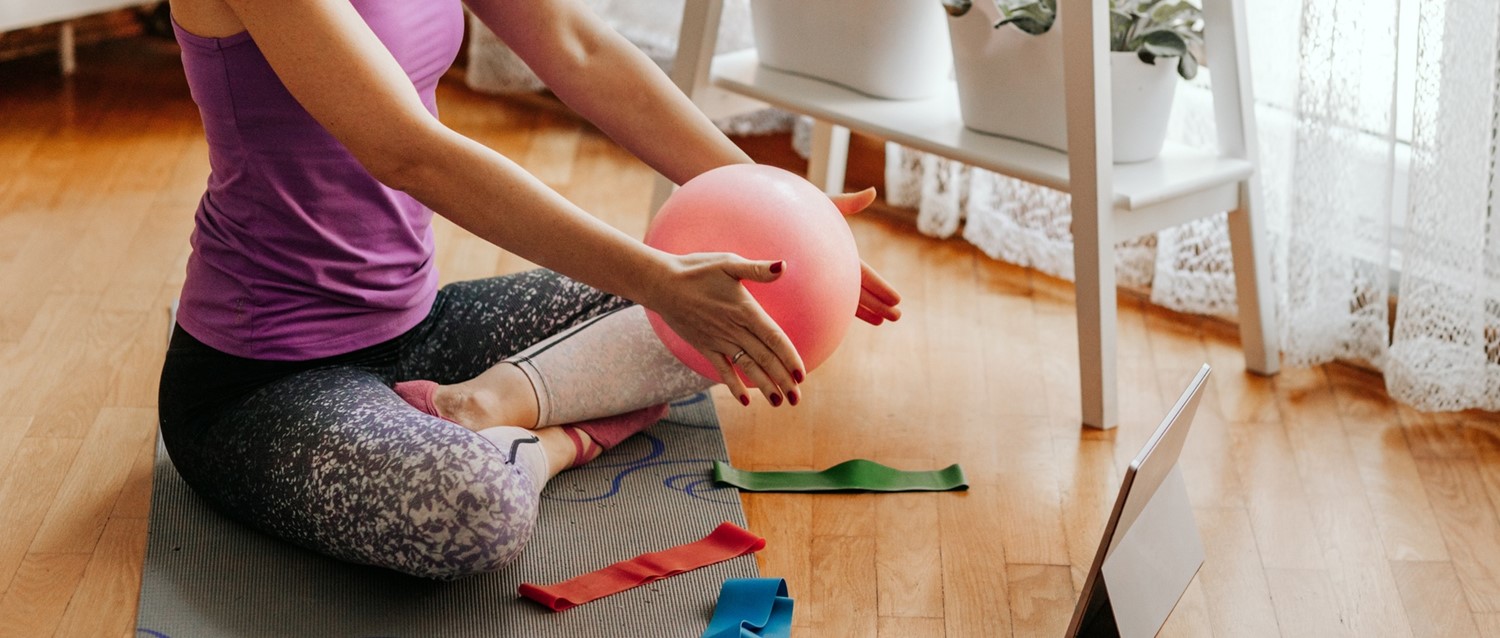
A consultation typically involves the patient and therapist connecting via video link, with the physio demonstrating movements and exercises and then watching the patient repeat them, so they can see whether they're performing them as they should or need correction or adaptation, as well as giving advice and education.
One distinct advantage of this remote approach over traditional face-to-face appointments is that the therapist can witness the patient in their own environment, and see the challenges they face in everyday life first-hand.
There are risks, too - a patient could misinterpret what the therapist is showing them if they're not in the same room, for example - but as McComiskie points out, that risk is present during traditional in-person appointments, too.
"Physios spend quite a bit of time checking back in with a patient after they've given them some exercises to do, to make sure they're doing the right thing and keeping the right form, or to progress or regress the exercise as their symptoms are reacting," he says. "Even in those groups where you might think remote physiotherapy is a lesser option, it has proven to be as good, if not even better, than the traditional offering."
One size doesn't fit all
Of course, there are some people for whom remote physiotherapy isn't an option, like those with particularly complex health needs, or language or communication difficulties. Currently, with the UK still in lockdown, many of these patients are simply having to wait to see a physiotherapist until in-person appointments resume.
"There is a relatively small number of patients who fit the criteria to continue with face-to-face physiotherapy during lockdown," says McComiskie, who adds that the therapist will always carry out thorough infection control procedures to make the appointment as safe as possible. This includes wearing appropriate PPE, employing social distancing measures where possible, and cleaning the environment.
"We should still be seeing patients in person whose care would be escalated to other parts of the healthcare system if we didn't - for example, cases that would result in a GP appointment, an A&E attendance, or a hospital admission," McComiskie comments.
Additionally, physiotherapists will see some patients who are being discharged from hospital, those with acute symptoms that might signal a serious problem, such as a spinal cord injury, and existing patients whose function or rehabilitation is likely to decline without a face-to-face appointment.
Robot physiotherapists of the future?
Remote healthcare isn't a completely new phenomenon: clinicians - including physiotherapists - have been using telephone triage for decades. But since then, uptake of advancements in remote offerings have been slow, especially across the NHS.
Everything changed at a furious pace earlier this year, when the COVID-19 outbreak forced providers in all settings to embrace alternatives to face-to-face routine healthcare appointments.
"We've seen significantly more remote physiotherapy in the last eight weeks than we've seen in the previous eight years," McComiskie says. "The scale and speed of implementation in the last few months is something we've never seen before."
In a post-lockdown world, it's likely that remote physiotherapy will remain and increasingly more patients will use digital platforms powered by artificial intelligence and chatbots. "We hope that now clinicians and patients have seen the possibilities, it becomes more the 'new normal' in terms of how healthcare is delivered in the UK," he concludes. "But it is not and will not be a replacement for a physiotherapist."
Patient picks for Physiotherapy

Treatment and medication
What does a women's health physiotherapist do?
From constipation and incontinence to painful sex and vaginal prolapse, women's health physiotherapy can help to relieve symptoms that affect the pelvic floor. We look at the potential benefits of treatment and what to expect from an appointment.
by Sally Turner

Treatment and medication
How physiotherapy can help people with lung conditions
Lung conditions can affect every part of someone's life and well-being, from movement to socialising. For people affected, experts recommend pulmonary physiotherapy to help manage and improve the condition. So how exactly does it work, and how could it benefit you?
by Allie Anderson
About the authorView full bio
Authored by

Allie Anderson
Freelance Journalist
NCTJ
Allie Anderson is an NCTJ-qualified journalist with many years of experience writing and editing for a range of publishers.
About the reviewerView full bio

Dr Sarah Jarvis
Clinical Consultant
MA (Cantab), BM, BCh (Oxon), DRCOG, FRCGP, MBE
After training in medicine at Cambridge and Oxford, Dr Sarah Jarvis MBE became a GP.
Article history
Article also available in English, German, Spanish, French, Italian, Portuguese, Hindi, Hebrew, Arabic, and Swedish.
25 Jun 2020 | Originally published
Authored by:
Allie AndersonPeer reviewed by
Dr Sarah Jarvis
Join the conversation
Share your thoughts or experiences with others in our patient communities.

Ask, share, connect.
Browse discussions, ask questions, and share experiences across hundreds of health topics.

Feeling unwell?
Assess your symptoms online for free
Sign up to the Patient newsletter
Your weekly dose of clear, trustworthy health advice - written to help you feel informed, confident and in control.
By subscribing you accept our Privacy Policy. You can unsubscribe at any time. We never sell your data.