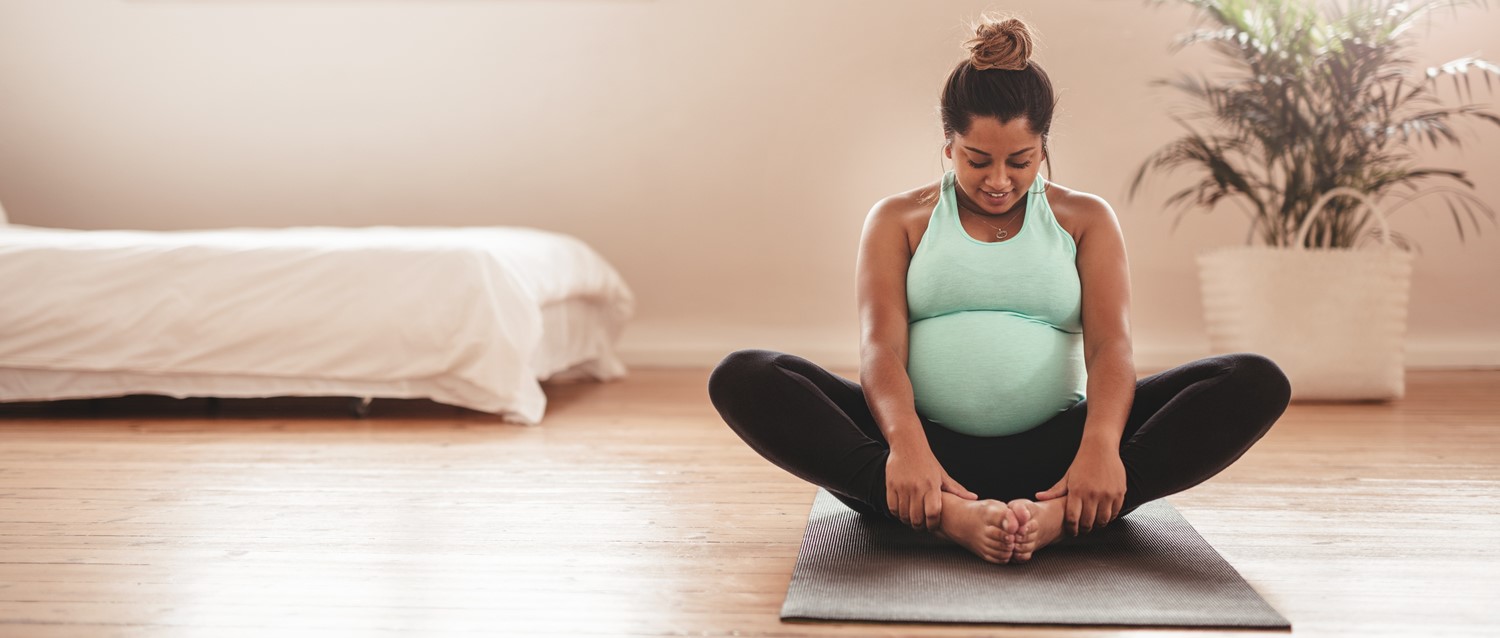
How to safely maintain your exercise routine while pregnant
Peer reviewed by Dr Sarah JarvisAuthored by Abi MillarOriginally published 10 Apr 2018
Meets Patient’s editorial guidelines
- DownloadDownload
- Share
- Language
- Discussion
- Audio Version
- Add to preferred sources on Google
Exercising during pregnancy can be a confusing subject, with a wealth of conflicting advice doing the rounds. For every runner who goes into labour after running a marathon, or weightlifter who takes part in a CrossFit inspired maternity shoot, there's another woman who's convinced exercise will harm the baby.
Sign up for our free 8-week Healthy Pregnancy course!
Each week we’ll share useful information and essential tips on topics such as nutrition, exercise, mental health, symptoms to look out for, and preparing for childbirth, to help you navigate your pregnancy journey whatever stage you are at.
By subscribing you accept our Privacy Policy. You can unsubscribe at any time. We never sell your data.
It doesn't help that, for many years, the advice given to pregnant women erred on the side of the conservative. Historically, women were instructed to get as much rest as possible, and to refrain from doing anything too athletic. Doctors were concerned that exercise might increase the risk of preterm delivery, or cause stress to the growing fetus.
These days, however, there's a wealth of evidence pointing to the benefits of keeping active. According to a 2017 paper in the Journal of the American Medical Association, the majority of pregnant women are actually not exercising enough. Aside from the effects on physical fitness, this can contribute to extra weight gain, and may lead to worse outcomes for the mother and child.
"Few pregnant women achieve an appropriate level of exercise in part because they are uncertain about the types and amount of exercise that can and should be performed," wrote the authors.
So how much should you really be exercising if you're pregnant? And how can you go about doing so in a safe and enjoyable way?
Keep exercising as normal
As Taylor Anderson - a personal trainer and new mother - explains, exercising during pregnancy is generally beneficial.
"Research shows being physically active can reduce back pain, swelling and constipation in pregnant women, help prevent or treat gestational diabetes and even help women cope better with labour pain," she says. "There does seem to be a common misconception that exercise somehow puts the baby at risk, but as long as you keep your activity levels to what your body was used to pre-pregnancy there is no foundation for this fear."
As a general rule of thumb it's best not to try anything new - now isn't the time to take up HIIT or high-speed mountain biking - but this may not apply if you've never been active at all. According to the JAMA paper, 'pregnancy is now considered an ideal time not only for continuing but also for initiating an active lifestyle,' in part because the mother is likely to be more motivated than normal.
For women who were previously sedentary, Anderson recommends walking, swimming and pregnancy-specific yoga - as well as those all-important pelvic floor exercises. Conversely, if you've always been super-fit, you can keep up your normal routine for as long as you feel comfortable.
"For the most part, you can safely continue to exercise in the same ways you always have, with a few modifications," she says.
Luke Hughes, the founder and owner of Origym, says he generally advises pregnant clients to avoid 'risky' sports (ie anything with a chance of falling), contact sports (where there's a chance of being hit in the abdomen), or anything too high-impact.
"This still leaves a wide variety of aerobic, cardiovascular, and resistance training-based exercises, which will be plenty in order to stay in shape," he says. "Indeed, activities like CrossFit, which are typically considered high intensity and competitive, can be scaled to suit the requirements of pregnant clients. As long as you're feeling the benefits, rather than it causing pain or adverse symptoms, then exercise should be encouraged."
Listen to your body
The Royal College of Obstetricians and Gynaecologists (RCOG) recommends taking extra care during pregnancy, and making sure not to exhaust yourself. In other words, moderate exercise is best.
"As a general rule, pregnant women should be able to hold a conversation while they exercise," says Professor Janice Rymer, vice president of education for RCOG. "If women experience any unusual symptoms, they should stop exercising and contact their healthcare professional immediately. Those with a medical condition should seek advice from their doctor or midwife before exercising."
Of course, what constitutes 'moderate' will vary from person to person, depending on your fitness level and how your pregnancy is progressing. The important thing is to listen to your body and avoid anything that feels uncomfortable.
"For instance, planks and running are generally considered safe during the first trimester - but both felt uncomfortable to me from very early on in my pregnancy, so I avoided them," says Anderson.
Additional tips
Depending on where you are in the pregnancy, there are a few other points to bear in mind. For instance, while all pregnant women should try to avoid overheating, that's particularly true during the first trimester, as there's some evidence to suggest overheating in early pregnancy may be linked to birth defects. Anderson recommends skipping any workouts where you're likely to get too hot, such as Bikram yoga or really intense spin classes.
Later on in the pregnancy, balance can become an issue, so it's important to avoid anything with a risk of falling. It's also best to take care with callisthenic or jumping-type exercises, as higher levels of the hormone relaxin can put you at greater risk of injuries.
If you lift weights, it's best not to lift anything heavier than what you're used to, and maybe even reduce the weight as you approach your due date.
"In the second and third trimester, avoid any exercises where you lie flat on your back for an extended period of time, as the weight of your uterus can compress major blood vessels and restrict circulation for both you and baby," adds Taylor Anderson. "Also avoid any exercises that cause the belly to 'cone', like planks and crunches, as this can increase the risk of diastasis recti post-pregnancy, which is a significant separation of the abdominal muscles."
Staying motivated
Of course, when confronted with a long list of 'don'ts' it may be tempting to eschew your workout altogether. However, as long as you approach things sensibly and don't overdo it, you may find that staying active can vastly improve your experience of pregnancy.
If you're not sure, it may pay to see a personal trainer with a prenatal and postnatal specialism, who can help you develop a fitness programme that suits your needs.
As Anderson points out, staying active can help counteract many of the negative side effects of pregnancy, not least by helping you sleep better and increasing your energy levels.
"Exercise can help a woman connect with her body and feel powerful and strong during pregnancy," she says. "This is especially important during a time when her body seems to change daily and she has the marathon that is childbirth on the horizon!"
Patient picks for Diet and lifestyle

Pregnancy
Can you drink coffee when you are pregnant?
Finding out you're pregnant can lead to a range of emotions, from excitement and joy to anxiety and fear. There is a lot to get your head around, including changes to your diet. Although most foods and drinks are safe to have during pregnancy, there are certain things to avoid or not have too much of - like overdoing it on caffeine. Read on to find out how much is enough of your daily brew.
by Lawrence Higgins
Pregnancy
How to be vegan when you are pregnant or breastfeeding
An increasing number of people are adopting a vegan diet, swapping meat, dairy and animal products in favour of plant-based alternatives. Although being vegan is safe and healthy, pregnant people and those who are breastfeeding may find themselves missing out on key nutrients without careful planning. So what should you bear in mind if you are vegan and expecting?
by Lydia Smith
About the authorView full bio
Authored by

Abi Millar
Freelance Journalist
BA (Hons), MA
Abi is a freelance journalist with a special interest in health and medicine writing.
About the reviewerView full bio

Dr Sarah Jarvis
Clinical Consultant
MA (Cantab), BM, BCh (Oxon), DRCOG, FRCGP, MBE
After training in medicine at Cambridge and Oxford, Dr Sarah Jarvis MBE became a GP.
Article history
Article also available in English, German, Spanish, French, Italian, Portuguese, Hindi, Hebrew, Arabic, and Swedish.
10 Apr 2018 | Originally published
Authored by:
Abi MillarPeer reviewed by
Dr Sarah Jarvis
Join the conversation
Share your thoughts or experiences with others in our patient communities.

Ask, share, connect.
Browse discussions, ask questions, and share experiences across hundreds of health topics.

Feeling unwell?
Assess your symptoms online for free
Sign up to the Patient newsletter
Your weekly dose of clear, trustworthy health advice - written to help you feel informed, confident and in control.
By subscribing you accept our Privacy Policy. You can unsubscribe at any time. We never sell your data.