Pelvic floor exercises (Kegel exercises) and stress incontinence
Peer reviewed by Dr Hannah Gronow, MBACPAuthored by Dr Jacqueline Payne, FRCGPOriginally published 20 Sept 2017
Meets Patient’s editorial guidelines
- DownloadDownload
- Share
- Language
- Discussion
- Audio Version
- Add to preferred sources on Google
Pelvic floor exercises, also known as Kegel exercises, have numerous benefits and may help cure stress incontinence. Pelvic floor exercises are also useful to prevent incontinence for women who have had children. In addition, some people feel that having strong pelvic floor muscles heightens the pleasure when having sex.
What are the pelvic floor muscles?
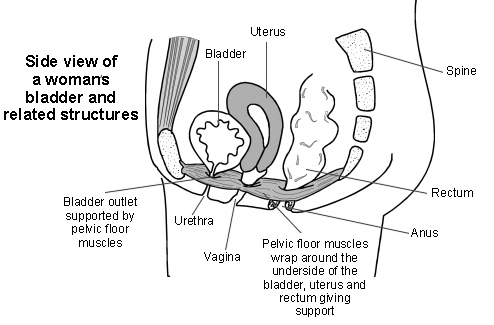
The pelvic floor muscles are a group of muscles that wrap around the underneath of the bladder and rectum. Your doctor may advise that you strengthen your pelvic floor muscles:
If you develop stress incontinence. In stress incontinence, urine leaks when there is a sudden extra pressure ('stress') on the bladder. Urine tends to leak most when you cough, laugh, or exercise (like jump or run). Strengthening the pelvic floor muscles can often cure stress incontinence.
After childbirth. The common reason for the pelvic floor muscles to become weakened is childbirth. If you do pelvic floor muscle exercises after childbirth, it may prevent stress incontinence developing later in life.
Female urinary system
Pelvic floor exercises to treat stress incontinence
Your doctor may refer you to a continence advisor or physiotherapist for advice on the exercises in the case of stress incontinence. They may ask you to do a pelvic floor exercise while they examine you internally, to make sure you are doing them correctly
How do you do pelvic floor exercises correctly?
Sit in a chair with your knees slightly apart. Imagine you are trying to stop wind escaping from your back passage (anus). You will have to squeeze the muscle just above the entrance to the anus. You should feel some movement in the muscle. Don't move your buttocks or legs.
Now imagine you are passing urine and are trying to stop the stream. You will find yourself using slightly different parts of the pelvic floor muscles to the first exercise (ones nearer the front). These are the ones to strengthen.
If you are not sure that you are exercising the right muscles, put a couple of fingers into your vagina. You should feel a gentle squeeze when doing the exercise. Another way to check that you are doing the exercises correctly is to use a mirror. The area between your vagina and your anus will move away from the mirror when you squeeze.
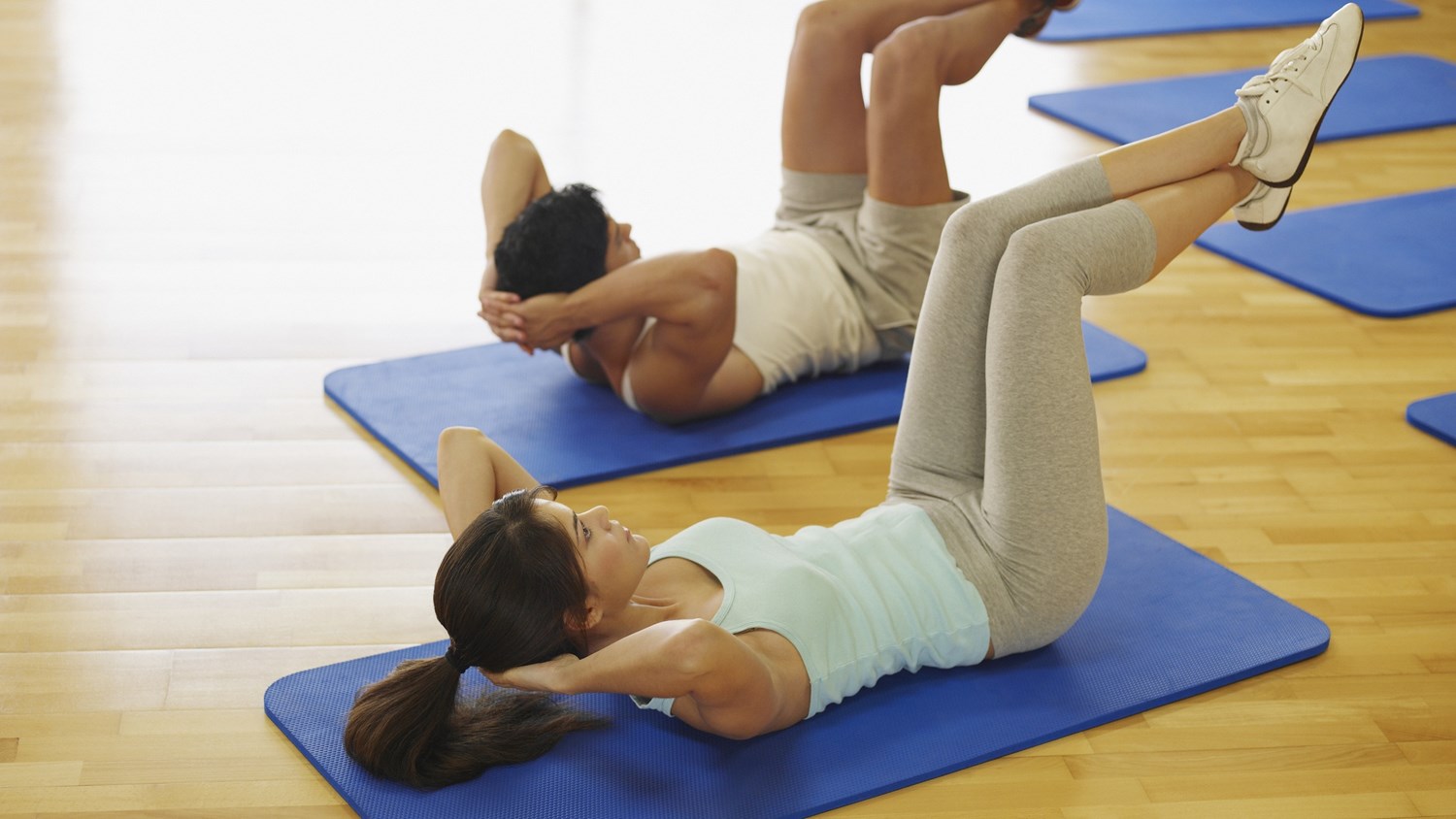
The first few times you try these exercises, you may find it easier to do them lying down.
How to do pelvic floor exercises (Kegels)
You need to do the exercises every day.
Sit, stand or lie with your knees slightly apart. Slowly tighten your pelvic floor muscles under the bladder as hard as you can. Hold to the count of five, then relax. These are called slow pull-ups or long squeezes.
Then do the same exercise quickly and immediately let go again. These are called fast pull-ups or short squeezes.
The aim is to do a long squeeze followed by ten short squeezes, and repeat this cycle at least eight times. It should only take about five minutes.
Aim to do the above exercises at least three times a day.
Ideally, do each set of exercises in different positions. That is, sometimes when sitting, sometimes when standing and sometimes when lying down.
As the muscles become stronger, increase the length of time you hold each slow pull-up or long squeeze. You are doing well if you can hold it each time for a count of 10 (about 10 seconds).
Do not squeeze other muscles at the same time as you squeeze your pelvic floor muscles. For example, do not use any muscles in your back, thighs, or buttocks.
Some people find it difficult to remember to do their exercises; a chart or a reminder on your phone may help.
Try to get into the habit of doing your exercises at other times too, whilst going about everyday life. For example, when brushing your teeth, waiting for the kettle to boil, when washing up, etc.
You may find it helpful to do a 'squeeze' just before you do something that would otherwise cause you to leak, like coughing or lifting.
After several weeks the muscles will start to feel stronger. You may find you can squeeze the pelvic floor muscles for much longer without the muscles feeling tired.
Do pelvic floor exercises make a difference?
It takes time, effort and practice to become good at pelvic floor exercises/Kegels. It is best do these exercises for at least three months to start with. You should start to see benefits after a few weeks. However, it often takes two to five months for most improvement to occur. After this time you may be cured of stress incontinence. If you are not sure that you are doing the correct exercises, ask a doctor, physiotherapist or continence advisor for advice.
If possible, continue exercising as a part of everyday life for the rest of your life. Once incontinence has gone, you may only need to do one or two bouts of exercise each day to keep the pelvic floor muscles strong and toned up and to prevent incontinence from coming back.
Other ways to strengthen the pelvic floor muscles
Sometimes a continence advisor or physiotherapist will advise extra methods if you are having problems or need some extra help performing the pelvic floor exercises. These are in addition to the above exercises. For example:
Electrical stimulation. Sometimes a special electrical device is used to stimulate the pelvic floor muscles with the aim of making them contract and become stronger.
Biofeedback. This is a technique to help you make sure that you exercise the correct muscles. For this, a physiotherapist or continence advisor inserts a small device into your vagina when you are doing the exercises. When you squeeze the right muscles, the device makes a noise (or some other signal such as a display on a computer screen) to let you know that you are squeezing the correct muscles.
Vaginal cones. These are small plastic cones that you put inside your vagina for about 15 minutes, twice a day. The cones come in a set of different weights. At first, the lightest cone is used. You will naturally use your pelvic floor muscles to hold the cone in place. This is how they help you to exercise your pelvic floor muscles. Once you can hold on to the lightest one comfortably, you move up to the next weight and so on.
Other devices. There are various other devices that are sold to help with pelvic floor exercises. Basically, they all rely on placing the device inside the vagina with the aim of helping the pelvic muscles to exercise and squeeze. There is little research evidence to show how well these devices work. It is best to get the advice from a continence advisor or physiotherapist before using any. One general point is that if you use one, it should be in addition to, not instead of, the standard pelvic floor exercises described above.
Pelvic floor exercise tips
If you are not used to doing pelvic floor exercises then perhaps do the exercises as often as described above for the first three months or so. This will strengthen up the pelvic floor muscles. Thereafter, a five-minute spell of pelvic floor exercises once or twice a day should keep the muscles strong and toned up which may help to prevent incontinence from developing in later life.
Patient picks for Bladder

Kidney and urinary tract
Bladder problems men shouldn't ignore
Urinary problems in middle-aged men can be frustrating and embarrassing, and are often caused by an enlarged prostate. However, they may also be indicative of something more serious such as prostate cancer. Our two experts explain why vigilance is important and share their self-help tips.
by Julian Turner

Kidney and urinary tract
Bad bladder habits to avoid
All too many of us have bad bladder habits. LUTS, or lower urinary tract symptoms, get more common with age. The way we treat our bladders can lead to disturbed nights and accidents.
by Dr Sarah Jarvis
About the authorView full bio
Authored by

Dr Jacqueline Payne, FRCGP
General Practitioner, Medical Author
MB, BS, DFFP, DRCOG, FRCGP
Jacqueline was a GP in Kendal, Cumbria for 25 years, where she trained young GPs for the RCGP and was an Instructing Doctor for the FSRH.
About the reviewerView full bio

Dr Hannah Gronow, MBACP
General Practitioner
MB, ChB, MBACP
Hannah qualified as a GP in 1997. She joined EMIS (Patient) as a peer reviewer in August 2006.
Article history
Article also available in English, German, Spanish, French, Italian, Portuguese, Hindi, Hebrew, Arabic, and Swedish.
20 Sept 2017 | Originally published
Authored by:
Dr Jacqueline Payne, FRCGPPeer reviewed by
Dr Hannah Gronow, MBACP
Join the conversation
Share your thoughts or experiences with others in our patient communities.

Ask, share, connect.
Browse discussions, ask questions, and share experiences across hundreds of health topics.

Feeling unwell?
Assess your symptoms online for free
Sign up to the Patient newsletter
Your weekly dose of clear, trustworthy health advice - written to help you feel informed, confident and in control.
By subscribing you accept our Privacy Policy. You can unsubscribe at any time. We never sell your data.