Incontinence chart
Peer reviewed by Dr Helen Huins, MRCGPAuthored by Dr Laurence KnottOriginally published 20 Sept 2017
Meets Patient’s editorial guidelines
- DownloadDownload
- Share
- Language
- Discussion
- Audio Version
- Add to preferred sources on Google
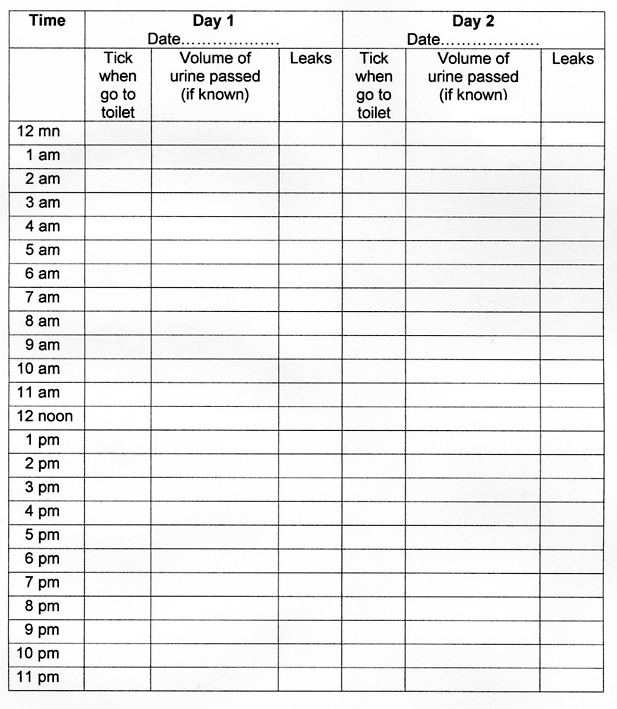
This form is to: 1) Record the times you pass urine, 2) Record the amount of urine you pass on each occasion and 3) Record the times you leak urine (are incontinent).
Tick (to the nearest hour) each time you go to the toilet to pass urine.
If your doctor or nurse asks, when possible, also record the amount (volume) of urine you pass each time. You can use a household measuring jug to do this. If you are away from home and it is inconvenient to measure the amount then just record the time with a tick.
If you leak urine unintentionally, record the times it happens (to the nearest hour). Put one, two or three + signs in the box. + = damp. ++ = wet. +++ = soaking.
Patient picks for Urinary tract infections and symptoms
Kidney and urinary tract
Will a UTI go away on its own?
Urinary tract infections, also known as UTIs and bladder infections, are a common health issue, particularly for women, and can recur with frustrating frequency. We asked a urologist whether it's safe to let a UTI 'run its course', or if antibiotics are always the best treatment.
by Sally Turner

Kidney and urinary tract
Cranberry juice for cystitis: does it work?
Many women swear by cranberry juice as an effective home remedy for painful cystitis symptoms - but are these anecdotes backed by scientific evidence, or is cranberry juice for cystitis just another unsubstantiated myth?
by Amberley Davis
About the authorView full bio

Dr Laurence Knott
General Practitioner, Medical Author
BSc (Hons) Biochemistry, MBBS
Dr Laurence Knott qualified in 1973 and has had extensive experience as a General Practitioner.
About the reviewerView full bio

Dr Helen Huins, MRCGP
General Practitioner, Medical Author
MB, BS, Lond, DCH, DRCOG, MRCGP, JCPTGP, DFFP
Helen qualified at Guy’s Hospital in 1989 and left London in 1990 to settle in the countryside.
Article history
Article also available in English, German, Spanish, French, Italian, Portuguese, Hindi, Hebrew, Arabic, and Swedish.
20 Sept 2017 | Originally published
Authored by:
Dr Laurence KnottPeer reviewed by
Dr Helen Huins, MRCGP
Join the conversation
Share your thoughts or experiences with others in our patient communities.

Ask, share, connect.
Browse discussions, ask questions, and share experiences across hundreds of health topics.

Feeling unwell?
Assess your symptoms online for free
Sign up to the Patient newsletter
Your weekly dose of clear, trustworthy health advice - written to help you feel informed, confident and in control.
By subscribing you accept our Privacy Policy. You can unsubscribe at any time. We never sell your data.
More in kidney and urinary tract
- 9 ways to get rid of a UTI
- Bad bladder habits to avoid
- Bladder problems men shouldn't ignore
- Cranberry juice for cystitis: does it work?
- Cystitis in men
- Honeymoon cystitis: what is it and how to avoid
- How many times should you pee a day?
- How to take good care of your kidneys
- Kidney dialysis treatment options
- Pee yourself laughing? How stand-up comedy can tackle incontinence
- Pelvic floor exercises (Kegel exercises) and stress incontinence
- Video: What is the best way to cure a UTI?
- What causes blood in urine?
- What do kidneys do?
- What is a UTI and how do you get it?
- What to do about constant UTIs
- What your pee says about your health
- Why you constantly need to pee
- Why you need to look after your pelvic floor
- Will a UTI go away on its own?