Healthy Hanukkah food for your weight, heart and diabetes
Peer reviewed by Dr Krishna Vakharia, MRCGPLast updated by Victoria RawLast updated 13 Nov 2024
Meets Patient’s editorial guidelines
- DownloadDownload
- Share
- Language
- Discussion
- Audio Version
- Add to preferred sources on Google
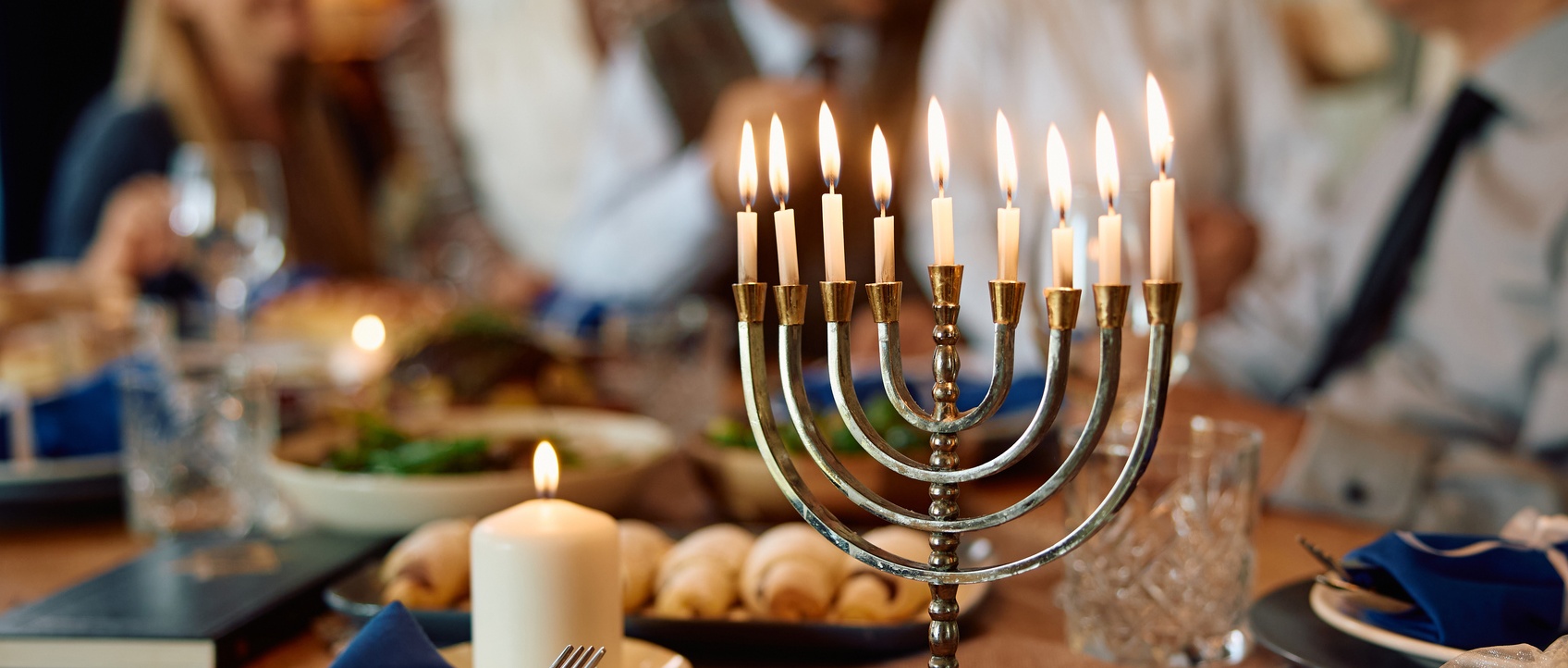
Millions of people across the world will soon be lighting menorahs, exchanging gifts, and eating lots of delicious fried foods in celebration of Hanukkah. From latkes and apple sauce to gelt and sufganiyot, it can be tricky keeping your diet healthy while enjoying the festivities. We share expert tips, handy food swaps, and healthier recipes so that you can continue to look after your weight, heart, or diabetes this Hanukkah.
Sign up for our free 10-week Diabetes course!
Each week, we'll explore a different topic to help you better understand and manage your diabetes, including everyday living and medicines, to mental wellbeing, the latest in diabetes tech, and nutrition.
By subscribing you accept our Privacy Policy. You can unsubscribe at any time. We never sell your data.
Looking after your weight, heart health and diabetes during Hanukkah
Fried food takes on a whole new meaning during the Jewish festival of lights. If you're looking after your weight, heart or diabetes, the advice is to avoid or limit frying foods in oil. Yet during Hanukkah, these foods are a reminder of the oil that burned for eight days - the Hanukkah miracle.
How, then, do you honour and celebrate the tradition of Hanukkah while looking after your health? It all comes down to forward planning, handy food swaps and moderation.
Hanukkah healthy oils
Nurit Raich is a food scientist and holistic nutrition coach who has helped many people with inflammation and blood sugar control.
She says: "Being a passionate foodie and Jewish as well, I am always looking for ways to keep our traditions alive whilst looking after health."
Raich explains that you can keep the tradition of having cooking oil during Hanukkah, so long as you choose the heart healthy options. Use oils that contain high amounts of unsaturated fatty acids, which normally come from plants, instead of the oils that have high amounts of saturated fatty acids, trans-fats or omega-6, which tend to come from animal sources.
"These unhealthy cooking oils can increase your likelihood of heart disease and cause long-term inflammation," she says. "It's important for everyone to aim for an anti-inflammatory diet because long-term inflammation can damage healthy cells, tissues, and organs. In turn, this can cause diabetes, heart disease, cancer, excess weight, arthritis, and dementia among other diseases."
On the other hand, Nurit points out that oils made with unsaturated fatty acids - sometimes called healthy fats - can actually help protect our hearts. One way they do this is by lowering our bad cholesterol - called low-density lipoprotein (LDL) - and raising our good cholesterol, known as high-density lipoprotein (HDL) cholesterol.
Nurit's healthy oil swaps
Replace vegetable, sunflower, canola and corn oil for these heart healthy options.
Extra virgin olive oil
Olive oil is traditionally consumed in the life-extending Mediterranean diet. Extra virgin olive oil is especially beneficial as it is extracted without high heat or added chemicals. It contains naturally occurring chemicals called phenols which are anti-inflammatory, and have blood-vessel expanding actions - both of which have excellent benefits for our heart health.
Olive oil is great for drizzling on top of salads, preparing sauteed dishes or baking, as it has a relatively low smoke point - which is the temperature at which it begins to break down. This means it's not great for deep frying.
Avocado oil
This is where avocado oil can be super beneficial. Also rich in monounsaturated fats, it has a high smoke point which means it is great for frying, as it retains more nutrients during high heat. Frying is a cooking method we should all limit or avoid where possible, but that is often part of the Hanukkah tradition. With a neutral flavour, avocado oil can also be used in baking.
Coconut oil
Coconut oil contains medium-chain fatty acids which can be healthy, so long as we don't consume them too often. In moderation, they can have a positive effect on our brain and hormone health.
Foods to control your sugar levels
If you're going to enjoy sugary treats during the festivities, you can balance this with certain food combinations to help manage sugar crashes, spikes, and cravings.
Nurit says: "One of my top tips is to make sure that you consume healthy fats and proteins alongside any sugary treats you have. For example, if you eat sufganiyot as dessert, try to do this after a meal that includes fish, chicken, or beef, alongside vegetables roasted with olive oil or a good salad with avocado.
“This is because eating protein and healthy fats in each meal can help regulate blood sugar levels by slowing down your digestion of carbohydrates and their sugar content. This means the sugar doesn't enter your bloodstream all in one go, causing high blood sugar, an insulin spike, and a resultant sugar crash and more cravings. Ultimately, this trick can keep you feeling well and more energised over the celebrations."
Nurit's sufganiyot
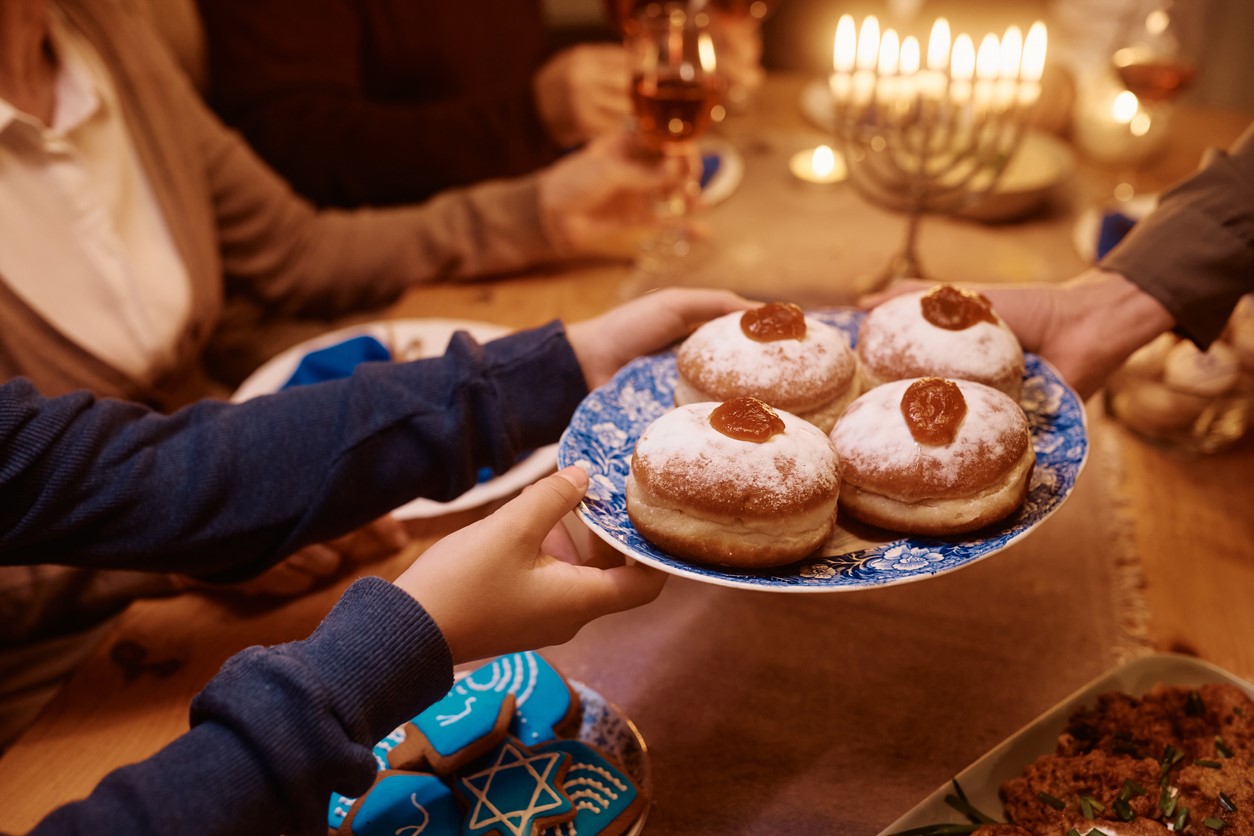
Some sweet Hanukkah treats - like delicious jam-filled sufganiyots - may seem intrinsically unhealthy. It's true that these should always be enjoyed in moderation, but if you have diabetes you can create the sweet jammy filling without causing blood sugar spikes.
"Use monk fruit sweetener instead of sugar for the jam inside the sufganiyot, or for any other dessert baking you do," says Nurit. "The natural sweetness of monk fruit doesn't create sugar spikes, unlike refined granulated sugar."
This is also a handy tip for those who don't have diabetes but are prone to weight gain, as it doesn't trigger the body to store sugar as fat in the same way. Bear in mind though that the combined calories in the dough and filling are still high.
Sufganiyot
Hanukkah food swaps
Registered dietitian Yelena Wheeler has given a lot of dietary advice to people with heart disease and diabetes. Although not raised by practicing Jewish parents, Wheeler has also recently started celebrating Hanukkah for her Jewish children, who really wanted to embrace the traditions. She shares her healthy food swaps for a few festive favourites.
Yelena's latkes
"Latkes are the most traditional food eaten during Hanukkah, and these fried potatoes pancakes are usually served with sour cream and apple sauce," says Yelena. "Here's how you can make them healthier."
Healthier oil - use unrefined avocado oil instead of canola oil. It has a higher smoke point, meaning that it retains more nutrients during cooking, and is a good source of vitamin E. This can help lower both blood pressure and blood sugar levels.
Healthier frying - if you have an air fryer, this requires significantly less oil. This is the best option even when using avocado oil which contains healthy fats, as limiting your fat intake is especially important over Hanukkah celebrations.
Healthier potatoes - swap white potatoes for sweet potatoes which are more heart healthy due to having a higher fibre content and therefore a more gradual effect on blood sugar levels.
Healthier sides - if you favour sour cream with your latkes, replace with fat-free Greek yoghurt. This has a similar sour taste, but even low-fat sour creams have a significantly higher fat content than Greek yoghurt. For apple sauce fans, making it homemade or purchasing one with no sugar added can help blood sugar management, although you'll still need to limit how much you have.
Yelena's beef brisket
Yelena says: "My best healthy food swap tip for brisket is to use other spices instead of salt. Also be careful with how much you put on your plate, and enjoy with a healthy portion of vegetables."
There are many spices you can choose from to pack lots of flavour into your beef, including smoked paprika, chilli, black pepper, cumin, mustard seeds, thyme, coriander and garlic, in any combination you like.
Yelena's challah bread
Yelena says: "Challah bread can be made using whole wheat flour instead of white flour. This contains more fibre - among other nutrients - which can help lower your cholesterol and balance your blood sugar levels."
White flour is a refined flour, meaning the wheat has undergone manufacturing that has removed many of its nutrients - unlike whole grain products.
Yelena's matzo ball soup
"Matzo ball soup is also a holiday tradition," says Yelena. "Certain ingredients, like carrots and dill, are incredibly healthy. However, the matzo ball itself can be very high in carbohydrates. I recommend making the matzo ball from almond flour to increase your fibre intake, for better blood sugar and cholesterol management."
Healthy Hanukkah recipes
Sweet potato latkes
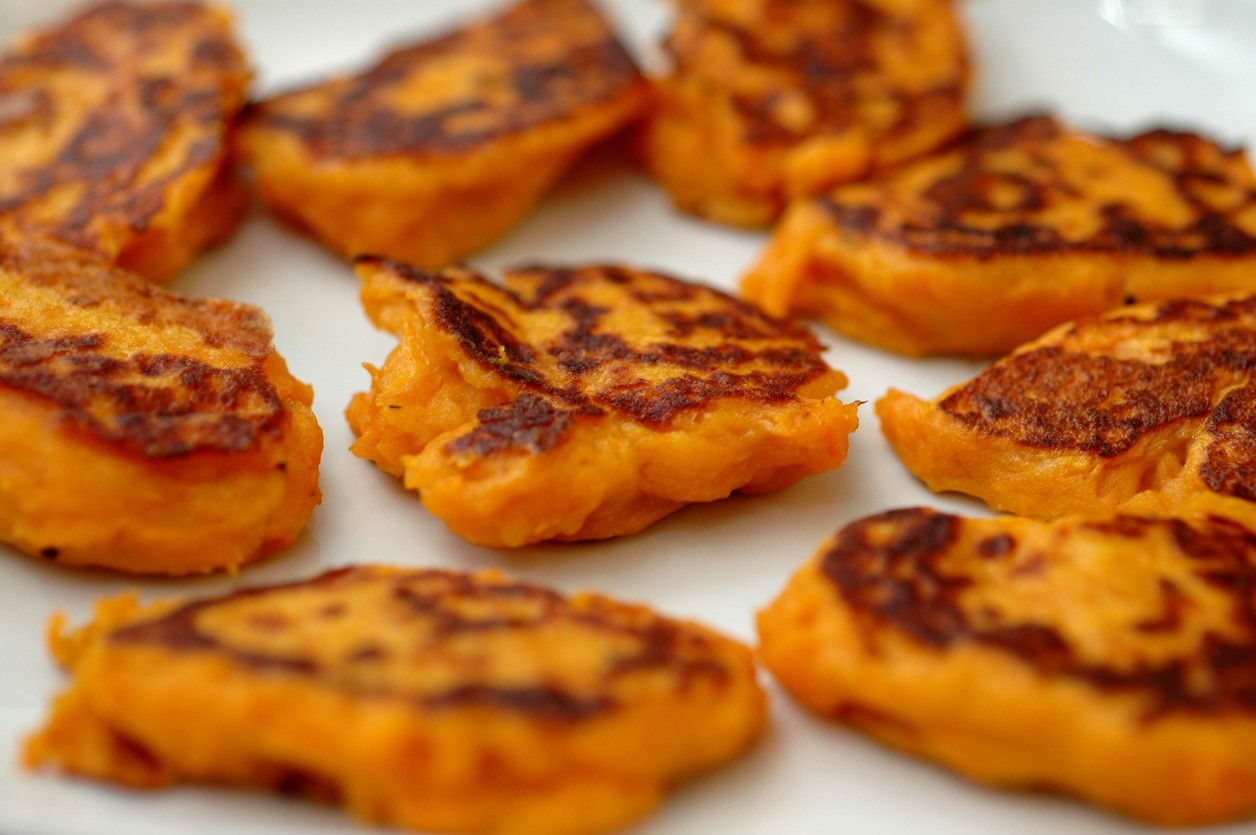
Nurit's sweet potato latkes
Makes around 26 latkes
450 grams (g) or 1 pound (lb) sweet potatoes, peeled and coarsely grated.
2 spring onions, finely chopped.
35g (1/3 cup) all-purpose flour or gluten-free flour.
2 large eggs, lightly beaten.
1 teaspoon (tsp) salt.
1/2 tsp black pepper.
175 millilitres (ml) or 3/4 cup avocado oil
Cinnamon to sprinkle on top (optional).
Step 1
Stir together sweet potatoes, spring onions, flour, eggs, salt, and pepper.
Step 2
Heat avocado oil in a deep 12-inch nonstick skillet over moderately high heat until hot but not smoking.
Working in batches of 4, spoon 25g (1/8 cup) sweet potato mixture per latke into oil and flatten to 3-inch diameter with a slotted spatula. Reduce heat to moderate and cook until golden, around 90 seconds on each side.
Transfer latkes with spatula to paper towels to drain. Sprinkle with cinnamon and serve.
Nurit’s olive oil roasted carrots with dates, mint and pistachios
900g (2 lbs) carrots peeled
½ tsp sea salt flakes or Himalayan salt.
Black pepper, to taste.
2 tbsp extra virgin olive oil.
1 and 1/2 tbsp balsamic glaze.
6 dates pitted and chopped into 8-10 pieces.
2 tbsp fresh mint leaves, roughly cut - leave some leaves intact to place on top as decoration.
Dry roasted pistachios.
Step 1
Heat oven to 200°C (400°F)
Stir together carrots, olive oil, salt and pepper and place in a roasting tin.
Place in the oven for 25 minutes or until cooked, but still a bit crunchy, and slightly caramelized.
Step 2
Remove from the oven and place on a serving dish.
Drizzle with balsamic glaze and sprinkle with dates, mint and pistachios and serve.
Nurit's sugar-free mixed berries jam/compote
This can be served with your latkes or used for sufganiyot filling.
450g (1lb) frozen organic mixed berries.
2 tbsp chia seeds - if you like it thicker just add an extra ½ or 1 tbsp.
2 tbsp monk fruit sweetener.
Instructions
Place ingredients in a pan on medium heat and stir to combine, bring to a boil and then simmer for 10 minutes.
Patient picks for Healthy eating
Diet and nutrition
How to eat well when it's hard to shop and cook
Ultra-processed food - such as canned soup and ready meals - is an obvious go-to for people who struggle to shop and cook. But a new study finds it is associated with a higher risk of all-cause mortality. Can we avoid it?
by Ellie Broughton

Diet and nutrition
Do you need to drink eight glasses of water a day?
The European Food Standards Agency reminds us that up to 30% of our fluid intake comes from food - especially fruit and vegetables. They recommend that adults should make up the rest with about three pints (for women) and four pints (for men) of non-alcoholic fluids a day.
by Dr Sarah Jarvis
About the authorView full bio
Updated by

Victoria Raw
Feature Writer
BA (Hons), English Literature
Victoria is a content writer at Patient, with special interests spanning mental wellbeing, societal trends and the impact of technology on our health.
Authored by

Amberley Davis
Senior writer
BA (Hons), CPD
Amberley is a senior writer with Patient and has written extensively on a range of health and wellbeing topics.
About the reviewerView full bio

Dr Krishna Vakharia, MRCGP
Chief Medical Officer for Health, Optum UK
MBChB, MRCGP(2013), BMedSci (hons), DFSRH, DRCOG, PGDipDerm (Distn)
Dr Krishna Vakharia is an NHS GP. She is also a regular examiner for the postgraduate Diploma in Practical Dermatology at Cardiff University as well as being the Chief Medical Officer for health at Optum UK.
Article history
Article also available in English, German, Spanish, French, Italian, Portuguese, Hindi, Hebrew, Arabic, and Swedish.
Next review due: 13 Nov 2027
13 Nov 2024 | Latest version
1 Dec 2023 | Originally published
Authored by:
Amberley Davis
Join the conversation
Share your thoughts or experiences with others in our patient communities.

Ask, share, connect.
Browse discussions, ask questions, and share experiences across hundreds of health topics.

Feeling unwell?
Assess your symptoms online for free
Sign up to the Patient newsletter
Your weekly dose of clear, trustworthy health advice - written to help you feel informed, confident and in control.
By subscribing you accept our Privacy Policy. You can unsubscribe at any time. We never sell your data.