Why do we need sleep?
Peer reviewed by Dr Ben Janaway, MBChBAuthored by Dr Ben Janaway, MBChBOriginally published 9 Oct 2017
Meets Patient’s editorial guidelines
- DownloadDownload
- Share
- Language
- Discussion
- Audio Version
- Add to preferred sources on Google
Sleep can be hard to get. How often have you drearily slumped through the day, your mind drawn to your sheets? So just how important is sleep? What happens when you don't get enough and can we 'cheat' sleep?
What happens when you sleep?
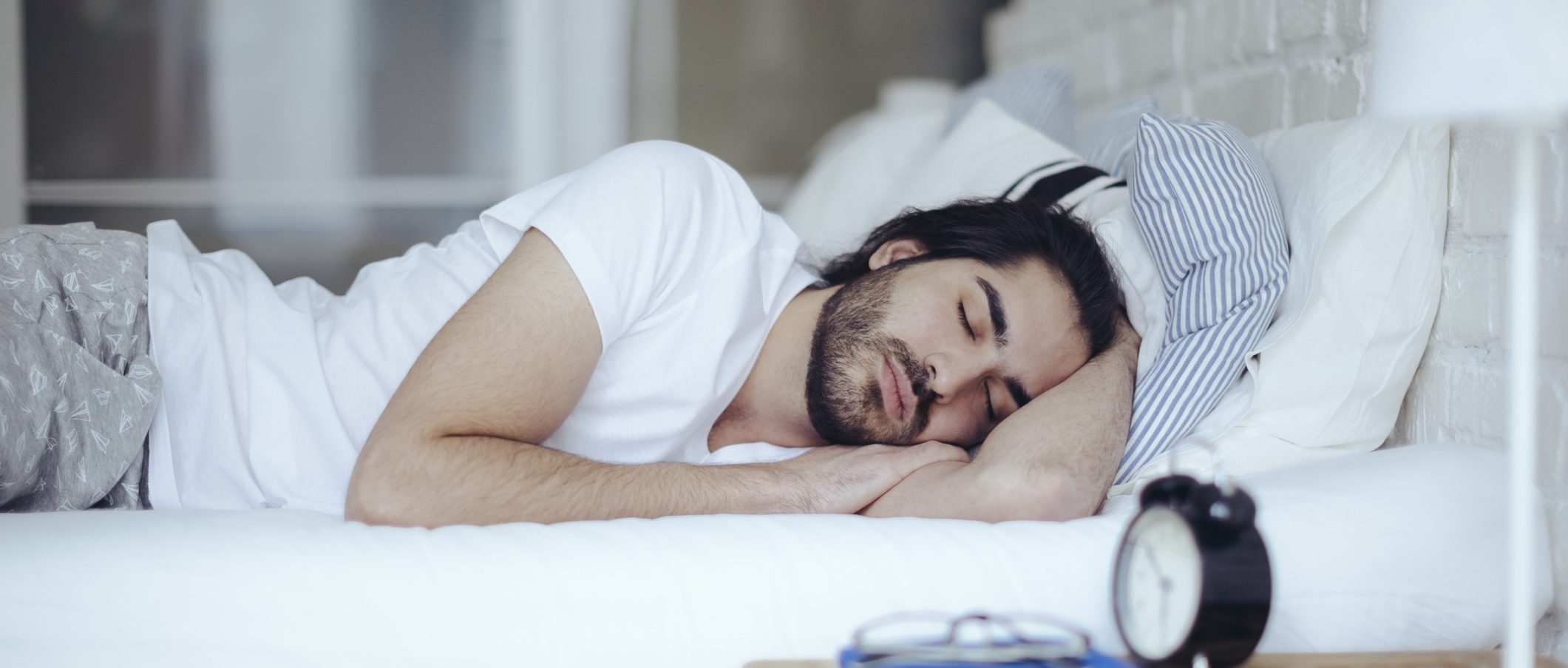
Sleep is a state of rest, accompanied by changes in our brain, body and chemistry. It seems to be a necessary part of human survival - we've evolved to sleep 7-9 hours within a 24-hour cycle. Technically speaking, sleep is is induced by the release of the hormone, melatonin and demand for some shut-eye changes with age; we tend to need less as we get older.
Sleep works in 90-110 minute cycles. By monitoring brain waves, muscle tension, and observation, scientists have split these cycles up into core 'stages of sleep':
Non-rapid eye-movement (NREM) - the first minutes of sleep (with low-voltage 'theta' brain waves found on brain readings) through to deep sleep (with slow 'delta' waves).
Rapid eye movement (REM) - where the body becomes intermittently paralysed and we dream.
The first total cycle lasts up to 100 minutes, but later cycles can take up to two hours.
Why do you sleep?
All of us dream, whether we remember it or not.
An entire industry has evolved from the 'interpretation' of dreams, but chances are that sleep isn't there purely for psychoanalysts. Although no consensus has been reached on overall purpose, several theories have emerged
Adaptive Inactivity/Preservation Theory
Evolutionary scientists suggest the sleep is a Darwinian survival mechanism. They suggest that sleep fills an 'ecological niche', where 'staying still' is beneficial to an animal's survival. An example is weak prey sleeping, unseen, during a time when strong predators would attack.
Energy Conservation Theory
An older theory suggests that sleep is a period of time when the body conserves energy. Many scientists think this a grander part of the inactivity theory. Although studies show that a decrease in body temperature does occur with sleep, others have shown that sleep quality doesn't seem to change with temperature.
Restorative Theory
Some evidence suggests that sleep may 'repair' brain and body functions that are worn out during the day. An increase in 'slow wave' activity in highly active brain regions may suggest that the brain is undergoing repair. Other studies show that sleep-deprived people tend to lose their immune function and that some processes such as muscle growth, tissue repair, and protein synthesis occur mainly, or only, during sleep.
Brain Plasticity Theory
Although specific measurements disagree, some believe that sleep functions to help the brain consolidate memory, forget useless information, learn and make sense of the world. 'Synaptic plasticity' is the ability of brain cells to reorganise and strengthen connections, which is thought to increase overnight. This theory also argues that infants sleep more because they have more to learn.
Although each provides a reasonable explanation, all theories are still speculative and it's likely to be a combination of these reasons.
What happens if we have too little?
Many of us sleep too little. In fact, some are genetically predisposed to sleeping less. But what happens when we get too little?
In 1965 American student Randy Garder stayed awake for 11 days and 24 minutes. Within days Gardner could not focus, became less coordinated and began to hallucinate. His mood deteriorated and he began to forget things and became paranoid. By day 11, he could barely speak, he was slurring his words and was almost mute. His cognitive functions were all but gone.
Symptoms of progressive sleep deprivation include disturbances in vision, reduced perception, slower reactions, reduced logical thinking, reduced sex drive, poor decision-making, poor mood and increased aggression.
Severe and prolonged deprivation can cause or worsen tremors, muscle jerks, poor speech and slurring. To put it in perspective, 24-hours of sleep deprivation inhibits your concentration and reactions as much as drinking equal to the drink-drive limit (a blood alcohol level of 0.1%).
And much worse, the long-term effects of sleep deprivation are an increased risk of obesity, diabetes, infection and cardiovascular disease in later life.
It is clear that not everyone will develop all of these symptoms, and severity is based on individual experience and level of deprivation. But it is also clear that deprivation hampers performance even in small doses. Worse still, repeated bouts of small sleep deprivation can produce similar symptoms of one extended course. For shift workers, such as nurses, carers, logistic drivers and shelf-stackers, life can quickly become difficult. Perhaps even dangerous.
No wonder it's a form of torture condemned by the UN.
Can you sleep too much?
Oversleeping also brings health risks.
Studies show an increased risk of diabetes, heart disease, and death. However, associated problems such as depression may have something to do with it. A large study found that oversleeping was linked with obesity and mental health issues.
It is worth noting that it is unclear as to which causes which. Obesity can increase total sleep length due to apnoea (periods of not breathing), as can depression.
What is the perfect amount of sleep?
Average healthy adults sleep between 7-9 hours a night, but some sleep much less or more. A large review published in Sleep Health Journal suggests that the perfect time is different with age:
Newborns - 14 to 17 hours.
Infants - 12 to 15 hours.
Toddlers - 11 to 14 hours.
Preschoolers - 10 to 13 hours.
School-aged children - 9 to 11 hours.
Teenagers - 8 to 10 hours.
Adults - 7 to 9 hours.
Older adults - 7 to 8 hours.
What alternative sleep patterns are there?
Some evangelise over 'trendy' sleep patters to boost productivity, but are they clinically recommended?
Polyphasic sleep cycles emphasise short naps over one long sleep; such 'micro sleep' approaches include the 'Everyman'. Biphasic sleep suggests two sleeps a day. The Victorians awoke for a few hours of work in the early morning before going back to bed. Some say that two sleeps a day aids creativity. It all sounds quite fantastic.
The theory is that small periods of sleep will be just as useful as one long one, maintaining all the benefits but none of the risks associated with sleep deprivation. It seems that although polyphasic or biphasic sleep may not show a significant difference in concentration, this only seems to be when the total need for sleep for the individual is met. In particular, polyphasic programmes such as the Uberman (six to eight 20-minute naps a day) may under-shoot the amount of sleep needed.
Furthermore, there are clear barriers to such an approach. The first is practical - most people simply won't be able to do it. Work commitments, family life and simple day to day demands may make an alternate sleep pattern impossible. Research into the long-term effects is awaited, but with what we know about sleep deprivation, it may be predictable. Sleep deprivation, regardless of how little, has clear consequences.
Put simply, the perfect amount is what fits into your life, keeps you healthy, and is around the recommended amount for your age.
Patient picks for Sleep and insomnia
Healthy living
1 in 10 people have encountered a near-death experience
One in 10 people have had 'spiritual' and 'out of body encounters' known as near-death experiences (NDEs).
by Ashwin Bhandari
Healthy living
Can you really die from lack of sleep?
If you've ever gone without sleep for an extended period, you will know it isn't exactly a good idea. Even one night of broken sleep can cause problems the next day - and there can be few things worse than not getting enough shut-eye for weeks on end.
by Abi Millar
About the author
Authored by

Dr Ben Janaway, MBChB
MBChB
About the reviewer
Dr Ben Janaway, MBChB
MBChB
Article history
Article also available in English, German, Spanish, French, Italian, Portuguese, Hindi, Hebrew, Arabic, and Swedish.
9 Oct 2017 | Originally published
Authored by:
Dr Ben Janaway, MBChB
Peer reviewed by
Dr Ben Janaway, MBChB
Join the conversation
Share your thoughts or experiences with others in our patient communities.

Ask, share, connect.
Browse discussions, ask questions, and share experiences across hundreds of health topics.

Feeling unwell?
Assess your symptoms online for free
Sign up to the Patient newsletter
Your weekly dose of clear, trustworthy health advice - written to help you feel informed, confident and in control.
By subscribing you accept our Privacy Policy. You can unsubscribe at any time. We never sell your data.