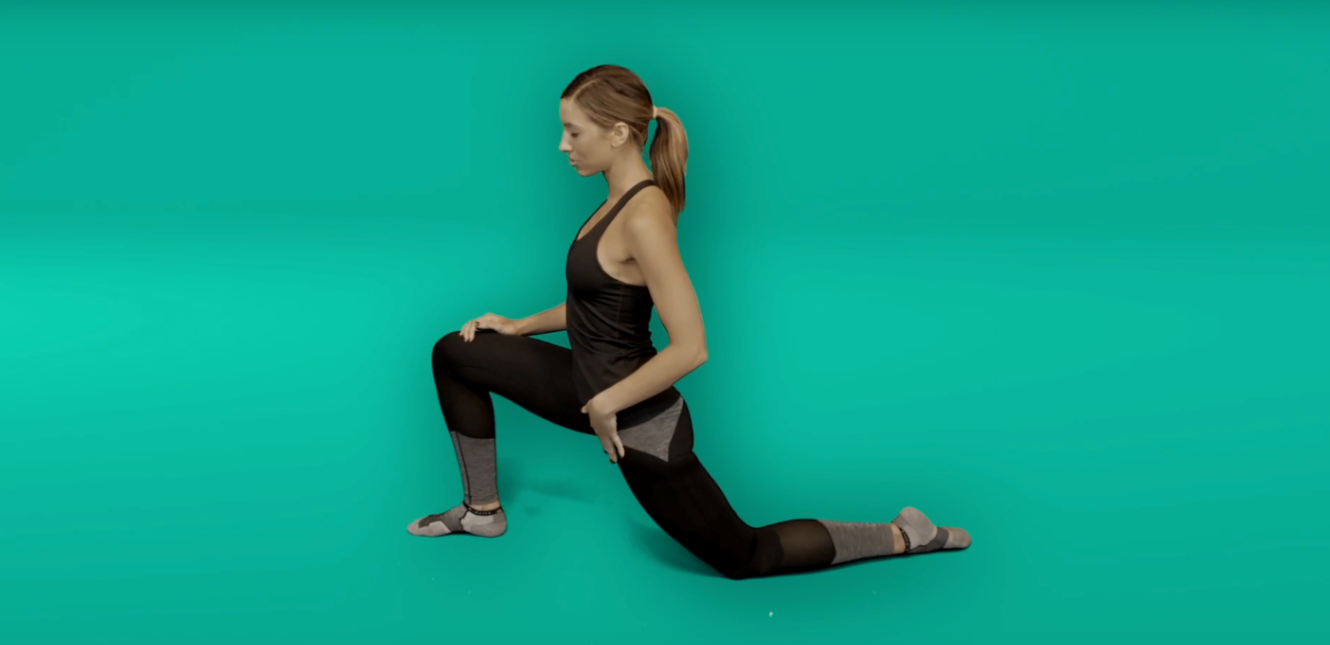
Video: Hip pain exercises
Peer reviewed by Dr Sarah JarvisAuthored by Lilly Sabri, MHPCOriginally published 15 Dec 2017
Meets Patient’s editorial guidelines
- DownloadDownload
- Share
- Language
- Discussion
- Audio Version
- Add to preferred sources on Google
Hip injuries are common in all age groups. The most common cause of chronic (long-standing) hip pain in adults is osteoarthritis.
Because the hip is such a complex joint, hip pain can be caused by many different things including: muscular injuries; ligament injuries; bursa injuries; cartilage tears; bone problems; fractures; reduced blood flow to the hip joint; or infection.
A common cause of hip pain is poor biomechanics - this is the body's movement patterns when completing daily activities such as walking. The following exercises are recommended to help reduce pain, increase range of movement and strengthen the muscles around the hip joint to prevent future problems.
Playlist: Hip Pain Exercises
3 videos
Hip Replacement: Range of Movement with Lilly Sabri | Patient Physio
Lilly Sabri, MHPC
Hip Replacement: Range of Movement with Lilly Sabri | Patient Physio
Lilly Sabri, MHPC

Hip Pain Exercise: Core Muscle with Lilly Sabri | Patient Physio
Lilly Sabri, MHPC

Hip Pain Exercise: Inner Thigh Stretch with Lilly Sabri | Patient Physio
Lilly Sabri, MHPC
Should your pain increase while completing the exercises, stop immediately and seek advice from your doctor. Should your symptoms not ease after two weeks of completing these exercises, a physiotherapy assessment may be required.
Once your symptoms are controlled it's worth getting into the habit of doing them once or twice a day to reduce the risk of symptoms coming back.
Range of movement exercises
Lower back rotations
Lie on your back with your knees bent.
Relax arms away from the body - palms facing upwards.
Place a pillow in between the knees.
Roll both legs over in one direction, whilst turning the head in the opposite direction.
Hold this position for 10 seconds and repeat 10 times, twice daily.
Single leg knee hugs
Lie on your back and hug one knee into the chest.
Keep the opposite leg either straight or bend it if this position aggravates your back pain.
Hold this position for 10 seconds and repeat 10 times, twice daily.
Single leg rotations
Lie on your back and hug one knee into the chest.
Hold on to knee with one hand and draw small circles with the hip, increasing the size of the circles as you feel the hip loosen.
Complete for 30 seconds in each direction, twice daily.
Stretches for the muscles of the hip joint
Lower back rotation stretch
Lie on your back with your knees bent.
Relax your arms away from the body - palms facing upwards.
With your inner thighs touching, drop both legs over in one direction, rotating your head in the opposite direction.
Increase the height of the upper knee by a few inches.
Using the opposite hand to knee, apply a light pressure down on the upper knee to increase the stretch in the lower back.
Hold the stretch for 20 seconds; repeat three times on each side, twice daily.
Hip flexor stretch
Start in a kneeling position.
Bring your right leg forward while keeping the left knee on the floor behind.
Place your hands on to your right thigh for support.
Lean your body weight forward to feel a stretch in the left hip flexor (the top of the quad muscle).
To increase this stretch, lean your body weight further forward.
Hold the stretch for 20 seconds; repeat three times on each side, twice daily.
Inner thigh stretch
Lie on your back with your knees bent, feet flat on the floor.
Slowly drop the knees outwards as far as you feel comfortable, feeling a stretch in your inner thigh muscles (adductors).
Once the stretch feeling eases off, you can gently apply a downward pressure to the inner thighs with your hands to increase the stretch.
Hold the stretch for 20 seconds; repeat three times, twice daily.
Gluteal muscle (glute) stretch
Lie on your back with your knees bent.
Hook the right ankle over the left knee.
Place your hands around the back of the left thigh.
Pull your left leg in towards your chest, feeling a deep stretch in the right buttock (glute) muscle.
Hold the stretch for 20 seconds; repeat three times on each side, twice daily.
Hamstring stretch
Lie on your back with your knees bent.
Interlock the fingers behind one of your thighs.
Hug that leg towards the chest, stopping at 90°.
Straighten the knee as far as you feel comfortable, feeling a stretch in the hamstring muscle - the big muscle at the back of the thigh.
Hold the stretch for 20 seconds; repeat three times on each side, twice daily.
To increase this stretch, walk your hands up towards your foot.
Hold the stretch for 20 seconds; repeat three times on each side, twice daily.
Strengthening for the hip, glute and core muscles
Deep core muscle activation (transverus abdominus)
Firstly, you need to find neutral spine by completing the following:
Lie on your back with your knees bent.
Practise tilting your pelvis backwards and forwards to flatten the back into the floor (posterior tilt) and forward (anterior pelvic tilt).
Repeat 10 times in each direction, keeping the movements slow and controlled.
Find neutral spine, which is the point in the middle.
In neutral spine practise activating the lower core muscles, which are the deep abdominal muscles, located low down where your underwear line would normally sit.
These muscles are active when you cough and laugh but are more difficult to activate consciously.
A good visualisation technique is to draw the lower abdominal muscles in as if trying to fit into a tight pair of trousers.
Single leg stretch
Lie with the lower back in imprint (flat to the floor).
Lift one leg up at a time to tabletop position (90° position - a right angle at the knee and the hip).
With both legs up, keep one leg completely still as the other leg drops to tap the toes on the floor
Slowly draw back to the start position
Continue this movement alternating legs
Complete 10 repetitions on each side, twice daily
To simplify this exercise, complete as above but with one leg up in tabletop, as the other leg is down - knee bent and foot on the floor. Complete 10 repetitions on one side; then repeat on the other, twice daily.
Single leg hip openers
Lie on your back with your knees bent.
Bring the right leg up to single leg table top (90° at the knee and hip).
Keeping the left leg as still as possible: slowly and controlled, drop the right knee outwards, using the deep core muscles to control the movement.
Stop as soon as you feel movement coming from the lower back rather than the hip; then draw the knee back to neutral, maintaining the 90° shape in the leg.
Complete 10 repetitions on each side, twice daily.
Side work series - glute muscles to support the hip
Clam exercise
Lie on your side with your knees bent, your ankles and knees touching.
Try to create a small gap under your waist by drawing your stomach muscles in and activating the core muscles.
While keeping your feet together, open your knees apart in a slow and controlled movement before closing them together again.
Complete 20 repetitions on each side, twice daily.
Be careful to avoid your hips rolling and falling out of correct form. Keep the hips facing forwards by pretending you have a full glass resting on your upper hip.
To increase the difficulty of this exercise, raise your feet up on to an imaginary stool, keeping the knees on the floor, and repeat the clam exercise.
Side leg lift
Lie on your side with both legs straight.
To avoid lower back strain, check that the lower back is not in extension by making sure you can see your toes when you look down.
Try to create a small gap under your waist by drawing your stomach muscles in and activating the core muscles.
Place one hand under your head for support and the other in front of you for balance.
With the foot flexed, lift the upper leg away from the underneath and slowly lower back down.
Complete 10 repetitions on each side, twice daily.
To increase the difficulty of this exercise, raise both legs off the floor and repeat the side leg lift exercise.
Glute max to support lower back
Donkey kicks
On all fours, with your hands directly under your shoulders and knees under hips.
Complete four cat/camel stretches before finding neutral spine. Neutral spine is the point in the middle of cat and camel where your back is flat and you can balance an imaginary tray of drinks on your lower back.
Pull your core and stomach muscle in before shifting your body weight on to your left side and lifting your right leg up to 90° at the knee and hip if able.
With your right foot flexed, pump the leg up towards the ceiling, leading with your right heel. Lift a few inches up and down with the leg to complete the donkey kick exercise.
Complete 20 repetitions on each leg, twice daily.
Patient picks for Exercise and physical activity
Healthy living
How to do Pilates at home
One of the great things about Pilates is that it can be done from your living room or bedroom - you don't need to go to a fancy Pilates studio providing you have plenty of space. If you are doing Pilates at home, it's important to do so safely and, if you are a beginner, you should work your way up to more advanced exercises and positions, rather than pushing yourself straightaway.
by Emily Jane Bashforth
Healthy living
Which sports are the worst for your health?
Despite their many health benefits, many sports can lead to injuries if you're not careful. But which sports carry the highest risk of injury and what should you do to stay safe?
by Abi Millar
About the authorView full bio
Authored by

Lilly Sabri, MHPC
Physiotherapist, Personal Trainer
BSc Physiotherapy, MCSP, MHPC, MAACP, MACSPM
Lilly Sabri is a chartered Physiotherapist, APPI pilates instructor, fitness, health and lifestyle influencer and founder of #LeanWithLilly.
About the reviewerView full bio

Dr Sarah Jarvis
Clinical Consultant
MA (Cantab), BM, BCh (Oxon), DRCOG, FRCGP, MBE
After training in medicine at Cambridge and Oxford, Dr Sarah Jarvis MBE became a GP.
Article history
Article also available in English, German, Spanish, French, Italian, Portuguese, Hindi, Hebrew, Arabic, and Swedish.
15 Dec 2017 | Originally published
Authored by:
Lilly Sabri, MHPCPeer reviewed by
Dr Sarah Jarvis
Join the conversation
Share your thoughts or experiences with others in our patient communities.

Ask, share, connect.
Browse discussions, ask questions, and share experiences across hundreds of health topics.

Feeling unwell?
Assess your symptoms online for free
Sign up to the Patient newsletter
Your weekly dose of clear, trustworthy health advice - written to help you feel informed, confident and in control.
By subscribing you accept our Privacy Policy. You can unsubscribe at any time. We never sell your data.