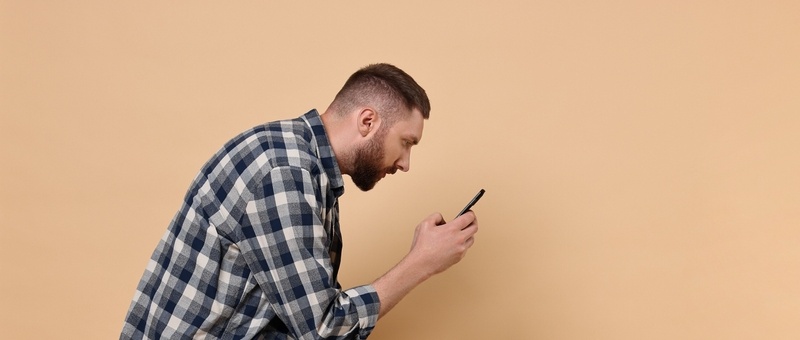
How poor posture impacts more than just your back
Peer reviewed by Dr Colin Tidy, MRCGPAuthored by Victoria RawOriginally published 7 Apr 2026
Meets Patient’s editorial guidelines
- DownloadDownload
- Share
- Language
- Discussion
- Audio Version
- Add to preferred sources on Google
These days, being stuck at a desk all day isn’t just a habit - it's basically part of the job for a lot of people. Between our professional lives and the digital entertainment that fills our downtime, we are increasingly pulled into stationary, hunched positions. This environment makes the simple act of maintaining good posture a constant struggle.
A physiotherapist explains exactly how poor posture impacts your wellbeing and offers simple, actionable tips to help you lead a happier, healthier life.
In a timely message, a new survey commissioned by Complete Pilates has found that one in three people in the UK don't realise how much posture can affect them, with many underestimating its impact on their breathing, energy levels and digestion.
Pilates is widely known for boosting posture, strength, and flexibility, yet, according to the survey, only one in ten people fit it into a normal week.
Helen O’Leary, physiotherapist at Complete Pilates, says that the UK seems to be facing a silent posture crisis where everyday habits - from desk work to dusting - are leaving the nation in long-term pain.
“When only one in three people recognise the wider health hazards of poor posture, it is no longer just a backache issue, but a growing public health blind spot,” she explains.
“The encouraging news is that we know posture is changeable, with the right guidance and small, consistent adjustments. This means we can help the UK move with greater strength, confidence and resilience.”
The truth behind how you see your posture
We often overlook our posture in the rush of everyday life. Little routines - slumping at a desk, staring down at a phone - build up into muscle pain and stiffness, and it’s easy to shrug it off instead of tackling what’s causing it.
Many people don’t realise how bad their posture actually is. According to the survey, under‑35s report more muscle pain than those aged 45–54, yet they’re four times more likely to say their posture is ‘excellent’ compared with older adults.
O’Leary says that our posture perception is usually inaccurate, and that most of us are surprisingly poor at judging our own spinal position, especially over time.
“This is because your nervous system adapts to whatever position you spend most time in,” she explains. “People also assess posture based on whether they’re slouching, how they look in the mirror, and cultural ideas of ‘good posture’.
“However, load tolerance depends on muscle endurance, movement variability, and the duration in a position.”
How poor posture affects your health
Poor posture is more than just a slouch in your shoulders - it is a systemic health issue. Beyond the visible misalignment, poor posture can lead to persistent neck and back pain, impaired balance, disrupted sleep, and long-term joint damage. Despite these effects, only one in three people in the UK is aware of the full extent of the consequences.
“Posture doesn’t just matter at your desk,” says O’Leary. “It influences muscle tone, breathing mechanics, pain sensitivity, and nervous system regulation - all of which affect sleep quality.
“If baseline muscle tone remains elevated into the evening, your body struggles to fully down-regulate. This can make it harder to relax into a deep sleep.”
Even more surprising is the impact on your breathing. Poor posture can significantly reduce your lung capacity, a serious health side effect that nearly three-quarters of the population fail to realise is linked to how they sit and stand.
O'Leary explains that slouching at your desk - staying hunched over with your head forwards - actually messes with how you breathe. This rounded position cramps up your ribs and diaphragm, making it harder for your lungs to fully expand.
Instead of taking deep, effortless breaths, your rib cage becomes restricted, and over time, you end up stuck in a cycle of shallow breathing.
Why most people self-manage posture issues
Instead of seeking targeted professional advice, the vast majority of people take a DIY approach when it comes to managing postural pain. According to the survey, nearly half the population turn to stretching, while just under half reach for over-the-counter pain relief.
While these may provide temporary comfort, they often mask a deeper issue. Despite the proven benefits of corrective movement, only one in 10 people actually integrate Pilates into their weekly routine, highlighting a significant gap between feeling pain and fixing its root cause.
O’Leary notes that while high‑intensity exercise, such as running or high-intensity interval training (HIIT), can help, Pilates and Yoga are widely seen as the most effective practices for correcting posture. She urges people to close the gap between intention and action and start addressing your posture today.
“Motivation to change something is often reactive,” she says. “Pain is often episodic. When the pain spikes and flares, people often want to make changes. But when the pain isn't there, the urgency disappears.
“Pilates is often also seen as maintenance and a long-term commitment. Whilst HIIT and the gym can feel intense and goal-driven, Pilates is often subtle, corrective and preventative, which doesn't give the same dopamine hit that the gym does.”
The best Pilates exercises for improving your posture
Adding just a few simple Pilates moves to your day can make a world of difference to how you stand, sit, and feel.
O’Leary highlights the best exercises to help you reset your alignment and boost your wellbeing:
Mermaid: opens your side body and rib cage for better lateral breathing
Sit on the floor and fold your right leg in front of you at a 90-degree angle. Position your left leg out to the side, also bent at 90 degrees.
Reach one arm overhead, stretching through the side of your body and breathing into the space.
Repeat a couple of times, then switch sides.
Thoracic extension with a Pilates ball: reverses the 'hunch' from sitting at your desk
Lie on your mat with a Pilates ball under the middle of your shoulder blades - adjust to where you feel tightest.
Support your head with your hands and lower your head back towards the floor, then lift your head and chest up.
Repeat, or hold the stretch while taking deep breaths.
Pelvic tilt: re-educates your lower back and core to find a neutral spine
Lie on your back with knees bent, feet hip‑width apart.
Imagine a clock on your pelvis with 12 at your belly button and 6 at your pubic bone.
Rock your pelvis towards 12 so your lower back presses gently into the floor, then rock towards 6 so the lower back arches away.
Repeat with controlled movement.
Patient picks for Exercise and physical activity

Healthy living
What is somatic exercise? Exploring the mind-body connection
Introduced in the 1970s by philosopher Thomas Hanna, somatics refers to a discipline that explores the relationship between your mind and body though movement. Somatic exercise is a sensory practice that promotes mindful movements to enhance your awareness of your body’s internal sensations.
by Victoria Raw
Healthy living
Why sitting ruins our health - and how 22 minutes of exercise could help
For many of us, a working day involves spending several hours at a time sitting in front of a computer - and it's having a serious effect on our health. But research suggests that 22 minutes of moderate to vigorous exercise per day may reduce the negative health impacts of a sedentary lifestyle.
by Victoria Raw
Frequently asked questions
Why is Pilates often chosen over other types of exercise for posture correction?
Pilates is often seen as more effective for correcting posture because it focuses on subtle, corrective, and preventative movements. While high-intensity exercises can be helpful, Pilates and Yoga are widely recognised as the most beneficial practices for addressing postural issues. It helps build core strength and body awareness, which are crucial for maintaining good posture.
How does poor posture impact my energy levels?
Poor posture requires your body to work harder to maintain balance and alignment, leading to muscle fatigue and reduced efficiency. This constant strain can deplete your energy reserves, making you feel more tired and sluggish throughout the day. By improving your posture, your body can function with less effort, potentially increasing your overall energy levels.
If I can't feel pain, does that mean my posture is good?
Not necessarily. Your nervous system adapts to the positions you spend most time in, so you might not feel discomfort even if your posture isn't ideal. Pain can also be episodic. Many people have an inaccurate perception of their own spinal position over time. Relying solely on the absence of pain can mean overlooking underlying postural issues that could lead to problems later on.
How does Pilates help improve overall body confidence?
Pilates helps improve body confidence by enhancing your strength, flexibility, and overall body awareness. As you become more attuned to your body's movements and alignment, you develop greater control and a sense of empowerment. This can lead to increased confidence in how you move, stand, and present yourself, both physically and mentally.
Can improving my posture help with digestion?
Yes, poor posture can affect your digestion. When you slouch, it can compress your internal organs, including those involved in digestion. This compression can impede their optimal function. By improving your posture, you create more space in your abdominal cavity, potentially allowing your digestive system to work more efficiently and comfortably.
About the authorView full bio
Authored by

Victoria Raw
Feature Writer
BA (Hons), English Literature
Victoria is a content writer at Patient, with special interests spanning mental wellbeing, societal trends and the impact of technology on our health.
About the reviewerView full bio

Dr Colin Tidy, MRCGP
General Practitioner, Medical Author
MBBS, MRCGP, MRCP (Paediatrics), DCH
Dr Colin Tidy is an NHS Doctor, based in Oxfordshire.
Article history
Article also available in English, German, Spanish, French, Italian, Portuguese, Hindi, Hebrew, Arabic, and Swedish.
Next review due: 7 Apr 2029
7 Apr 2026 | Originally published
Authored by:
Victoria RawPeer reviewed by
Dr Colin Tidy, MRCGP
Join the conversation
Share your thoughts or experiences with others in our patient communities.

Ask, share, connect.
Browse discussions, ask questions, and share experiences across hundreds of health topics.

Feeling unwell?
Assess your symptoms online for free
Sign up to the Patient newsletter
Your weekly dose of clear, trustworthy health advice - written to help you feel informed, confident and in control.
By subscribing you accept our Privacy Policy. You can unsubscribe at any time. We never sell your data.