How much screen time is too much?
Peer reviewed by Dr Sarah JarvisAuthored by Gillian HarveyOriginally published 9 Jul 2020
Meets Patient’s editorial guidelines
- DownloadDownload
- Share
- Language
- Discussion
- Audio Version
- Add to preferred sources on Google
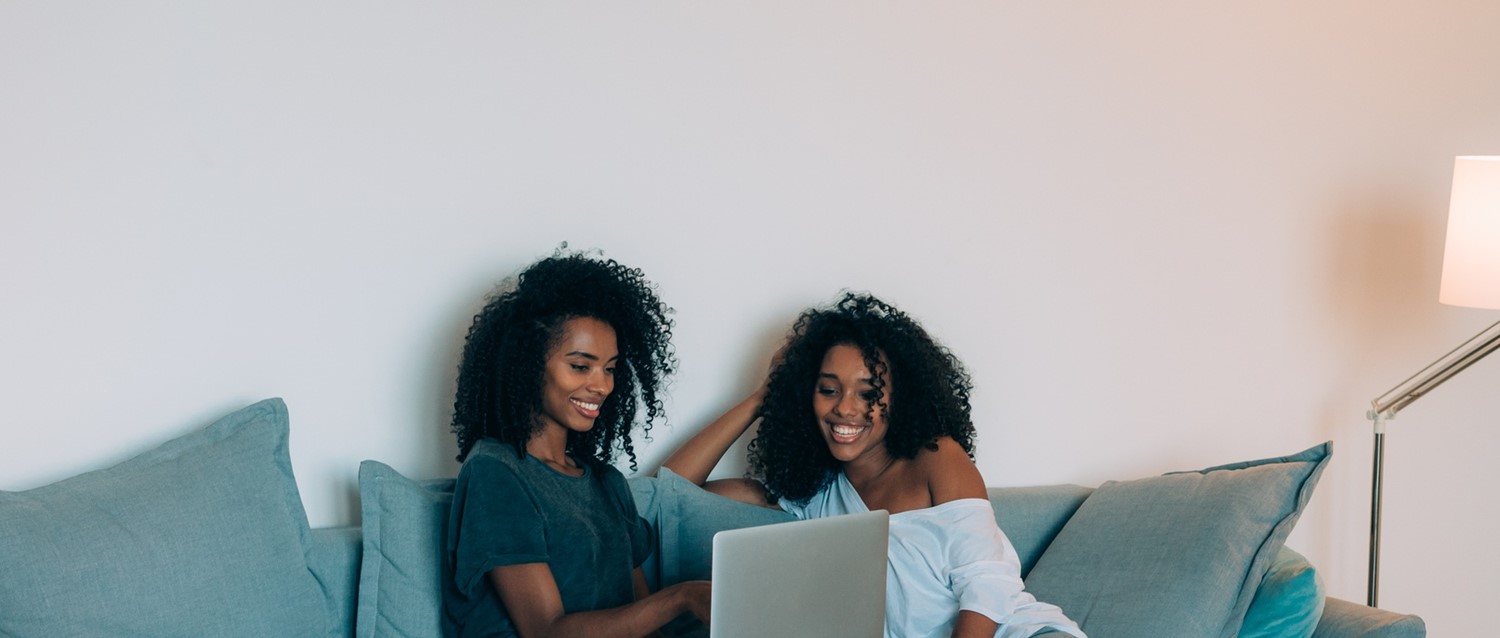
In this digital age, much of our time is spent on screen - whether we're scrolling on a smartphone or typing at a PC. And in a time of social distancing, where the internet has come to the fore, many of us worry whether we and our children are spending too much time on screen - but does the science stack up?
Changing focus
It may come as a surprise, but experts now believe that the actual time spent on screen shouldn't be our main focus when we assess the value of our activities. With so many modern activities taking place online - particularly in the age of social distancing - we need to learn to look at the individual activity and its value rather than 'screen time' as a whole.
"Screen time could encompass any number of different things, scrolling down a series of Instagram posts to reading Tolstoy, to blowing up the Death Star!" explains Dr Max Davie, Officer for Health Improvement at Royal College of Paediatrics and Child Health, who has written guidance on screen time for parents and clinicians.
"All of those have got very distinct psychological and cognitive inputs. So to talk about screen time and to measure screen time as a whole makes less and less sense as time goes on."
The right prescription
So is there a recommended limit for screen use that we should try to aim for? "It's difficult to prescribe an exact 'digital dose' that would be deemed healthy and appropriate for children or adults.
“We also respond to technology in different ways and it really depends on what we're doing when we're using it and what's driving our behaviours, or our kids' digital pursuits (for example, are kids using game play as a coping mechanism to bypass some big emotions they may be experiencing)," explains Dr Kristy Goodwin, digital well-being researcher and author.
Recognising value
Instead of simply limiting screen time both for ourselves and our children, it's worth taking a moment to think about the benefits of individual activities without factoring in the screen use. "Look at the value of the activity in itself," advises Davie. "For example, looking at Facebook could be the equivalent of leafing through a trashy magazine - a way to unwind. The fact that it's on screen rather than not doesn't really matter."
Instead, Davie advises that we look at how we wish to spend our time, and whether our online activity is fulfilling our needs. "For example, are you doing things that allow social interaction?" he says.
Guiding children
Children, too, have increased access to electronic devices both for education and for leisure. With new technology coming to the fore, it can be hard to know how to guide or advise our children on their use of different sites and programs. Differences between the generations can also lead to misunderstanding of the value of different activities.
"Lots of teenagers will say they interact with their friends within games. Is it less rich than running around a playground or going to a skate park? Yes, possibly. But it isn't necessarily the screens that are making this difference - it's the lack of being outdoors," says Davie.
In a time where meeting up with pals may prove impossible, it may be that your child's gaming is providing the interaction they need.
Age appropriate
There is some evidence that excess screen time for under-5s can have an impact on development. One study suggested that children aged 2 and 3 years with higher levels of screen time were less likely to perform as well at 3 and 5 development milestones.
However, studies like this can't pick away all the 'confounding factors' - for instance, did the children with more screen time have parents who spent less time stimulating them? It certainly didn't prove that we should ban our younger children from screens, but it certainly suggests we should take care to ensure we don't allow screen time to interfere with other forms of mental stimulation such as chatting, reading or playing together.
Adding value
It's hard to see the value of a YouTuber bouncing on a trampoline, or a funny video on TikTok, but this may also be to do with a difference in how we view these activities.
"I don't see a huge difference between a child watching someone play Minecraft for two hours and their parent watching someone play football for two hours," says Davie. "They are both entertainment and that is fine. The fact of it being educational isn't really the test. If they are engaging with it properly, it's well made and ideally they're able to talk about it, then it can be a useful tool for conversation, for example."
In fact, rather than necessarily asking our children to avoid YouTube or reduce their time gaming - within reason - it may be more sensible to look at ways to add value to the things they enjoy doing. "For example, if they're watching funny videos on TikTok, you could have a conversation and talk about what made it funny - was it the situation, or the timing?" Davie suggests.
Joining in
Another way to make your child's screen-time richer is to engage in it yourself. "Parents are often advised, for example, if there's a problem with child behaviour, to find something the child enjoys doing and do it with them. If you have a 15-year-old, that might well be playing FIFA, for example. There's nothing wrong as a parent in playing FIFA badly and your child laughing at how bad you are at it. It's positive interaction. Showing some interest and a bit of humility and acknowledging the stuff that happens in their world isn't necessarily inferior."
Red flags
Of course, the fact that screen time may not be as harmful as once thought doesn't mean all screen use is healthy. We need to make sure sites our children use are age-appropriate, and educate them about cyber-bullying.
In addition, although there may not be a specific number of minutes or hours we should limit our own or our children's screen use to, there is still such a thing as 'excessive use'.
"Excessive use of screens and/or inappropriate use (for example, using them too close to bed, first thing in the morning, or when we're feeling stressed) can have a detrimental impact on our physical health. Everything from our sleep, vision, hearing and musculoskeletal health can be impacted by our digital behaviours and habits. It can also have an effect on our mental well-being. Research confirms that our digital habits can have a negative impact on children, teens and adults if we're not using it in deliberate and intentional ways," explains Goodwin.
As parents, we need to watch children to ensure that they do not slip into negative habits. "If you find the child's screen time is interfering with what you want to do as a family or if you feel it's out of control, for example," explains Davie. "If it's interfering with sleep or you feel your child is snacking too much, that's something to think about."
Eye damage
We also need to be mindful of protecting our eyes when using screens.
"Excessive screen time can cause eye damage, both short-term in the form of eye strain and visual stress and long-term in the form of macular degeneration. A key factor that contributes to this is a type of harmful blue light which is emitted from digital device screens and has been shown to elevate eye issues. This is even more important for children as the lens in their eye does not develop fully until their teenage years, so more blue light is absorbed," explains Dhruvin Patel, Optometrist and Founder of Ocushield.
Such damage can be mitigated by ensuring we don't get too close to our screen - "an arm's distance at minimum" - and don't use screens to excess. If we do need to use screens for prolonged periods - for example, for work - Patel recommends we employ software or a filter to limit blue light exposure.
Assessing our use
In order to truly understand the effect of screen time for both ourselves and our children, we need to delve deeper and look at the pros and cons of the way we use technology. In order to do this, Goodwin advises us to think about what we'd be doing if we weren't on screen at a particular moment and whether missing that activity could be harmful. For example, "is it to the detriment of our basic psychological and physical needs like sleep, relationships, movement, play?"
We should also think about what we're doing when we're using tech, and consider the psychological needs our tech is fulfilling for us.
Rather than setting a screen time limit, we need to take time to understand the part screens play both in our own lives and our children's. We need to involve ourselves more and ditch preconceived ideas about what constitutes value.
Top tips for healthy screen use
If you're worried about your screen use, it's worth trying these tips, Ruth Kudzi, Business Mentor and coach suggests:
Reduce the number of tabs you have open. If you can do this you will be able to focus better and that time will be more productive.
Look at having your screen in an environment that you find nourishing and enjoyable. For example, looking out into the garden.
Take microbreaks which help you tap back into your creativity.
Having a glass of water next to you that you sip at regular intervals will keep you hydrated and give you a reason to get up and move when you need a refill.
Set a timer, and take regular breaks.
Patient picks for Online and social media

Healthy living
How to support your child if they are being cyberbullied
If you suspect your child is being cyberbullied, it can be difficult to know how to approach the situation. You want them to know you are there to support them, but also don't want them to think you are intruding. However, with online bullying becoming an increasingly concerning issue with the growth of social media platforms, it's important to know how to be there for your child, and how to help prevent cyberbullying.
by Emily Jane Bashforth
Healthy living
How to spot the signs of gaming addiction in children
Nearly half of parents are worried that their children are spending too much time playing online games. There are also concerns over violent games affecting their sleep and making children less sociable. As technology develops and becomes more accessible to minors, it's important that parents and guardians are able to spot the signs of gaming addiction before it gets out of control.
by Emily Jane Bashforth
About the authorView full bio
Authored by

Gillian Harvey
Freelance Writer
BA (Hons) English
Gillian is a freelance writer and columnist for a variety of national newspapers and magazines.
About the reviewerView full bio

Dr Sarah Jarvis
Clinical Consultant
MA (Cantab), BM, BCh (Oxon), DRCOG, FRCGP, MBE
After training in medicine at Cambridge and Oxford, Dr Sarah Jarvis MBE became a GP.
Article history
Article also available in English, German, Spanish, French, Italian, Portuguese, Hindi, Hebrew, Arabic, and Swedish.
9 Jul 2020 | Originally published
Authored by:
Gillian HarveyPeer reviewed by
Dr Sarah Jarvis
Join the conversation
Share your thoughts or experiences with others in our patient communities.

Ask, share, connect.
Browse discussions, ask questions, and share experiences across hundreds of health topics.

Feeling unwell?
Assess your symptoms online for free
Sign up to the Patient newsletter
Your weekly dose of clear, trustworthy health advice - written to help you feel informed, confident and in control.
By subscribing you accept our Privacy Policy. You can unsubscribe at any time. We never sell your data.