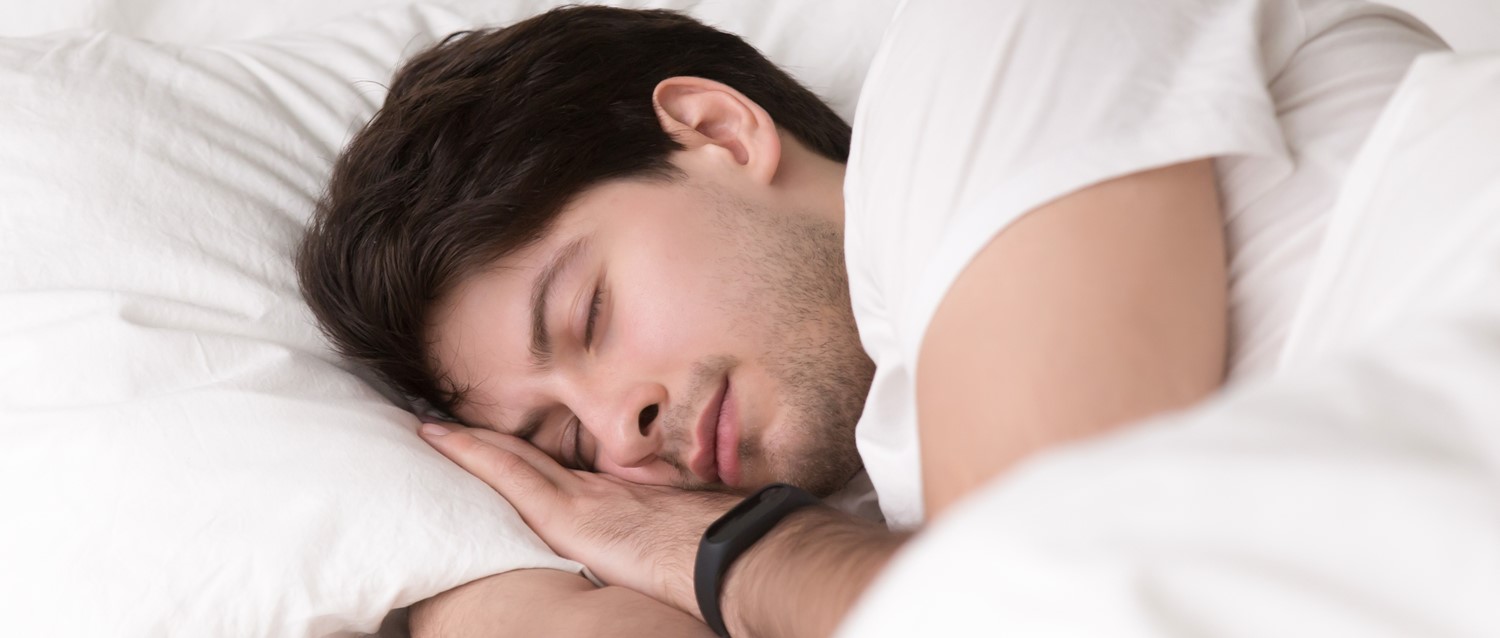
What are sleep trackers and do they work?
Peer reviewed by Dr Sarah JarvisAuthored by Emily Jane BashforthOriginally published 21 Apr 2022
Meets Patient’s editorial guidelines
- DownloadDownload
- Share
- Language
- Discussion
- Audio Version
- Add to preferred sources on Google
Sleep trackers have experienced a surge in popularity over recent years. As a nation, we seem to be extremely curious about what's happening with our bodies while we sleep. But, before you start spending money on sleep tracking devices or downloading apps, it may be helpful to understand a bit more about how and whether they work.
What is a sleep tracker?
Sleep trackers are devices used to measure sleep quality. Sleep trackers measure how long you have slept, the depth of your sleep, and other sleeping habits. Sleep trackers can be valuable in gaining insight into how much sleep you are getting and, as a result, making lifestyle changes to optimise your sleeping experience.
Sleep trackers are either wearable devices, such as a wristwatch or a thumb monitor, or non-wearable sleep tracking devices such as motion sensors designed to be positioned under a pillow or a mattress.
How do sleep trackers work?
Sleep trackers work by measuring parameters such as the rate of your breathing, heart rate, and how much you move around while sleeping. Movement specifically is recorded by a device within the sleep tracker, called an accelerometer. Some sleep tracker devices also pick up noises such as snoring and can assist someone in seeking a diagnosis of sleep apnoea. They may also measure temperature.
Dr Deborah Lee of Dr Fox Online Pharmacy explains that a sleep tracker is a type of actigraph - a monitor that detects continuous movement. It monitors your sleep-wake cycle and Circadian rhythms. Circadian rhythms are physical, mental and behavioural changes following 24-hour cycles as part of your body's internal clock, running in the background to carry out essential functions.
"In fact, the actigraph might not be the best method of tracking your sleep quality because it is actually measuring movement - not sleep per se - and is using movement as an analogy for sleep. To measure sleep accurately, a polysomnogram is needed. This is also called a sleep study and is a comprehensive test used to diagnose sleep disorders. It does this by recording brain waves, oxygen levels in your blood, heart rate and breathing, as well as eye and leg movements," she adds.
What are the different types of sleep trackers?
There are two main types of sleep trackers: wearables and under-the-mattress trackers. The type you use really depends on personal preference, but some people find wearable trackers irritating at night.
Wearable sleep trackers
The majority of sleep trackers come in the form of a watch worn on the wrist. This means they use body movement (and sometimes heart rate data) to make estimates of nightly sleep. Many people move around a lot during the night, which can provide the sleep tracker with information on what stage of sleep you may be in. However, since people tend to move frequently during different stages of sleep, wearable sleep trackers can struggle to differentiate between stages.
Studies also show sleep tracking devices underperform in people with insomnia, since many people with insomnia remain very still in bed in an attempt to fall asleep. However, the trackers only use movement as a measurement, so one study found wearable trackers were unable to tell the difference between people with insomnia being awake and asleep.
Under-the-mattress sleep trackers
Under-the-mattress trackers usually connect to an app on your phone or tablet to provide you with data the following morning. They automatically track your sleep cycle, heart rate, and sometimes snoring. They give you a sleep score that takes into account the amount of time in light, deep and REM (rapid eye movement) sleep you have had, plus whether your sleep was interrupted, and how much time it took you to fall asleep. Some under-the-mattress trackers can also monitor breathing, and stress levels via the balance of your nervous system.
How accurate are sleep trackers?
Despite the popularity and intrigue surrounding sleep trackers, studies suggest they aren't totally accurate. Not a lot of research has been conducted into how trustworthy data information from sleep trackers is. However, what has been investigated thus far implies their findings aren't 100% trustworthy.
So far, research has found that polysomnography tests are accurate 78% of the time when identifying sleep versus wakefulness. However, this accuracy drops to around 38% when estimating how long it took participants to fall asleep.
"A polysomnogram is a sleep test, performed in a sleep test centre, which records brain wave patterns. The participant is wired up to the machine, and in addition to the EEG (brain activity) recordings, additional measurements are taken, such as electrical heart tracing and eye movements. It is clearly not practicable for everyone to be able to have a polysomnogram, so an actigraph is a reasonable alternative," explains Dr Fox. However, he adds that actigraphs are especially unreliable in people with chronic health conditions.
"They tend to overestimate the total sleep time and underestimate the time taken to fall asleep (sleep latency). This means they overestimate sleep efficiency - the percentage of time you are actually asleep when you are in bed."
Are sleep tracker apps accurate?
Sleep tracker apps have become quite popular in recent years. But how reliable are they?
Sleep tracker apps can be downloaded on to your phone. They offer a reading of sleep quality measures, including your phases of sleep - light sleep, deep sleep, and REM sleep - and estimate your total sleep score.
A couple of examples of sleep tracking apps are Sleepscore and Sleep Cycle.
Sleepscore says their app was created with 12 years and over six million nights' worth of data.
However, as we've heard, sleep trackers may overestimate the time you believe you are sleeping. One study has shown that if people believe they are sleeping better, they perform better at tasks requiring concentration compared to people who slept for the same period but were told they had slept badly.
Another study involved giving volunteers with insomnia sleep trackers to wear and being given sham information on how well they slept. Being told they had slept well resulted in volunteers displaying higher levels of alertness, positive mood and wakefulness compared to those told they had slept poorly.
These are both examples of the so-called 'placebo effect' - people's symptoms, perceptions or health outcomes being affected by how they expect to feel.
While sleep tracking apps aren't necessarily accurate, experts have noted it is a positive thing that people are becoming attuned to their own Circadian rhythms and the effect of sleep (or lack thereof) on their bodies, since it allows them to make lifestyle changes for the greater good of their health.
What are the pros of sleep trackers and who might benefit from them?
“A sleep tracker can offer interesting information about your sleep pattern. It will show you when you fell asleep and when you woke up, and tell you how much sleep you had. It will also show how deep or light your sleep was. The sleep tracker can't improve your sleep on its own, but it can help you monitor it and keep check of your progress when trying to improve your sleep," says Dr Fox.
However, she stresses that sleep trackers tend to overestimate how much sleep you have had.
Sleep trackers also cannot diagnose sleep apnoea, insomnia, or other health conditions. Therefore, if you suspect a sleep disorder, you should consult your GP.
Sleep tracking has been used in various research studies. For example, in one 2017 study using a sleep tracker, short sleep duration was linked to high blood pressure. Other studies have used sleep trackers to investigate asthma, haemodialysis, and prostate cancer.
Is there a downside to sleep trackers?
Since most sleep specialists do not believe that sleep trackers give accurate results, the most harmless consequence could be that you waste your time and money on a sleep tracker for no reason. However, there is a more serious side to obsessively tracking how much sleep you are getting.
"Orthosomnia is a condition where people obsess about how much sleep they have had. Stress and anxiety are well known to have a negative impact on sleep and using a tracker may add to the stress of the situation, and actually, make sleep worse," says Dr Fox.
If you are using a sleep tracking app on your mobile phone, this can lead to disturbed sleep. Mobile phones emit blue light which switches off the production of the sleep hormone, melatonin. So, looking at your phone screen in the middle of the night to check how much you have slept is likely to cause you further difficulties in falling asleep.
Dr Fox recommends using your energy levels and lifestyle as a guide for creating a healthy sleeping environment and developing a regular sleeping pattern.
Things to remember if you are using a sleep tracker
Sleep tracking apps are movement sensors. Your tracker will only work well if it is able to detect movement properly.
Choose a device and stick with it. If you used several different devices and keep switching between wearable trackers, under-the-mattress trackers and apps, they will all give different results.
Sync your device regularly so it is married up with the app on your smartphone.
Wear your sleep tracker on your non-dominant hand. Studies have shown if you wear it on the dominant hand, this tends to overestimate results.
Remember to keep your tracker charged.
Make sure your tracker is firmly attached to your wrist, so there is adequate skin contact for the sensor. If your tracker is loose, data won't be accurate.
Update your own personal statistics. For example, if you are losing weight you need to update the settings.
Patient picks for Sleep and insomnia
Healthy living
What causes sleep paralysis?
Sleep paralysis, where you wake up unable to move for a short time, is relatively common but it can be incredibly distressing. So what can you do to reduce the chances of it happening? And what can it tell you about your health?
by Elizabeth Sulis Kim

Healthy living
What to do when your child can't sleep
Sleep, along with diet and exercise, is fundamental to a child's emotional and physical well-being. But as many parents can attest, ensuring their kid gets adequate slumber is easier said than done. What should you do if counting sheep just isn't doing the trick for them? We ask a paediatrician for their top tips.
by Julian Turner
About the authorView full bio

Emily Jane Bashforth
Feature Writer
NCTJ
Emily is a Feature Writer with Patient, writing articles on a variety of topics relating to health and well-being.
About the reviewerView full bio

Dr Sarah Jarvis
Clinical Consultant
MA (Cantab), BM, BCh (Oxon), DRCOG, FRCGP, MBE
After training in medicine at Cambridge and Oxford, Dr Sarah Jarvis MBE became a GP.
Article history
Article also available in English, German, Spanish, French, Italian, Portuguese, Hindi, Hebrew, Arabic, and Swedish.
21 Apr 2022 | Originally published
Authored by:
Emily Jane BashforthPeer reviewed by
Dr Sarah Jarvis
Join the conversation
Share your thoughts or experiences with others in our patient communities.

Ask, share, connect.
Browse discussions, ask questions, and share experiences across hundreds of health topics.

Feeling unwell?
Assess your symptoms online for free
Sign up to the Patient newsletter
Your weekly dose of clear, trustworthy health advice - written to help you feel informed, confident and in control.
By subscribing you accept our Privacy Policy. You can unsubscribe at any time. We never sell your data.
More in healthy living
- Are e-cigarettes a safe way to quit smoking?
- Can counselling help you decide when or whether to have children?
- Can spending time in nature benefit your mental health?
- Can you really die from lack of sleep?
- Does smoking affect your sex life?
- How poor posture impacts more than just your back
- How to drink sensibly over the festive season
- How to exercise safely in later life
- How to get into swimming safely for beginners
- How to look after your mental health this winter
- How to maintain your fitness New Year's resolutions
- How your teeth can affect your self-esteem
- Is going sober becoming a trend?
- Obesity blamed for fewer eligible organ donors
- Switch off TV in the bedroom to avoid weight gain
- The conditions that cause unexpected weight gain
- The health benefits of stretching every day
- The truth about vaping
- Why going bald can seriously affect your mental health