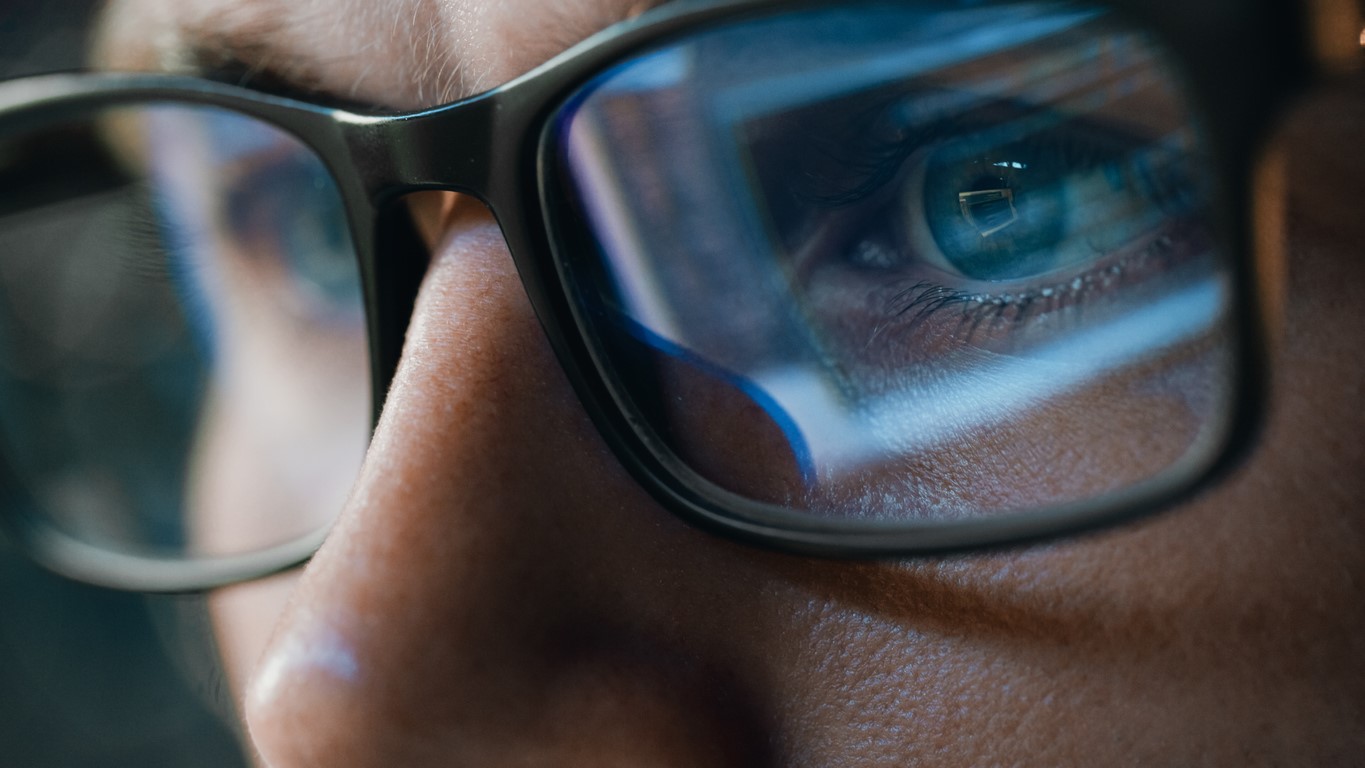
Blue light filters: do they really work?
Peer reviewed by Dr Krishna Vakharia, MRCGPAuthored by Matt BinnyOriginally published 3 Jul 2023
Meets Patient’s editorial guidelines
- DownloadDownload
- Share
- Language
- Discussion
- Audio Version
- Add to preferred sources on Google
Most of us spend several hours looking at digital screens every day, all of which emit varying levels of blue light. There's debate about the damage and effects blue light has on our vision and health, and if blue light filters help. We investigate if they really work.
What is blue light?
Around one-third of all the light we see is blue light, with sunlight being the main source. Blue light is also known as high-energy visible (HEV) light. Unlike other types of light, our eyes cannot filter it on their own. This means blue light can reach the retina without restriction.
The most common sources of artificial blue light are:
Flat-screen LED televisions.
Fluorescent lights.
LEDs.
Compact fluorescent light (CFL) bulbs.
Smartphones.
Computer screens.
Tablets.
What is a blue light filter?
A blue light filter is designed to protect our eyes from any harmful effects of blue lights.
People spend around seven hours a day looking at digital screens. As this has raised safety concerns, blue light filters are now commonplace across a range of products to increase safety for long-term use - they can be used on everything from phones to blue light blocking sunglasses.
How does blue light affect the eyes?
There is debate as to whether blue light damages our eyes. Studies show that high levels of blue light, over prolonged periods, have the potential to damage the retina - and that blue light blocking glasses could help prevent up to 80% of this damage1. An injured retina can lead to vision loss and distortion.
But when it comes to a smaller amount of blue light, it's less about eye damage and more about how it affects your body.
One of the most common issues people have with looking at screens a lot is digital eye strain. This occurs because you blink less when looking at screens, which reduces the amount of moisture in your eyes. Symptoms of digital eye strain include dry eyes, headaches, nausea, neck pain, and more. This is often mistaken for the effects of blue light. At present, there's no evidence that blue light filters can help prevent or ease digital eye strain2.
If you experience symptoms of digital eye strain, the following may help:
Adjust your screen's brightness.
Eliminate screen glare.
Ensure your screen isn't brighter than the other lighting in the room.
Use filters to adjust colour warmth throughout the day, as this reduces eye strain in the evening.
Don't sit too close to the screen.
Benefits of blue light filters
Eye damage
Blue light can cause retinal damage, but the evidence for this involves extreme exposure over consistent and long periods3. In truth, the effects of day-to-day blue light exposure are not yet fully understood - and we don't yet know how beneficial blue light filters are.
Bhavin Shah is a behavioural optometrist at Central Vision Opticians. He says that the evidence for blue light filters is inconclusive, and instead opts for a spectral filter on his personal sunglasses. "This filters out more than blue in the spectrum of light and makes my eyes more comfortable when i'm driving in overcast weather."
Sleep
Blue light exposure affects your circadian rhythm, the body's internal clock3. Light is critical for how it behaves and adjusts to environmental factors - such as day and night. This is why too much exposure to artificial light before bedtime - such as blue light from a screen - can make it hard to fall asleep.
Blue light stimulates your eyes and brain, sending signals to your body's internal clock. This in turn affects how your body produces melatonin, the sleep-inducing hormone. So, if you find yourself scrolling through your phone or watch TV before bed to wind down at bedtime, you're actually making your body more alert.
Reducing or cutting out screen time before bed is beneficial for improved sleep and a healthy sleep pattern. For screen-time you do have, blue light filters can help limit blue light exposure.
Further reading
Patient picks for Online and social media

Healthy living
Level up your real life: 6 health tips every gamer needs to know
In video games, all players usually need to do to stay healthy is to drink the occasional healing potion or perhaps grab a floating heart. Avoiding zombies and killer aliens helps, too. In real life, deadly monsters may be less common, but maintaining health is trickier. Luckily, it doesn't take a secret hack to stay well while playing, experts say - and some of their advice might even help you boost your gameplay.
by Michael Merschel

Healthy living
Dr Krishna Vakharia: A look back - and forward
2022 brought with it the end of lockdown and social distancing due to COVID-19. However, with it we saw an increase in diseases and illnesses that kept us all on our toes. At Patient, we published new information about mpox - previously known as monkeypox - polio and new leaflets on Group A streptococcus which had taken hold by the end of the year.
by Dr Krishna Vakharia, MRCGP
About the authorView full bio
Authored by

Matt Binny
Feature writer
BA Applied Media
About the reviewerView full bio

Dr Krishna Vakharia, MRCGP
Chief Medical Officer for Health, Optum UK
MBChB, MRCGP(2013), BMedSci (hons), DFSRH, DRCOG, PGDipDerm (Distn)
Dr Krishna Vakharia is an NHS GP. She is also a regular examiner for the postgraduate Diploma in Practical Dermatology at Cardiff University as well as being the Chief Medical Officer for health at Optum UK.
Article history
Article also available in English, German, Spanish, French, Italian, Portuguese, Hindi, Hebrew, Arabic, and Swedish.
3 Jul 2023 | Originally published
Authored by:
Matt BinnyPeer reviewed by
Dr Krishna Vakharia, MRCGP
Join the conversation
Share your thoughts or experiences with others in our patient communities.

Ask, share, connect.
Browse discussions, ask questions, and share experiences across hundreds of health topics.

Feeling unwell?
Assess your symptoms online for free
Sign up to the Patient newsletter
Your weekly dose of clear, trustworthy health advice - written to help you feel informed, confident and in control.
By subscribing you accept our Privacy Policy. You can unsubscribe at any time. We never sell your data.