Women's HIV prevention: the importance of the vaginal ring
Peer reviewed by Dr Krishna Vakharia, MRCGPLast updated by Amberley DavisLast updated 1 Dec 2022
Meets Patient’s editorial guidelines
- DownloadDownload
- Share
- Language
- Discussion
- Audio Version
- Add to preferred sources on Google
In Women's HIV prevention techniques are essential in the fight against HIV. In sub-Saharan Africa where the HIV infection rate is highest, woman and girls accounted for 63% of all new HIV infections in 2021. The Dapivirine vaginal ring is an HIV prevention method that is woman-controlled and long-acting.
A HIV prevention method for high-risk women
The United Nations estimated that there were 38.4 million people living with human immunodeficiency virus (HIV) at the end of 2021. Around 54% are women, the majority of whom live in sub-Saharan Africa.
The importance of women's HIV prevention methods has long been recognised in the fight against HIV. In early 2021, WHO recommended a promising new option called the Dapivirine vaginal ring (DPV-VR) for use in addition to other HIV prevention methods by "women at substantial risk of HIV infection".
This is the first vaginal ring for HIV prevention, and now the ring has been approved in many low-income, high HIV risk countries, including Kenya, Uganda, South Africa, Zambia and Zimbabwe.
Both its safety and efficacy have been demonstrated in several studies. The initial Aspire and Ring studies involved over 4,500 women aged 18-45 in Malawi, South Africa, Uganda and Zimbabwe.
Dapivirine vaginal ring studies - effectiveness compared to placebo
Aspire - 27% reduction in risk.
Vaginal ring - 31% reduction in risk.
Two further open-label extension studies, known as DREAM and HOPE, offered all women involved the opportunity to use the vaginal ring. These studies: "Found that ring was well tolerated, consistent with the safety profile seen in ASPIRE, and the majority of women from ASPIRE chose the ring being offered. Measures of adherence also indicated they were willing to use the ring to protect themselves against HIV."
What puts women at risk for HIV?
It may come as a surprise that such a high percentage of women become infected with HIV. After all, they're not often listed as one of the key high-risk groups:
Sex workers and their clients.
Men who have sex with men.
People who inject drugs.
Transgender people and their partners.
Yet according to UNAIDS, around 4,900 young women aged 15-24 years become infected with HIV every week. In sub-Saharan Africa, these women are twice as likely to be living with HIV as men are in sub-Saharan Africa.
HIV is most prominent in low-income and middle-income countries, and of these eastern and southern Africa hold the majority of people living with HIV by some way - around 20.6 million. In these high-risk areas, young women and adolescent girls are particularly affected due to the following factors.
Biological factors
Women are more vulnerable than men to sexually transmitted infections (STIs) because during vaginal intercourse a greater area is exposed to the virus. Adolescent girls are even more susceptible, due to their underdeveloped cervix and low vaginal mucus production.
Sociocultural factors and gender inequality
In high-risk, low-income regions, there are many social, cultural and political factors that contribute toward gender inequality and impede a women's ability to protect herself.
Tragically, UNAIDS reports that over a third of women around the world have experienced physical or sexual abuse at some point in their lives. In HIV high-risk regions, these women are 1.5 times more likely to acquire HIV, and many women and girls are unable to control who they have sex with.
Marriage offers no protection, and the prevalence of marriages between girls/young women and older men contributes to the spread of HIV. There is a greater chance of older partners being HIV-positive than same age peers.
Economic factors
In low-income countries, not only can the cost of HIV prevention methods or access to health care be a limitation, but women tend to be financially dependent on men. This power dynamic makes it hard for women to negotiate condom use, or to refuse sex if they suspect the partner is infected.
How can HIV be prevented?
The main way to protect against HIV is to practise safer sex and to stop other activities that put you at risk, such as sharing needles.
HIV may also be prevented by:
Post-exposure prophylaxis (PEP) - a course of anti-HIV medicines which may be offered by a doctor if you think you've been exposed to HIV.
Pre-exposure prophylaxis (PrEP) - taken regularly, this reduces the risk of catching HIV and is available on the NHS through sexual health clinics.
If you inject drugs, don't share needles or other injecting equipment.
If you are pregnant and have HIV, then special antenatal care can reduce the risk of the virus passing on to your baby.
The Dapivirine vaginal ring isn't as effective as PrEP, pre-exposure prophylaxis, in preventing HIV. This is a big reason why this vaginal ring hasn't yet been licensed in high-income countries, like the UK and US, where PrEP is more widely available.
However, in low-income, high-risk regions, the statistics on HIV prevalence among females underscore the need for more HIV prevention methods that females can access and use easily without having to rely on men.
What is a vaginal ring?
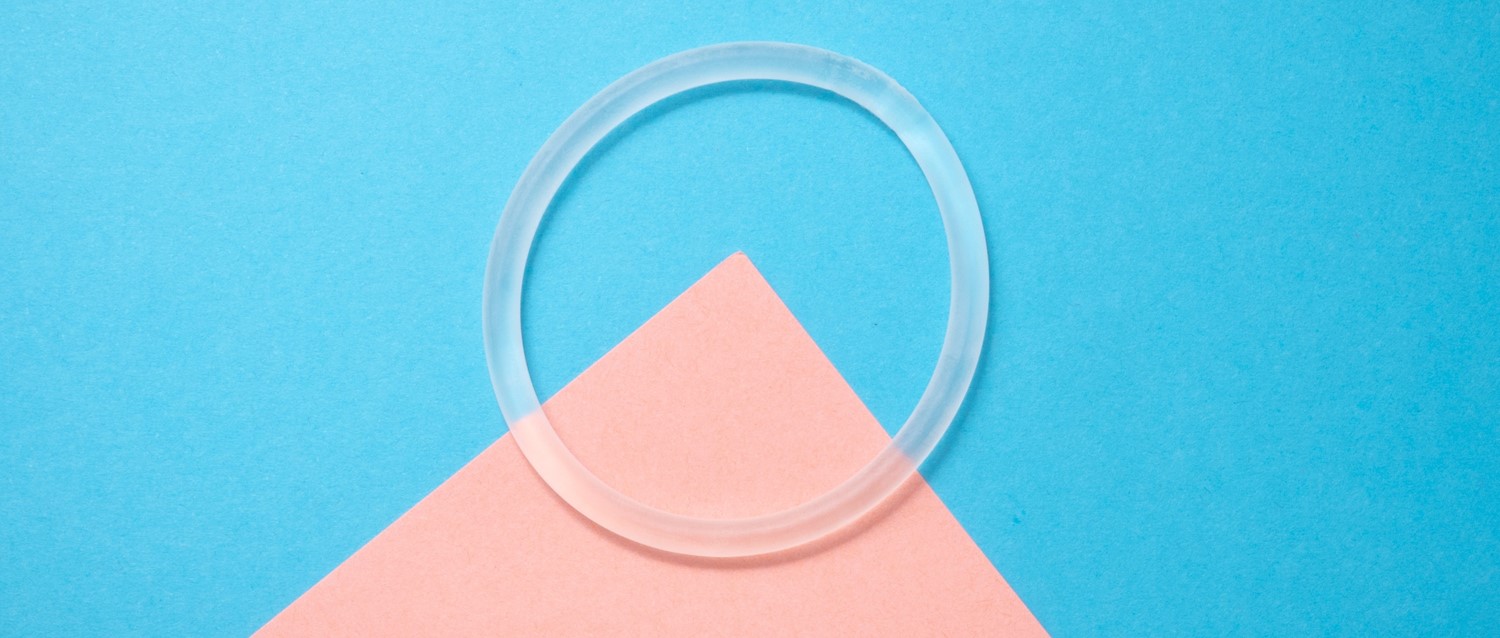
The vaginal ring is a promising method of safer sex because it is both woman-controlled and long-acting (it can provide a sustained release of medicines without frequent replacement).
For many years, the contraceptive vaginal ring has provided protection against unwanted pregnancy by releasing the hormones oestrogen and progestogen into the vagina. The ring is just over 5 cm in diameter and is thin and flexible.
How does the Dapivirine vaginal ring work?
The Dapivirine vaginal ring is the first vaginal ring created for HIV prevention. It's important to note that it doesn't also release hormones to prevent pregnancy, although research to develop a ring that includes both contraception and HIV prevention is underway.
As the name suggests, the vaginal ring contains Dapivirine, an antiretroviral medicine which slows down the rate of virus replication in the body to the point that the levels are too low to weaken the immune system. Dapivirine is released slowly to reduce the risk of local HIV infection in the vagina.
WHO makes it clear that this vaginal ring is an addition - not a substitute - to other safer sex practices. As well as providing no protection against unwanted pregnancy, it can't prevent other STIs.
The Dapivirine vaginal ring needs to be replaced every month (28 days). Women insert it into the vagina themselves, and it is made from silicone which makes it easy to bend.
Benefits
Effectiveness at HIV prevention - on average, studies suggest that the risk of HIV is reduced by about 30%.
Safe to use - no safety concerns or side-effects have been reported.
Self-insertion - gives women more control over their sexual health.
Long-acting - does not require daily use. Research suggests low rates of use for daily methods of protection (such as PrEP oral pills and vaginal gels) either due to forgetting, boredom, mistiming, being too busy, or other social impediments.
More choice - means more women can find an HIV prevention method that works for them. For example, WHO suggests using alongside oral PrEP as a choice for women who do not want, or are unable to take, a daily oral tablet.
Potential limitations
The reduction rate of HIV is considered to be moderately (rather than highly) effective.
In the ASPIRE study, no reduction rate of HIV was observed in participants under 21. However, the other studies found there to be a reduced rate of infection in this age group. One possible explanation is that this group used the product less in comparison to other groups.
Although the Dapavirine vaginal ring has been branded a "product with modest efficacy", Global Advocacy for HIV Prevention (AVAC) believes that having multiple HIV prevention options is key to ending the HIV epidemic. Giving women a choice of preventative methods is "crucial to epidemic control".
The fact that this vaginal ring can be controlled and self-inserted by women, used discreetly and only needs replacing once a month is particularly important for the women most in need. These women tend to live in regions where women have little or no autonomy over their sexual health.
The Dapivirine vaginal ring is a step in the right direction in both the fight against HIV and the fight for gender health equality.
Patient picks for HIV and AIDS

Sexual health
Can you live a long, healthy life with HIV?
An HIV diagnosis was once renowned as a death sentence. However, advances in scientific research and medicine mean it is now possible to manage HIV on a daily basis without passing it on to others. In fact, it was only in 2019 when the oldest known person with HIV died. Miguel - known as The Lisbon Patient - was a Portuguese man who was diagnosed with HIV at the age of 84. He lived to the age of 100.
by Emily Jane Bashforth
Sexual health
Living with HIV from birth
Being born with a long-term condition is bad enough, but being born with a disease which you have to keep quiet about because of society's taboos is unimaginable to most of us. Such is the lot of the 1,200 or so children in the UK and Ireland who acquired HIV from their mothers, either in the womb or when breastfed.
by Dr Laurence Knott
About the authorView full bio

Amberley Davis
Senior writer
BA (Hons), CPD
Amberley is a senior writer with Patient and has written extensively on a range of health and wellbeing topics.
About the reviewerView full bio

Dr Krishna Vakharia, MRCGP
Chief Medical Officer for Health, Optum UK
MBChB, MRCGP(2013), BMedSci (hons), DFSRH, DRCOG, PGDipDerm (Distn)
Dr Krishna Vakharia is an NHS GP. She is also a regular examiner for the postgraduate Diploma in Practical Dermatology at Cardiff University as well as being the Chief Medical Officer for health at Optum UK.
Article history
Article also available in English, German, Spanish, French, Italian, Portuguese, Hindi, Hebrew, Arabic, and Swedish.
1 Dec 2022 | Latest version
30 Nov 2021 | Originally published
Authored by:
Amberley Davis
Join the conversation
Share your thoughts or experiences with others in our patient communities.

Ask, share, connect.
Browse discussions, ask questions, and share experiences across hundreds of health topics.

Feeling unwell?
Assess your symptoms online for free
Sign up to the Patient newsletter
Your weekly dose of clear, trustworthy health advice - written to help you feel informed, confident and in control.
By subscribing you accept our Privacy Policy. You can unsubscribe at any time. We never sell your data.
More in sexual health
- A chlamydia vaccine has passed initial safety tests
- Are fertility apps a reliable form of contraception?
- Can your pharmacist help you with your sexual health?
- Do contraceptive pills change your behaviour?
- Does hormonal contraception affect fertility after you stop taking it?
- Easy ways to get the pill: options beyond the GP surgery
- First long-acting injectable HIV treatment approved
- HIV in women: what you should know
- How common is male infertility, and what causes it?
- How does having a stroke affect your sex life?
- How good is PEP for preventing HIV?
- How quickly do different STIs spread?
- Protecting your mental health during fertility treatment
- The female reproductive system
- The most likely reasons for your low sex drive
- What can cause low libido in women?
- What to do about contraception after giving birth
- When will I become fertile again after coming off contraception?
- Which types of condoms are best for preventing pregnancy?
- Why is sexual violence against men on the rise?