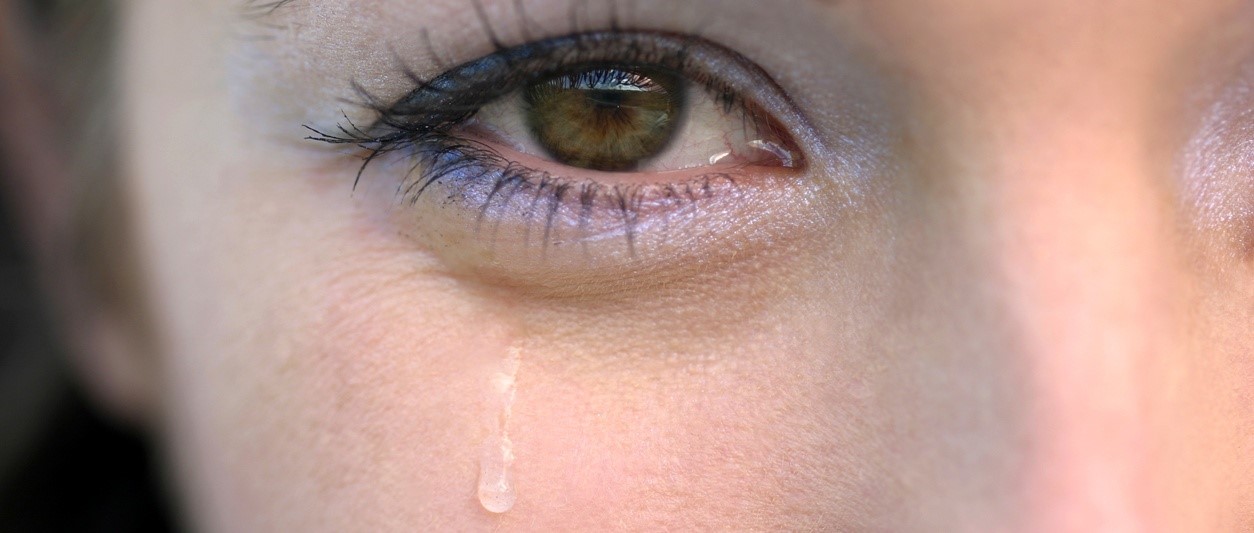
Why do we cry?
Peer reviewed by Dr Hayley Willacy, FRCGP Authored by Dr Laurence KnottOriginally published 26 Jun 2018
Meets Patient’s editorial guidelines
- DownloadDownload
- Share
- Language
- Discussion
- Audio Version
- Add to preferred sources on Google
It was the poet Ella Wheeler Wilcox who wrote: 'Laugh and the world laughs with you, weep and you weep alone.' This aphorism is only partly true. Although laughing is more infectious than crying, crying is almost as widespread an activity. Extend the definition to include the production of tears for any reason, and it becomes a universal phenomenon.
The mechanics of crying
Tears and lacrimation

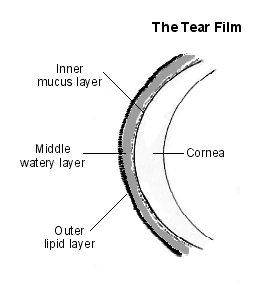
To understand why we cry, it is perhaps necessary to appreciate how we cry. Tears are produced by the lacrimal gland located at the outer end of the eyeball. Blinking spreads the tear as a film across your eye (the tear film).
Tear film
The tears flow into a collection area called the lacrimal lake and from there into drainage holes in the upper and lower inner eyelids. These are called the superior and inferior lacrimal puncta (singular: punctum). From there it's on to a reservoir called a lacrimal sac before they make their way down the nasolacrimal duct into the nasal cavity. It's a bit like a ride at Alton Towers, but less interesting.
The tears are meant to be held in place by some oil in the tear film. However, if the flow is more than this drainage system can cope with, they will start running down your cheeks, as anyone with a credit card will tell you.
There are in fact three types of tears:
Basal tears
These are your common or garden tears that bathe the eye 24/7. Their function is to lubricate the eye so the eyelid flows smoothly over it, and to keep it free from dust and infection. Basal tears contain a whole bunch of stuff, including chemicals such as sodium, an enzyme called lysozyme which helps to destroy germs, and mucin, the WD-40® of the biochemical world.
Reflex tears
These are produced as a response to irritants. It's the body's way of trying to wash nasty substances out of your eye. Onions are the triggers often quoted in books but it can also happen with pepper, bright light, ammonia in cleaning fluid and many strong chemicals (such as perfume). Vomiting, coughing and yawning (hopefully not all at the same time) can also stimulate reflex tear production.
Psychic tears
Nothing to do with overwrought mind readers. Their other name - emotional tears - gives you a clue as to their origin. Any strong emotion - such as sadness, pleasure, anger or suffering associated with physical pain - can bring a tear to the eye. Humour can be another trigger, and in some people crying can be associated with intense bouts of laughter.
Why we cry
Emotional crying
The fancy medical term for crying is lacrimation. The above description gives you some of the reasons for crying. Emotional crying is controlled by the hypothalamus, which is part of the limbic system of the brain. The limbic system is involved in generating basic emotions such as sadness, fear and anger. When a person feels emotion, the hypothalamus springs into action to stimulate the lacrimal glands to produce tears. It does this via the autonomic nervous system, a network of nerves functioning largely behind the scenes.
Emotional tears have a different chemical make-up to basal or reflex tears. They contain more prolactin, adrenocorticotrophin hormone and a natural painkiller called leucine enkephalin. It is possible that at times of emotional stress, crying reflects the body's attempts to make us feel better. It is, if you like, attempting to wrap itself in a huge biochemical comfort blanket. As that great neuropsychologist of his day, William Shakespeare, wrote in Henry VI, Part 3: "To weep is to make less the depth of grief."
Other types of crying
The tear production system is meant to work in the background, flowing across the eyeball to float dust and debris off the front of the eye, so that it can be swept away by the eyelids. If you think about it, it's not too dissimilar from the screenwash/rain/wiper set-up we have for our cars. If the tear production system works overtime or the drainage system becomes blocked, tears start to well up in the eye. The eye becomes watery and tears start to overflow down the cheeks. This is called epiphora. Many conditions can interrupt the smooth working of this system, including problems you are born with (congenital), infections, inflammation and foreign bodies in the eye.
Patient picks for Eye health

Eye health
More than just a fashion fail: the hidden dangers of fake sunglasses
The days are getting sunnier, and let’s be honest - while many of us reach for sunglasses to shield our eyes from the sun’s glare, we’re also drawn to them for their style. All too often, we sacrifice eye health in favour of a designer logo - hoping someone will spot the brand name on the frame. If the real thing is out of reach, it’s tempting to opt for knockoffs. But as Mr Alex Day warns, wearing fake designer sunglasses could lead to permanent, lasting harm to your sight.
by Victoria Raw
Eye health
How to use eye ointment
This leaflet gives general advice on how to use most eye ointments. However, you may be given specific instructions which may vary from the advice below. Ask your pharmacist if you have any queries.
by Dr Mary Harding, MRCGP
About the authorView full bio
Authored by

Dr Laurence Knott
General Practitioner, Medical Author
BSc (Hons) Biochemistry, MBBS
Dr Laurence Knott qualified in 1973 and has had extensive experience as a General Practitioner.
About the reviewerView full bio

Dr Hayley Willacy, FRCGP
General Practitioner, Medical Author
MBChB (1992), DRCOG, DFFP, MRCOG (Part 1) MRCGP (2007), DFSRH (2013), MSc - medical education (2020)
Dr Hayley Willacy was an NHS GP working in northwest England, who retired from clinical practice in 2022 after 30 years.
Article history
Article also available in English, German, Spanish, French, Italian, Portuguese, Hindi, Hebrew, Arabic, and Swedish.
26 Jun 2018 | Originally published
Authored by:
Dr Laurence KnottPeer reviewed by
Dr Hayley Willacy, FRCGP
Join the conversation
Share your thoughts or experiences with others in our patient communities.

Ask, share, connect.
Browse discussions, ask questions, and share experiences across hundreds of health topics.

Feeling unwell?
Assess your symptoms online for free
Sign up to the Patient newsletter
Your weekly dose of clear, trustworthy health advice - written to help you feel informed, confident and in control.
By subscribing you accept our Privacy Policy. You can unsubscribe at any time. We never sell your data.