Cos'è la creatina? Benefici, usi e rischi
Revisione paritaria di Dr Colin Tidy, MRCGPAutore Josh AldermanPubblicato originariamente 12 Mar 2026
Rispetta le linee guida editoriali
- ScaricaScarica
- Condividi
- Language
- Discussione
- Versione audio
- Aggiungi alle fonti preferite su Google
Creatine is one of the most popular sports supplements in the UK. Often associated with gym training and muscle building, creatine is widely used to support strength and performance. But it isn’t just for athletes - it’s a naturally occurring substance found in your body and in certain foods.
So, what does creatine do, what are the potential creatine benefits, and are there any downsides to consider?
What is creatine?
La creatina è un composto naturale prodotto dal fegato, dai reni e dal pancreas a partire dagli aminoacidi. Circa il 95% di essa viene immagazzinato nei muscoli, con piccole quantità presenti nel cervello.1
You also get creatine from foods such as red meat and fish. However, the amount from diet alone is much lower than the amount typically provided by supplements.
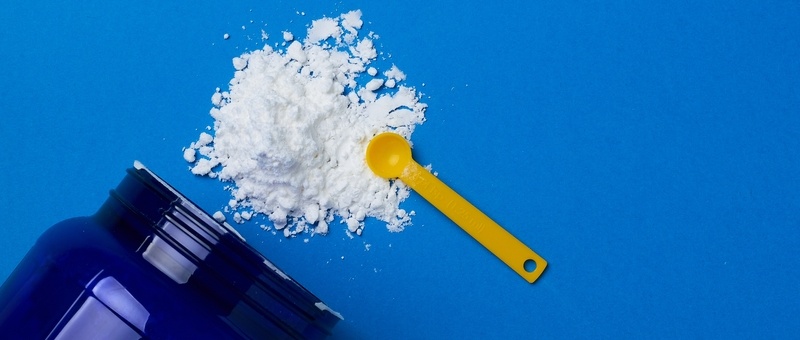
Integratori di creatina are usually sold as powders, capsules, or tablets. The most widely studied and commonly used form is creatine monohydrate.2
How does creatine work?
Creatine plays an important role in energy production. It helps your body make adenosine triphosphate (ATP), which is the main energy source your cells use, especially during short bursts of intense activity.
Taking creatine increases the amount stored in your muscles.
This may help your muscles:
Produce energy more quickly.
Sustain high-intensity activity for slightly longer.
Recover more effectively between sets.
So when it comes to short, high-powered efforts such as weightlifting, sprinting, or HIIT, creatine can make a real impact-but it doesn’t offer the same benefit for longer, steady-state endurance exercise.
Quali sono i benefici della creatina?
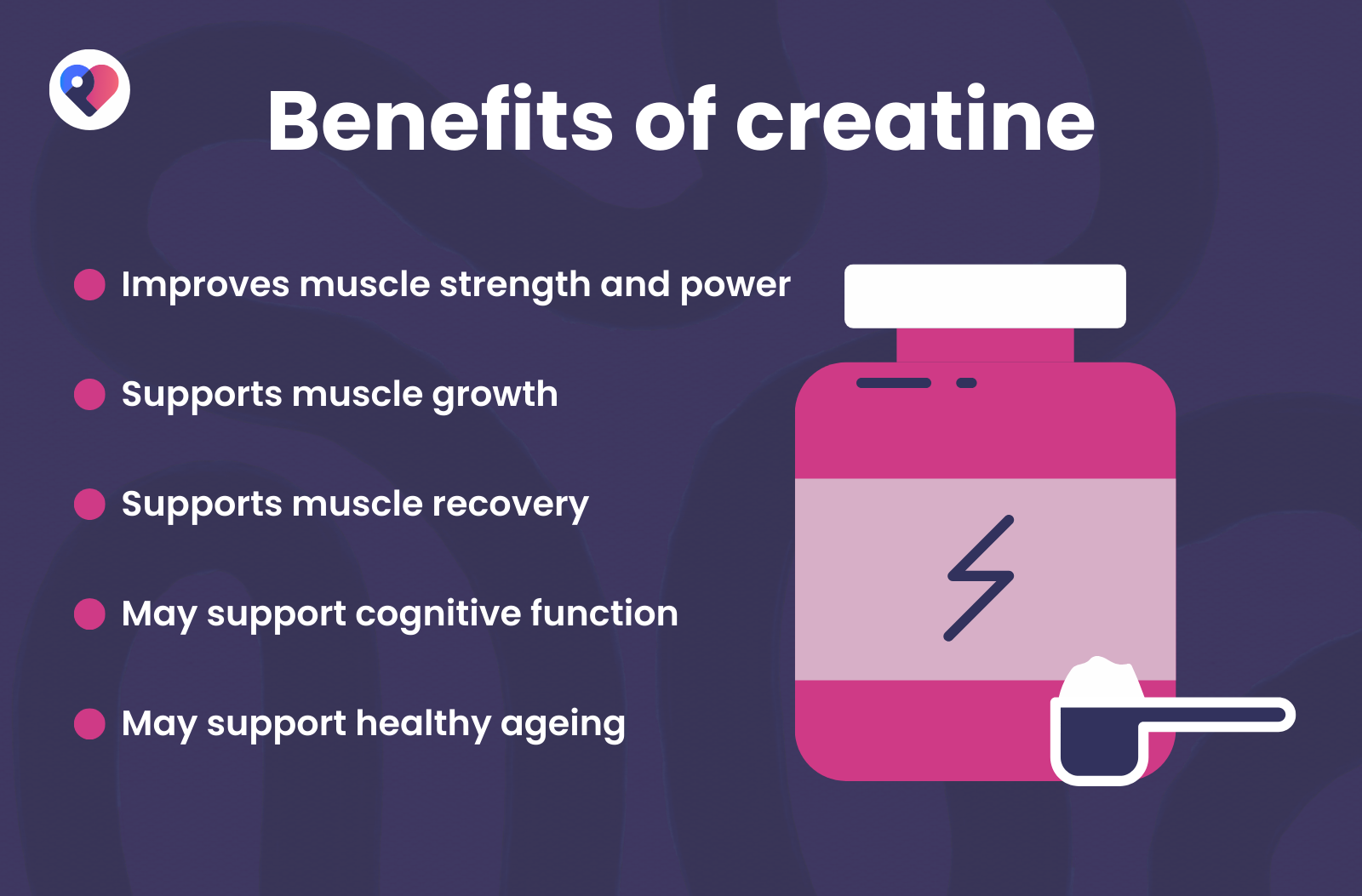
Se stai pensando di aggiungere la creatina alla tua routine, ecco cinque motivi per cui potrebbe valerne la pena.
© Paziente / Heather Ainsworth
1. Improves muscle strength and power
La creatina può aumentare la forza muscolare e la potenza.3Many people find they can lift slightly heavier weights or perform more repetitions.
2. Favorisce la crescita muscolare
La creatina può contribuire ad aumentare la massa muscolare.4 This is partly due to greater training capacity and partly because creatine draws water into muscle cells.
Un leggero aumento di peso corporeo è comune nelle prime settimane. Di solito si tratta di acqua immagazzinata nei muscoli, non di grasso.
3. Supports muscle recovery
Alcune evidenze suggeriscono che la creatina possa aiutare a favorire il recupero muscolare dopo un esercizio intenso,5 allowing more consistent training.
4. Potrebbe supportare la funzione cognitiva
Because creatine is also present in the brain, researchers are studying whether it may support memory or mental performance in certain situations as well as possibly aid in combating conditions such as demenza.5 More research is needed before firm conclusions can be made.
5. May support some medical conditions
Creatine has also been studied in a range of medical conditions that affect muscle strength and energy production. These include inherited muscle disorders such as distrofia muscolare and other myopathies,6 as well as mitochondrial disorders,8 where the body’s ability to produce energy is impaired.
Researchers have also explored its potential role in neurological conditions such as malattia di Parkinson7e sclerosi multipla,8 and in perdita muscolare legata all'età (sarcopenia). 9
While some small studies suggest creatine may improve muscle strength or reduce fatigue in certain groups, results have been mixed and benefits are not consistent.
Is creatine safe?
For healthy adults taking recommended doses, creatine is generally considered safe. It is one of the most researched supplements available.
Side effects of creatine
Possible side effects include:
Temporary weight gain.
Gonfiore.
Mild stomach discomfort.
Questi effetti sono più probabili con dosi più elevate. Bere abbastanza liquidi può aiutare a ridurre i sintomi digestivi.
There is no strong evidence that creatine causes kidney damage in healthy people using standard doses.
Should you speak to a doctor before taking creatine?
Creatine may not be suitable for everyone.
Seek medical advice if you:
Have kidney or liver disease.
Are pregnant or breastfeeding.
Are under 18.
Have a long-term medical condition.
Take regular medicine.
As with all supplements, product quality can vary. Choosing reputable brands is advisable.
Sommario
Creatine is a naturally occurring compound that helps your muscles produce energy during short bursts of high-intensity activity. When taken as a supplement, it may improve strength, power, and muscle mass - particularly when combined with structured training.
The main creatine benefits relate to improved exercise performance and increased muscle size. For most healthy adults taking recommended doses, creatine is considered safe, with mild side effects such as temporary weight gain or bloating.
Tuttavia, la creatina non è adatta a tutti. Se hai problemi ai reni, sei in gravidanza o gestisci una condizione di salute a lungo termine, è importante consultare un medico prima di iniziare l'integrazione.
Creatine can be a useful addition to a well-balanced training plan - but it’s not a replacement for regular exercise and a healthy diet.
Domande frequenti
Is creatine safe to take every day?
Yes, for most healthy adults, taking 3-5 grams of creatine daily is considered safe. Consistency is more important than cycling on and off.
Does creatine cause hair loss?
C'è una quantità limitata di prove che collegano la creatina alla perdita dei capelli. Uno studio di piccole dimensioni ha suggerito che potrebbe aumentare i livelli di un ormone associato alla calvizie maschile, ma ciò non è stato confermato da ricerche più ampie. Non ci sono prove chiare che la creatina causi direttamente la perdita dei capelli.10
Does creatine damage your kidneys?
In healthy people using recommended doses, creatine has not been shown to damage kidney function. However, people with existing kidney disease should avoid it unless advised by a doctor.
Do you need a loading phase?
A loading phase (around 20 grams daily for 5-7 days) can increase muscle creatine stores more quickly. However, it is not essential. Taking 3-5 grams daily will achieve similar levels over several weeks.
Can you take creatine without exercising?
Creatine may still increase muscle stores without exercise, but most creatine benefits are seen when combined with resistance training.
Scelte del paziente per Vitamine e integratori
Dieta e nutrizione
Quali sono i benefici della vitamina E?
Vitamin E is a well-loved ingredient in any skincare routine. But it's also vital for your health and how your body functions. Find out why and how to get enough vitamin E here.
di Victoria Raw
Salute degli anziani
I migliori integratori anti-invecchiamento per la tua salute
Il termine anti-invecchiamento è scritto su molte confezioni di creme di bellezza e altri prodotti per la cura della pelle. Ma cosa significa anti-invecchiamento all'interno del corpo? Qui, va oltre l'aspetto delle linee del viso, verso un invecchiamento interno sano. Questo significa quanto bene le nostre cellule e i nostri organi rimangano sani e in grado di combattere il declino e le malattie man mano che invecchiamo - in modo da poter vivere felici il più a lungo possibile. Esploriamo gli integratori anti-invecchiamento che aiutano i nostri corpi a fare proprio questo, secondo gli esperti.
di Lawrence Higgins
Domande frequenti
When is the best time to take creatine?
The article does not specify an optimal time to take creatine. The most important factor for creatine supplementation is consistency in daily intake to maintain muscle stores, rather than the specific timing relative to workouts or meals.
Is creatine considered a drug or a hormone?
Creatine is neither a drug nor a hormone. It is a natural compound made in your liver, kidneys, and pancreas from amino acids. It's also obtained from foods like red meat and fish and is widely available as a supplement.
What is the typical dosage for creatine supplements?
For most healthy adults, a daily dosage of 3-5 grams of creatine is considered safe to take every day. A loading phase of around 20 grams daily for 5-7 days can also be used to increase muscle creatine stores more quickly, but it isn't essential.
How long does it take to see the benefits of creatine?
While a loading phase can increase muscle creatine stores more quickly, consistent daily intake of 3-5 grams will achieve similar muscle saturation levels over several weeks. Therefore, changes in strength, power, or muscle size may become noticeable after a few weeks of consistent use, especially when combined with resistance training.
Ulteriori letture e riferimenti
- Felipe Ribeiro et al. "Integrazione di creatina e asse muscolo-cervello: un nuovo possibile meccanismo?." Frontiers in Nutrition, 12 (2025).
- R. Kreider et al. "Bioavailability, Efficacy, Safety, and Regulatory Status of Creatine and Related Compounds: A Critical Review."
- Camic CL, Hendrix CR, Housh TJ, et al; Gli effetti dell'integrazione di creatina glicosilata con polietilenglicole sulla forza e potenza muscolare. J Strength Cond Res. Dicembre 2010;24(12):3343-51. doi: 10.1519/JSC.0b013e3181fc5c5c.
- Drzewiecki, Artur, et al. “L'effetto della creatina sull'aumento della massa muscolare: una revisione della letteratura”. Qualità nello Sport,
- Xu, Chen, et al. «Gli effetti dell'integrazione di creatina sulla funzione cognitiva negli adulti: una revisione sistematica e meta-analisi.»”.
- Kley, Rudolf A, et al. “Creatina per il trattamento dei disturbi muscolari.” Cochrane Database of Systematic Reviews
- Yea-Hyun Leem, et al. «L'integrazione di creatina con l'esercizio riduce l'oligomerizzazione di α-sinucleina e la necroptosi nel modello murino della malattia di Parkinson.» The Journal of Nutritional Biochemistry, vol. 126
- Ostojic, Sergej M. “Creatina e sclerosi multipla.” Neuroscienze Nutrizionali
- Dolan, Eimear, et al. “Muscular Atrophy and Sarcopenia in the Elderly: Is There a Role for Creatine Supplementation?”
- Lak, Mohammadyasin, et al. “La creatina causa perdita di capelli? Uno studio controllato randomizzato di 12 settimane.” Journal of the International Society of Sports Nutrition, vol. 22
Informazioni sull'autoreVisualizza il profilo completo

Josh Alderman
Responsabile SEO
Laurea in Media e Giornalismo su Stampa
Josh è un dirigente SEO presso Patient con oltre 4 anni di esperienza nel settore sanitario.
Informazioni sul recensoreVisualizza il profilo completo

Dr Colin Tidy, MRCGP
Medico di base, Autore medico
MBBS, MRCGP, MRCP (Paediatrics), DCH
Il Dr Colin Tidy è un medico del NHS, con sede nell'Oxfordshire.
Storia dell'articolo
Le informazioni su questa pagina sono revisionate da clinici qualificati.
Articolo disponibile anche in Inglese, Tedesco, Spagnolo, Francese, Italiano, Portoghese, Hindi, Ebraico, Arabo, and Svedese.
Prossima revisione prevista: 12 Mar 2029
12 Mar 2026 | Pubblicato originariamente
Autore:
Josh AldermanRevisione paritaria di
Dr Colin Tidy, MRCGP

Chiedi, condividi, connettiti.
Esplora le discussioni, fai domande e condividi esperienze su centinaia di argomenti di salute.

Non ti senti bene?
Valuta i tuoi sintomi online gratuitamente
Iscriviti alla newsletter di Patient
La tua dose settimanale di consigli sulla salute chiari e affidabili - scritti per aiutarti a sentirti informato, sicuro e in controllo.
Abbonandoti accetti i nostri Informativa sulla Privacy. Puoi annullare l'iscrizione in qualsiasi momento. Non vendiamo mai i tuoi dati.
Di più su dieta e nutrizione
- 10 sorprendenti benefici per la salute del cavolo
- 5 pasti vegetariani ad alto contenuto proteico per mantenere la tua forza
- 7 idee per colazioni keto facili e deliziose
- Oltre l'uva: svelare i fatti sulla salute riguardo al resveratrolo
- La dieta può influenzare il tuo ADHD?
- La kombucha può migliorare la tua salute?
- Cambiare le tue abitudini alimentari dopo una diagnosi di diabete di tipo 2
- Le vitamine gommose funzionano?
- Come influisce la dieta sulla demenza?
- Come eliminare il gonfiore addominale: rimedi casalinghi efficaci
- Come preparare patate arrosto salutari
- Come preparare un ripieno salutare
- Bere olio d'oliva fa bene alla salute?
- Esiste un legame tra dieta e acne?
- Magnesio: Benefici per la salute e rischi
- Quali sono i benefici della vitamina E?
- Qual è la migliore dieta per la malattia di Crohn?
- Cos'è la dieta Ornish e può trasformare la tua salute?
- Quali alimenti possono ridurre il tuo stress e ansia?
- Quali vitamine per la gravidanza sono davvero necessarie?