
How does the new 90-minute COVID-19 test work?
Peer reviewed by Dr Sarah JarvisAuthored by Abi MillarOriginally published 23 Sept 2020
Meets Patient’s editorial guidelines
- DownloadDownload
- Share
- Language
- Discussion
- Audio Version
- Add to preferred sources on Google
Two new 90-minute tests for COVID-19 are being rolled out ahead of winter. So why might rapid testing make so much difference and can these tests deliver on what's being promised?
This feature is now out of date. You can find our latest features on COVID-19 in our hub.
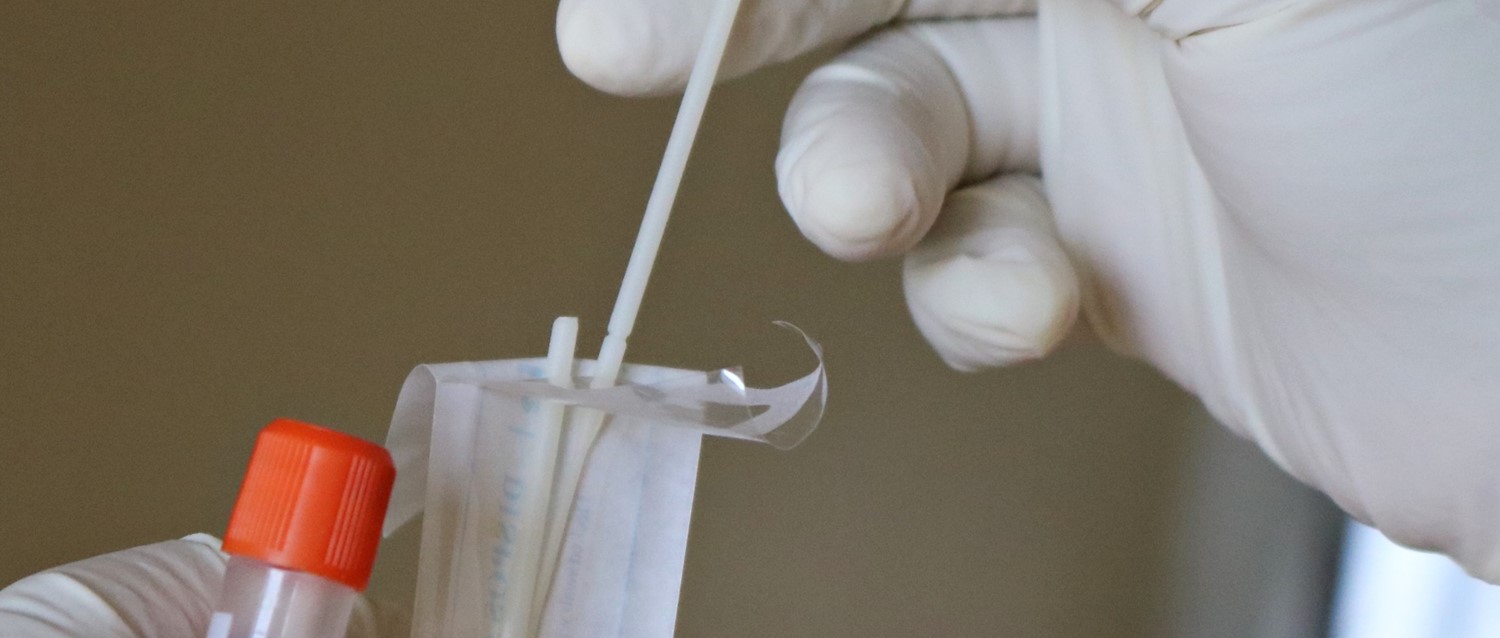
On 3rd August, the UK government announced it would roll out two new rapid coronavirus tests ahead of winter. The tests - both able to detect the virus in less than 90 minutes - will be introduced to hospitals, care homes, labs, and a range of non-clinical settings.
As well as speeding up the process, the tests will be able to distinguish between COVID-19 and other winter viruses such as flu. Since these conditions have similar symptoms, but different implications (flu doesn't require self-isolation, for instance), it's important to get a diagnosis as soon as possible.
"We're using the most innovative technologies available to tackle coronavirus," said Health Secretary Matt Hancock. "Millions of new rapid coronavirus tests will provide on-the-spot results in under 90 minutes, helping us to break chains of transmission quickly. The fact these tests can detect flu as well as COVID-19 will be hugely beneficial as we head into winter, so patients can follow the right advice to protect themselves and others."
Why rapid testing is so important
The tests in question are a rapid swab test called LamPORE, and DNA testing machines called DnaNudge. According to the government, 450,000 of the LamPORE tests will be made available along with 5,000 DNA 'NudgeBox' machines. The latter will have the capacity to perform 5.8 million COVID-19 tests over the coming months.
Until recently, the UK has been relying on PCR swab tests, which need to be sent to a laboratory and take at least 24 hours to turn around. Dr William Haseltine, an infectious disease expert, has written two books about COVID-19: A Covid Back To School Guide and A Family Guide to Covid, which will be updated as our understanding of the virus evolves. As he explains, any test that simplifies diagnosis has advantages over current methods.
"The PCR tests and the new tests all detect viral infections using very different technologies," he says. "The PCR test is slower, most expensive and requires more highly trained personnel. The two new tests, which detect viral RNA, are simpler to use, use less expensive methods and produce answers more quickly."
He adds that convenience, price and speed will be essential going forward, as we move from testing those who think they've been exposed, to testing the general population. For instance, the LamPORE test may eventually be used to screen NHS staff, whether or not they have symptoms.
"Containment of the epidemic depends primarily on identifying those people who are contagious and isolating them from people who they might infect," says Dr Haseltine. "These tests are a first good step to identifying those who are contagious. I look forward to further improvements that make it even easier and less expensive than this current generation."
In his estimate, up to 90% of all people infected are asymptomatic. If true, this would further boost the case for widespread community testing - and quicker, cheaper tests.
How the tests work
The LamPORE test, developed by Oxford Nanopore, uses a technique called RT-LAMP, along with genetic sequencing, to identify the virus in a swab or saliva sample. Unlike the existing PCR tests, it can be processed on site through 'pop-up labs', further speeding up diagnosis.
The DnaNudge test, developed by the company of the same name, analyses DNA in nose swabs. It too can be used outside a lab, via the miniaturised NudgeBox analyser, and has an average sensitivity of 95% (similar to existing lab tests). At present, the machines are operating in eight London hospitals.
"We have been able to successfully adapt our in-store consumer DNA testing technology - which identifies genetic risks for chronic conditions related to obesity and type 2 diabetes - and validate it for detecting COVID-19 with gold-standard accuracy," said Regius Professor Chris Toumazou FRS, CEO and co-founder of DnaNudge.
Concerns about accuracy
Although both tests have been heralded as a breakthrough, some experts have raised concerns. When the rollout was first announced, there was no publicly available data on their accuracy, prompting fears that the government had rushed ahead without waiting for full evaluations.
"These tests should not be generally used without information available to the public regarding the sensitivity and specificity as well as the cost and speed of the test," says Dr Haseltine. "It is irresponsible to introduce these tests without release of underlying data that supports their use."
DnaNudge has since published a diagnostic accuracy study in The Lancet Microbe. Oxford Nanopore, meanwhile, says it has collaborated with multiple laboratories to evaluate LamPORE's performance. Approached for comment, a spokesperson said more information would become available in the coming weeks.
The future of COVID-19 testing
Both tests could make a real difference to the UK's testing capacity (as well as cutting down the nail-biting wait for results). However, there may be something even more ambitious in store. According to recent reports, the government is now working on a mass-testing regime nicknamed 'Operation Moon Shot', which would screen up to four million people every day. This would require cheap, rapid tests on an unprecedented scale.
This project is in the very early stages, and has been met with significant scepticism from some quarters. They point out that the government has repeatedly made promises about scaling up the Test and Trace programme, and has repeatedly failed to deliver. Assuming the new technology does turn out to be as fast, and as accurate, as its proponents hope, there is a huge logistical challenge involved in scaling up the tests.
Even if this could be achieved, the cost would be eye-watering. With vast amounts already spent on furlough and other measures, the British Medical Journal has uncovered documents suggesting that the expansion of the programme would cost cost over £100bn to deliver - almost the same cost as the entire annual NHS budget.
However, if successful it would enable the country to control the virus without resorting to lockdowns. This would be crucial as we move into winter, both with regard to preventing and minimising a second wave and to preserving some normality.
In the meantime, it's important to abide by the existing advice - self-isolating and getting tested if you have symptoms.
Patient picks for Vaccination, tests and treatment
COVID-19
COVID-19: When should you do a lateral flow test and when should you do a PCR?
With the Omicron variant spreading rapidly, there is a high demand for both lateral flow and PCR tests to detect COVID-19. Double-vaccinated people in England are now being asked to take a lateral flow test daily for one week if they come into contact with someone with COVID-19, rather than self-isolate. But when else should you do a lateral flow test and when should you do a PCR?
by Lydia Smith
COVID-19
Can the COVID vaccine affect the menstrual cycle?
Following the rollout of COVID-19 vaccines across the country, there have been reports of people's periods changing in some way after their jabs. This has understandably caused concern, among young women in particular. So are COVID-19 vaccination and period changes linked, and if so should you be worried?
by Emily Jane Bashforth
About the authorView full bio
Authored by

Abi Millar
Freelance Journalist
BA (Hons), MA
Abi is a freelance journalist with a special interest in health and medicine writing.
About the reviewerView full bio

Dr Sarah Jarvis
Clinical Consultant
MA (Cantab), BM, BCh (Oxon), DRCOG, FRCGP, MBE
After training in medicine at Cambridge and Oxford, Dr Sarah Jarvis MBE became a GP.
Article history
Article also available in English, German, Spanish, French, Italian, Portuguese, Hindi, Hebrew, Arabic, and Swedish.
23 Sept 2020 | Originally published
Authored by:
Abi MillarPeer reviewed by
Dr Sarah Jarvis
Join the conversation
Share your thoughts or experiences with others in our patient communities.

Ask, share, connect.
Browse discussions, ask questions, and share experiences across hundreds of health topics.

Feeling unwell?
Assess your symptoms online for free
Sign up to the Patient newsletter
Your weekly dose of clear, trustworthy health advice - written to help you feel informed, confident and in control.
By subscribing you accept our Privacy Policy. You can unsubscribe at any time. We never sell your data.