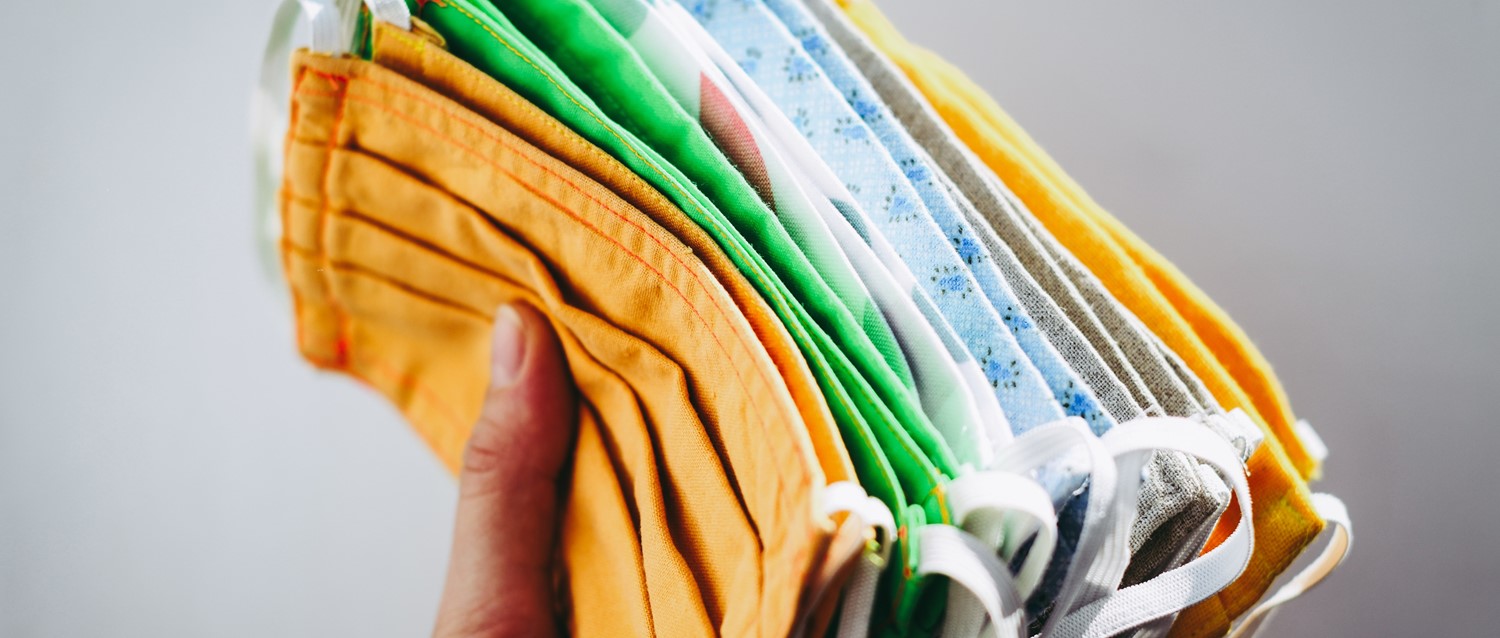
Face coverings: what should you look for in a homemade mask?
Peer reviewed by Dr Sarah JarvisAuthored by Gillian HarveyOriginally published 28 Oct 2020
Meets Patient’s editorial guidelines
- DownloadDownload
- Share
- Language
- Discussion
- Audio Version
- Add to preferred sources on Google
With face coverings now mandatory in enclosed spaces in the UK, many of us are having to get used to a whole new dress code. And choices are springing up everywhere - fancy a mask with your favourite photo on the front? How about matching your mask to your outfit? But when it comes to protecting others and ourselves, what should we look for in a home-made mask?
Why wear a mask?
It's important to remember the primary reason for wearing a mask is to protect those around us from COVID-19. Keeping our mouths and noses covered should work to minimise the spread of droplets - reducing the risk of infection for those we come into contact with.
Although a home-made cloth masks won't block airborne coronavirus particles in the same way and certainly won't offer the protection of hospital-grade PPE, they should drive down infection rates and the amount of virus transmitted in the population.
"Some might argue that masks aren't that effective one on one," explains Dr Stephen Griffin, Chair of the Virus Division of the Microbiology Society. "But when you wear them as a population you start to drive down that efficiency of transmission and you can also decrease the amount of virus that's transmitted as well."
Severity of infection
Reducing the amount of virus we are exposed to may also have an impact on the severity of the infection we develop. "There's no good data on this as it's impossible to carry out an effective study," explains Griffin. "However, there is a theory that this might reduce the severity of infection.
"We don't fully understand how much virus you need to be exposed to in order to become sick, and it may vary on an individual basis, but I think on average getting less means you're less likely to have what we'd term a 'productive infection'. Some people may be exposed to a small amount of virus and be infected and others wouldn't."
So what should we look for?
Whether we're running up a mask for ourselves at home, or shopping online to find something suitable, what do we need to consider?
"The World Health Organization (WHO) recommends using three layers of material," explains Val Edwards-Jones, Professor of Medical Microbiology, who has recently developed her own range of protective masks. "It's important to choose as high a thread count as possible. Virus particles could escape through the microscopic holes between the weave of the material, but the chance of these holes lining up when there are three layers is far lower."
"If you were looking for maximum protection, you might look for a non-woven layer," adds Griffin. "This would be more like the PPE that's worn in hospitals. But they wouldn't be as breathable. You can also buy masks with respirators, but these need to be properly fitted to be effective."
The best material
When it comes to the type of material used, recent WHO data reveal that polypropylene offers a better filtration rate than other materials. The organisation also recommends that stretchy material be avoided, as stretching may alter the structure of the material, making it less effective. The protection offered by this type of material may also deteriorate after washing.
In terms of comfort, as this is something you may have to wear fairly regularly, it's important also to look at the elastic fastenings that go around the ear, to ensure they are large enough and comfortable. You may wish to choose a mask with straps that tie around the back of the head instead.
Washable fabric
As the WHO recommends washing masks at temperatures of 60°C or higher, it's advisable to select a material that is washable at higher temperatures, such as polypropylene. If the material of your mask is unsuitable for washing at this temperature, you can find advice on cleaning your mask properly on the WHO website.
Breathability
While it's important to choose a mask that's comfortable, it's important to remember that stretchy or thin materials - which may feel more breathable - offer limited protection for ourselves and others.
If you are worried that a mask will prevent you from breathing properly, rest assured that there is no evidence that wearing a mask reduces oxygen saturation. Any feelings of faintness or breathing difficulty are therefore more likely to be caused by anxiety at having to wear a mask rather than by a physical problem.
"Masks are not gas-tight; they ought not to affect your respiratory effort in any way at all," explains Griffin.
Comfort
While it might be tempting to choose a thinner covering, for the best protection it is worth using a layered mask even if you feel a mild level of discomfort, as your oxygen levels will not be affected.
If you don't feel entirely comfortable wearing a mask, a little rehearsal may be in order. To prepare yourself for wearing a mask for the first time, it may be advisable to wear it in a safe environment - such as your home - first of all to get used to how your mask feels. If you find it particularly uncomfortable, it may be worth trying a different type or fit of mask.
If you wear glasses, you may find the information in our article on how to make face masks and coverings more comfortable.
Our top tips
With the majority of us not used to wearing a face-covering, it's not always easy to know exactly how to use one safely.
Here are a few tips to help!
Choose a mask with three layers of material, as recommended by the WHO.
Make sure your mask covers your nose and mouth - many people wear the mask just on the tip of their nose, but they should be worn higher up the nose for maximum protection. If your mask is not big enough to provide adequate coverage, it's important to invest in a bigger mask.
Don't be tempted to select or make a coated mask - as well as reducing breathability, coating a mask - for example, with wax - makes it more likely that air will escape around the edges of the mask, reducing its effectiveness.
Buy or make several masks to ensure they can be changed regularly.
Make sure your mask fits well and stays in place to avoid unnecessary touching and adjusting.
Wash masks at the highest permitted temperature - although check with your vendor to ensure this is right for the material used. More information on mask washing can be found on the WHO website.
Carry spare masks in a sealed plastic bag to ensure they don't become contaminated.
Importantly, don't overestimate the protection a mask affords. While masks are helpful in reducing transmission levels when worn by the population at large, they only offer very limited protection to the wearer. Ensure you adhere to social distancing guidelines even when wearing a face covering.
Patient picks for General information

COVID-19
What happens if you catch flu and COVID-19 at the same time?
Thousands of people across the UK are living with tougher COVID-19 restrictions in a bid to curb infection rates ahead of winter. But each year winter also means a spike in flu cases, so what happens if you catch the flu and COVID-19 at the same time?
by Andrea Downey
COVID-19
What are the long-term health impacts of coronavirus?
In some COVID-19 patients, post-viral illness continues for weeks. But with a wide variety of symptoms, doctors and researchers are now racing to produce clear guidelines on what patients should expect in the long term.
by Ellie Broughton
About the authorView full bio
Authored by

Gillian Harvey
Freelance Writer
BA (Hons) English
Gillian is a freelance writer and columnist for a variety of national newspapers and magazines.
About the reviewerView full bio

Dr Sarah Jarvis
Clinical Consultant
MA (Cantab), BM, BCh (Oxon), DRCOG, FRCGP, MBE
After training in medicine at Cambridge and Oxford, Dr Sarah Jarvis MBE became a GP.
Article history
Article also available in English, German, Spanish, French, Italian, Portuguese, Hindi, Hebrew, Arabic, and Swedish.
28 Oct 2020 | Originally published
Authored by:
Gillian HarveyPeer reviewed by
Dr Sarah Jarvis
Join the conversation
Share your thoughts or experiences with others in our patient communities.

Ask, share, connect.
Browse discussions, ask questions, and share experiences across hundreds of health topics.

Feeling unwell?
Assess your symptoms online for free
Sign up to the Patient newsletter
Your weekly dose of clear, trustworthy health advice - written to help you feel informed, confident and in control.
By subscribing you accept our Privacy Policy. You can unsubscribe at any time. We never sell your data.