How safe is dermaplaning?
Peer reviewed by Dr Krishna Vakharia, MRCGPAuthored by Victoria RawOriginally published 7 Jul 2024
Meets Patient’s editorial guidelines
- DownloadDownload
- Share
- Language
- Discussion
- Audio Version
- Add to preferred sources on Google
Simple cosmetic procedures like dermaplaning are becoming a routine part of skincare. Dermaplaning might seem like a straightforward treatment for smoother, fresher skin. But is it safe, and should you consider it?
What is dermaplaning?
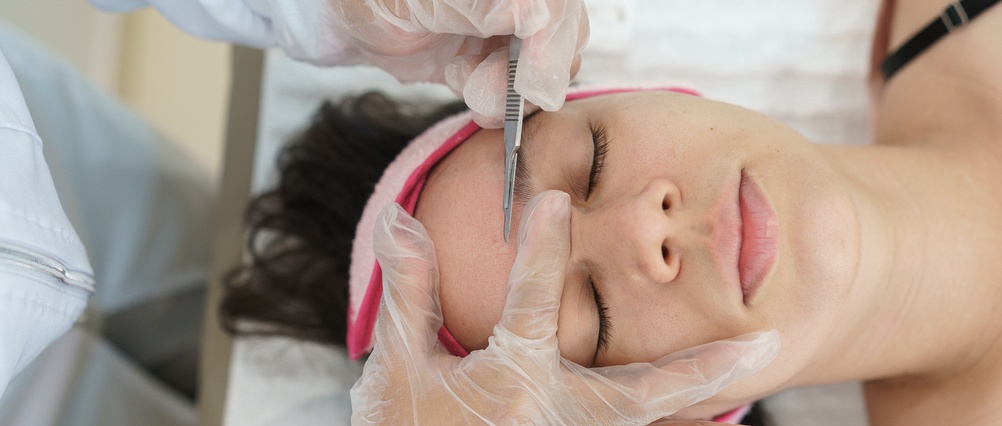
Dermaplaning is a cosmetic procedure used for facial hair removal for all skin types. It involves using a sharp, sterile blade to scrape away the top layer of your skin. It's intended to buff away fine hairs, remove the build-up of dead skin cells, and reduce the appearance of wrinkles and acne scars.
Dr Hannah Kopelman, clinical dermatologist and host of the Derm Club podcast says: "Dermaplaning involves gently removing the top layer of dead skin cells and fine vellus hair - often referred to as "peach fuzz" - from your face. The benefits of dermaplaning treatment are a smoother, brighter complexion, which can also enhance the effectiveness of your skincare products and treatments."
Dermaplaning is similar to microdermabrasion - a procedure that uses crystals and suction to exfoliate dead skin cells. Both options can be used on areas such as the face, neck, chest, back, and hands.
What happens during dermaplaning?
Kopelman sets the dermaplaning stages:
Before the dermaplaning procedure takes place, any makeup, oils or impurities are removed from the skin.
Using a sterile surgical scalpel - held at a 45-degree angle - the surface of the skin is gently scraped in short, swift strokes.
The skin is exfoliated and fine hairs are removed.
What is the difference between dermaplaning and shaving?
Although both dermaplaning and shaving remove hair from your face, they have some key differences.
"Dermaplaning is a professional procedure, focusing on exfoliation by removing the top layer of dead skin cells, along with fine hair," explains the podcast host. "Shaving, on the other hand, is primarily for hair removal and doesn't provide the same level of exfoliation."
Dermaplaning
Tool: Scalpel with a sterile blade.
Removes: Exfoliates and smooths the skin by removing vellus hair and dead skin cells.
Benefits: Provides deeper exfoliation, and potentially smoother makeup application.
Safety: Should only be performed by a trained professional to reduce the chance of cuts.
Price: More costly due to the need for professional treatment.
Regrowth: Expect soft, fine hair regrowth.
Shaving
Tool: Standard/facial razor with multiple blades or electric trimmers.
Removes: Removes only fine vellus hair.
Benefits: Targets unwanted facial hair.
Safety: Convenient for home use, but with a greater chance of cuts, rash and burns.
Price: Affordable razors, shaving cream and facial hair removers are easy to find.
Appearance: Uneven cutting from a dull razor can give the grown-back hair a greater surface area making it appear thicker or darker.
How long does dermaplaning last?
Dermaplaning sessions typically last about 30-45 minutes with immediate results.
Kopelman advises that vellus hair usually grows back in around 2-4 weeks. She recommends having the procedure done once a month to maintain results.
What are the potential side effects of dermaplaning?
At-home dermaplaning kits have become increasingly popular due to their affordability. However, this seemingly easy process comes with hidden dangers.
Dermaplaning requires a high degree of precision. The scalpel must be held at an exact 45-degree angle to avoid damaging your skin. Social media is full of content showcasing injuries and severe skin damage from improper use of dermaplaning techniques.
Even when performed by a professional, dermaplaning can have side effects. The repeated scraping can weaken the skin's natural barrier, leaving it vulnerable to infection and molecules that can harm your skin and even accelerate ageing. It shouldn't used if you have active acne, any skin infections such as impetigo or herpes, or flares of eczema or psoriasis. A professional dermatologist will assess to see if you are safe to have the procedure.
Kopelman adds: "Dermaplaning is generally safe when performed by a trained professional. However - like any cosmetic procedure - there can be potential downsides. These include minor cuts or abrasions, redness, and - in rare cases - infection. For this reason, it's important to have the procedure done by a qualified dermatologist or aesthetician."
There is a rare chance of scarring but again, going to a qualified professional will lower this chance.
What to expect after dermaplaning
While dermaplaning may be regarded as a less-invasive procedure, it's important to remember it involves exfoliating the skin. There may be some temporary skin irritation or redness for a few hours afterwards - especially if you have sensitive skin. This effect varies from person to person.
Kopelman explains your skin might also be more sensitive to sun exposure. Be sure to apply sunscreen with SPF 30 or higher following dermaplaning.
"You'll notice that your skin is smoother, and skin care products may penetrate more effectively," she says. "However, it's important to follow the post-care instructions provided by your dermatologist."
Where can you get the dermaplaning procedure done?
For safe and effective dermaplaning, it's important to seek treatment from a licensed dermatologist or a trained aesthetician with experience. Do your research thoroughly. You can also seek advice from friends, family or a doctor for recommendations.
Kopelman warns to avoid dermaplaning at home, as this may lead to cuts, infections and other complications. Make sure the professional you choose uses sterile equipment and practices proper hygiene.
While dermaplaning can seem appealing, consider the potential drawbacks before proceeding with the treatment. Consulting a dermatologist is always recommended to safeguard the health of your skin.
Patient picks for Cosmetic surgery
Treatment and medication
What age can you get lip fillers and Botox in the UK?
A new law means those under the age of 18 will no longer be able to access Botox or lip fillers for cosmetic reasons.
by Emily Jane Bashforth
Treatment and medication
Under-18s unable to access Botox and fillers: is it a good thing?
Legislation was recently introduced that means under-18s can no longer access fillers or Botox for cosmetic reasons. The Botulinum Toxin and Cosmetic Fillers (Children) Act makes it illegal for Botox and dermal lip filler procedures to be administered to under-18s, or even for appointments to be booked. But, is this new law a good thing, and how will it protect young people?
by Emily Jane Bashforth
About the authorView full bio
Authored by

Victoria Raw
Feature Writer
BA (Hons), English Literature
Victoria is a content writer at Patient, with special interests spanning mental wellbeing, societal trends and the impact of technology on our health.
About the reviewerView full bio

Dr Krishna Vakharia, MRCGP
Chief Medical Officer for Health, Optum UK
MBChB, MRCGP(2013), BMedSci (hons), DFSRH, DRCOG, PGDipDerm (Distn)
Dr Krishna Vakharia is an NHS GP. She is also a regular examiner for the postgraduate Diploma in Practical Dermatology at Cardiff University as well as being the Chief Medical Officer for health at Optum UK.
Article history
Article also available in English, German, Spanish, French, Italian, Portuguese, Hindi, Hebrew, Arabic, and Swedish.
Next review due: 7 Jul 2027
7 Jul 2024 | Originally published
Authored by:
Victoria RawPeer reviewed by
Dr Krishna Vakharia, MRCGP
Join the conversation
Share your thoughts or experiences with others in our patient communities.

Ask, share, connect.
Browse discussions, ask questions, and share experiences across hundreds of health topics.

Feeling unwell?
Assess your symptoms online for free
Sign up to the Patient newsletter
Your weekly dose of clear, trustworthy health advice - written to help you feel informed, confident and in control.
By subscribing you accept our Privacy Policy. You can unsubscribe at any time. We never sell your data.