
How to stop your child catching a verruca
Peer reviewed by Dr Sarah JarvisAuthored by Danny ChadburnOriginally published 28 Sept 2017
Meets Patient’s editorial guidelines
- DownloadDownload
- Share
- Language
- Discussion
- Audio Version
- Add to preferred sources on Google
Verrucas are very common in children and teenagers – around one in three will get them. They’re actually warts on the feet, caused by the human papillomavirus, but they don’t look like normal warts because they’re pressed in.
Children tend to catch them more easily because their immune systems are not fully developed, and they’re more likely to have cuts and scratches on their skin where the virus can get in. Teenagers who play contact sports can also be particularly prone.
Although they are usually harmless, verrucas can be embarrassing, painful, and difficult to get rid of. Here’s how you can prevent them.
Common places to catch a verruca
Verrucas spread quickly and easily in hot and humid environments, such as:
Swimming pools and communal showers – the virus can survive for months on swimming pool floors
Gyms, indoor play parks, sports halls – especially if you let them go barefoot
It can take months for a verruca to appear after your child has caught the infection. So don’t blame last week’s school swimming lesson; they may have caught the virus on holiday with you.
How to prevent verrucas
Verrucas spread through skin-to-skin contact and also via personal items that have become contaminated, such as towels, socks and shoes.
Tips to help protect your child
Don’t let them go barefoot in public places (particularly the ones above).
Don’t let them use personal items that aren’t their own.
Keep their feet dry whenever possible – the virus spreads more quickly on wet feet.
Make sure any cuts or scratches are covered up if they’re going to any of the places mentioned above.
Check their feet regularly. You might not be able to prevent that first verruca, but you can stop your child developing more or infecting the rest of the family.
Can swimming socks prevent verrucas spreading?
Most experts agree that special swimming socks have limited value. In fact, Swim England advises against using them and says using a waterproof plaster to cover up a verruca is fine.
If your child already has a verruca, socks might help to stop the virus spreading. But if they’re feeling self-conscious, or getting teased by classmates, a plaster could be just as effective and a lot less stressful for both of you.
If you spot another child swimming with an uncovered verruca, it may be worth mentioning it to their parents or a teacher, especially if they seem to be in pain or are limping. But many experts (and parents) these days consider verrucas to be a nuisance rather than a serious health risk, so no matter what you say, they may decide to do nothing.
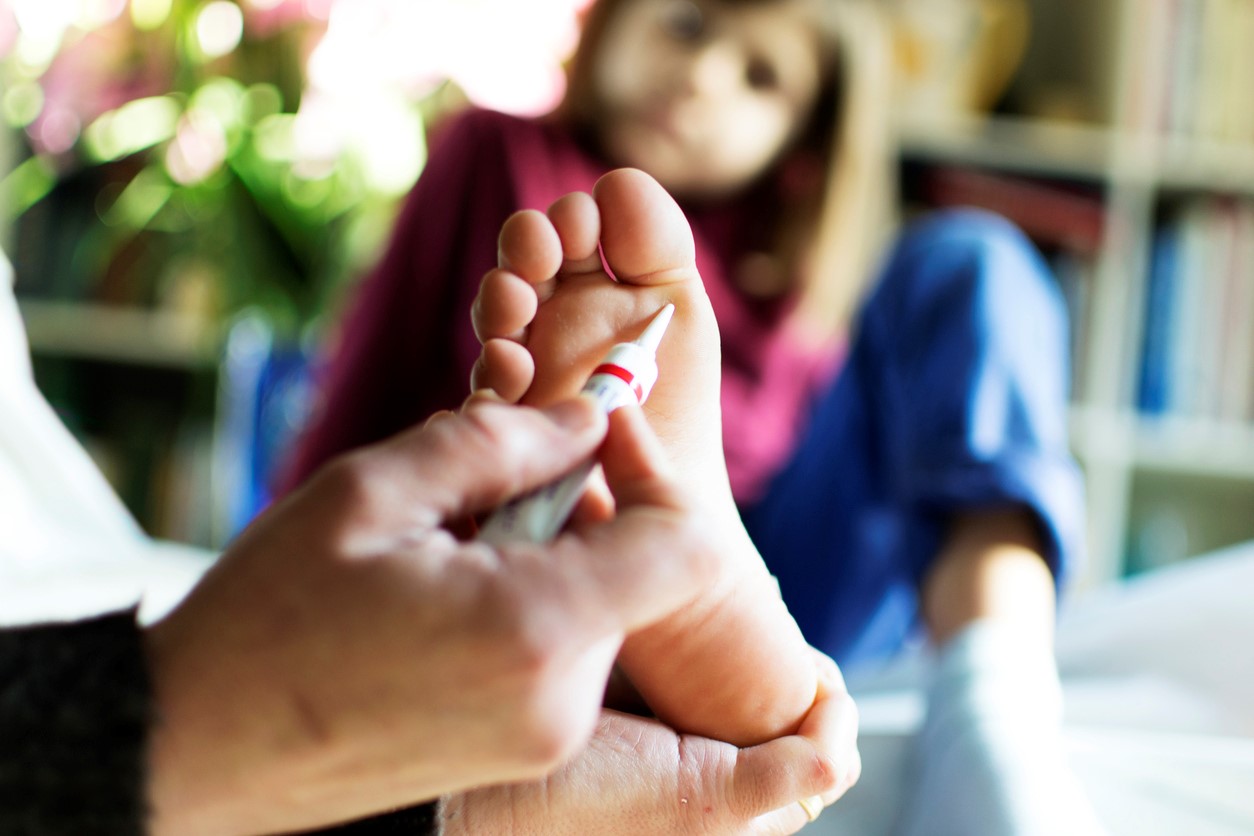
How to treat verrucas
Be aware not touch your child’s verruca with bare hands, or you could catch them yourself, and do not try to scrape or cut it off because you could damage the skin and cause an infection – the verruca may come back. Your pharmacist will have several treatment options they can advise you on and sell you without a prescription.
Leave them alone
The body will eventually cure itself, but you might have to be patient. It could take a year or two for them to clear up completely, and you still need to keep the verruca covered with a plaster when your child goes swimming.
Dry them out
Over-the-counter chemical treatments containing formic acid have had considerable success in clinical trials. Formic acid works by penetrating into the verruca and effectively drying it out, though it can take up to 12 weeks.
Peel them off
Over-the-counter treatments containing salicylic acid, which works by peeling off layers of the infected skin, can also be successful when used regularly for up to three months.
Freeze them off
If the verruca becomes painful and your child is finding it difficult to walk, it’s worth seeing your GP. You could be offered cryotherapy – a freezing treatment containing liquid nitrogen – which is usually successful but it can be quite painful. Home freezing kits are also available in chemists but they aren’t generally as effective.
Home remedies
Although there’s no clinical evidence it works, and the methods above are preferred treatments, some people try a mixture of tea tree oil and lemon applied every day.
Should you tell their school?
It’s probably best to warn the teacher before swimming or PE so they can make sure your child doesn’t go barefoot or share towels etc. But verrucas shouldn’t stop children from going swimming or taking part in sport.
Can verrucas be a sign of something serious?
People with low immunity can be more susceptible to verrucas, so if your child keeps getting them, despite taking precautions, or they haven’t disappeared after two years, ask your GP for blood tests to make sure their immune system is working properly.
Patient picks for General skin conditions
Skin, nail and hair health
How your environment affects skin conditions
Did you know that where you live and work can have a major impact on the health of your skin? Conditions such as eczema, psoriasis, rosacea, and acne can either improve or worsen based on the environment you are in.
by Sara Lindberg
Skin, nail and hair health
Wart and verruca treatment options
Warts are very common and usually harmless. Warts on the feet are called verrucas (or verrucae) and are sometimes painful. Warts and verrucas usually disappear without treatment but can remain for a long time. There are a number of different treatments that can help to get rid of them more quickly.
by Dr Colin Tidy, MRCGP
About the author
Authored by

Danny Chadburn
Head of Content
Danny was the previous Head of Content at Patient.
About the reviewerView full bio

Dr Sarah Jarvis
Clinical Consultant
MA (Cantab), BM, BCh (Oxon), DRCOG, FRCGP, MBE
After training in medicine at Cambridge and Oxford, Dr Sarah Jarvis MBE became a GP.
Join the conversation
Share your thoughts or experiences with others in our patient communities.

Ask, share, connect.
Browse discussions, ask questions, and share experiences across hundreds of health topics.

Feeling unwell?
Assess your symptoms online for free
Sign up to the Patient newsletter
Your weekly dose of clear, trustworthy health advice - written to help you feel informed, confident and in control.
By subscribing you accept our Privacy Policy. You can unsubscribe at any time. We never sell your data.